
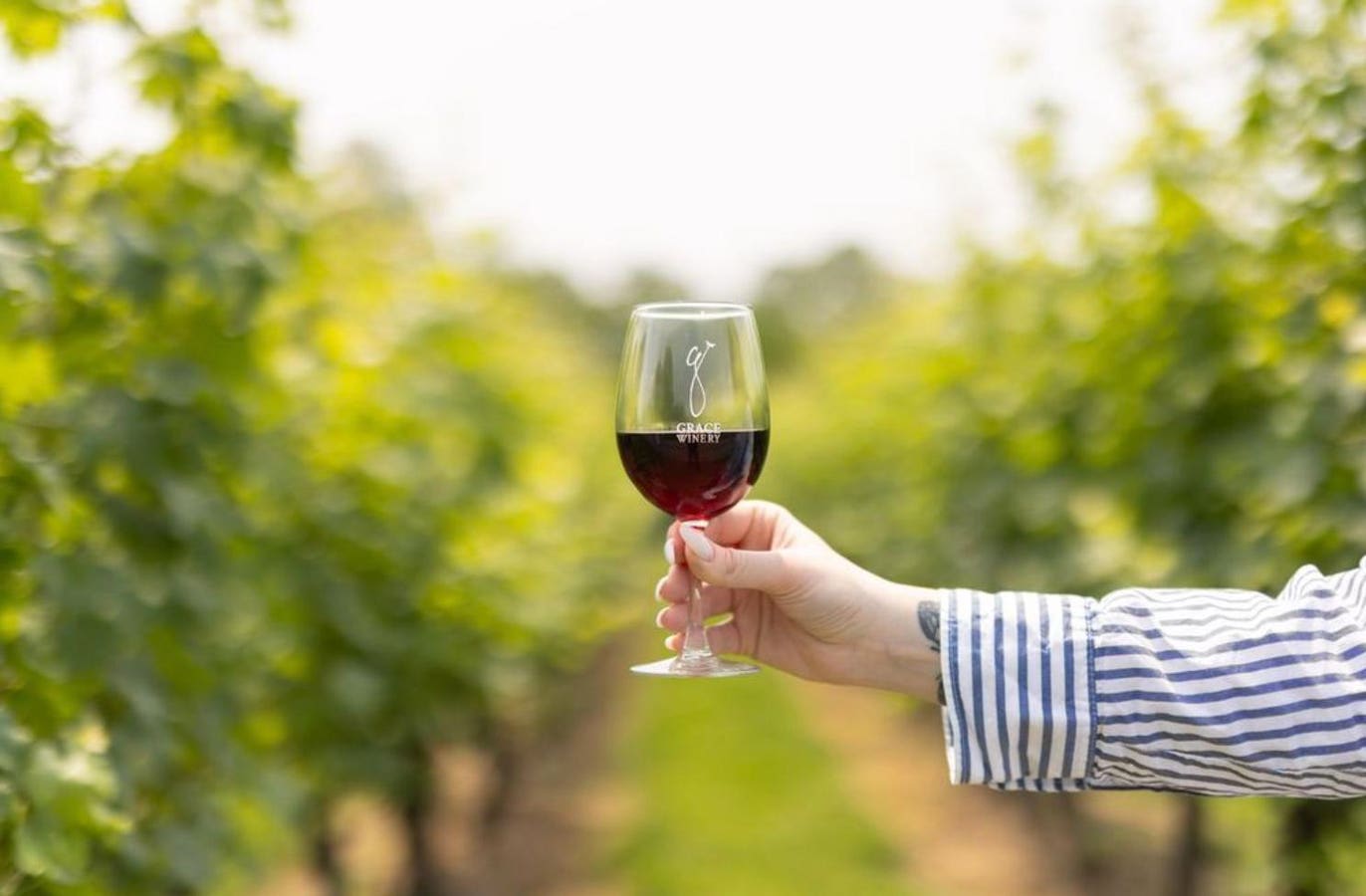
Grace Winery is leading the charge when it comes to changing the views on wine in Brandywine Valley.
Gab Bonghi
You may not think of Pennsylvania when you think about wine. But that’s starting to change—quickly.
Just outside of Philadelphia, the Brandywine Valley is quietly building a reputation as one of the East Coast’s most compelling emerging wine regions. And at the center of that conversation is the Inn at Grace Winery, a property that’s doing more than producing bottles—it’s reshaping expectations.
Set on land that has been cultivated for nearly 300 years, Grace Winery offers something rare: not just a tasting, but a fully immersive experience. Guests don’t simply stop in for a flight; they stay, dine, walk the vineyards, and begin to understand the wine as part of a larger story. It’s a model that feels less like a traditional winery and more like a destination—one that’s helping to anchor the broader Brandywine Valley wine scene.
“Most people don’t associate Pennsylvania with serious wine, and that’s exactly what makes discovering it so rewarding. Guests arrive expecting a pleasant afternoon and leave with a fundamentally different understanding of what Pennsylvania can produce,” says Andrew Yingst, head winemaker, Grace Winery and the secretary of the PA Wine Association.
The Brandywine Valley sits within the Northern Piedmont, where ancient granite and gneiss soils weather slowly, contributing a distinct minerality to the wines. The region’s growing season mirrors that of the warmer Loire Valley appellations, with a long, moderate climate that allows for slow ripening—preserving acidity while building complexity rather than simply increasing sugar levels.
Under the direction of Yingst, Grace Winery is focused on wines that prioritize balance, restraint, and a clear sense of place—an approach that stands in contrast to the louder, more fruit-forward styles often associated with newer wine regions.
“The north star is simple: Made to enhance the moment, never dominate it. We make Old World-inspired wines; restrained and food-driven. The portfolio is curated because we’d rather do fewer things exceptionally well than spread thin across styles that don’t reflect who we are,” he says.
That philosophy extends beyond the glass and into how the region itself is being defined. The Brandywine Valley isn’t trying to replicate Napa or Bordeaux—it’s leaning into what works here. Cabernet Franc has emerged as a standout red, Yingst says.
“Cabernet Franc is the red that belongs here. It’s the dominant red variety of France’s Loire Valley, the region our climate most closely mirrors, and it thrives in exactly the kind of long, moderate growing season we have. It gives you elegance and structure without demanding the heat of Bordeaux or California,” he notes.
But, it’s not just about the Cab Franc. Yingst explains. Pinot Gris has become a quiet overachiever here, with a layered, mineral-driven profile that challenges expectations of the varietal. Sauvignon Blanc, meanwhile, leans more aromatic and structured, with a fuller body and acidity that keeps everything in balance. It’s a clear reflection of the Brandywine Valley’s terroir—granite soils and a long, steady growing season that naturally favor whites with texture, tension, and real complexity.
Still, what sets Grace Winery apart isn’t just what’s in the bottle—it’s how guests experience it. The Inn plays a critical role in deepening that connection, turning a visit into something more immersive and memorable.
“Wine is best understood in context, and context is exactly what staying here provides. When you wake up on the property, walk the vineyard, sit down to dinner with a glass of the estate Cabernet Franc, and then fall asleep in the place where the grapes were grown, the wine means something different than it does in a tasting room. A space becomes a place through human experience and story layered over time. That depth of engagement is what turns a visitor into an advocate,” he says.
That kind of advocacy is exactly what the region needs as it continues to grow. According to Yingst, Pennsylvania wine is reaching a turning point—one where quality, identity, and recognition are finally beginning to align.
“What I see happening in the Brandywine Valley, specifically, is a maturation from destination attraction to genuine wine region identity. That means more estate-grown fruit, more variety-specific expression, and more wineries willing to make the hard choices about style and restraint that produce wines worth talking about nationally. We’re still early in understanding what this piece of land can do, and that’s the most exciting thing about it,” says Yingst.