
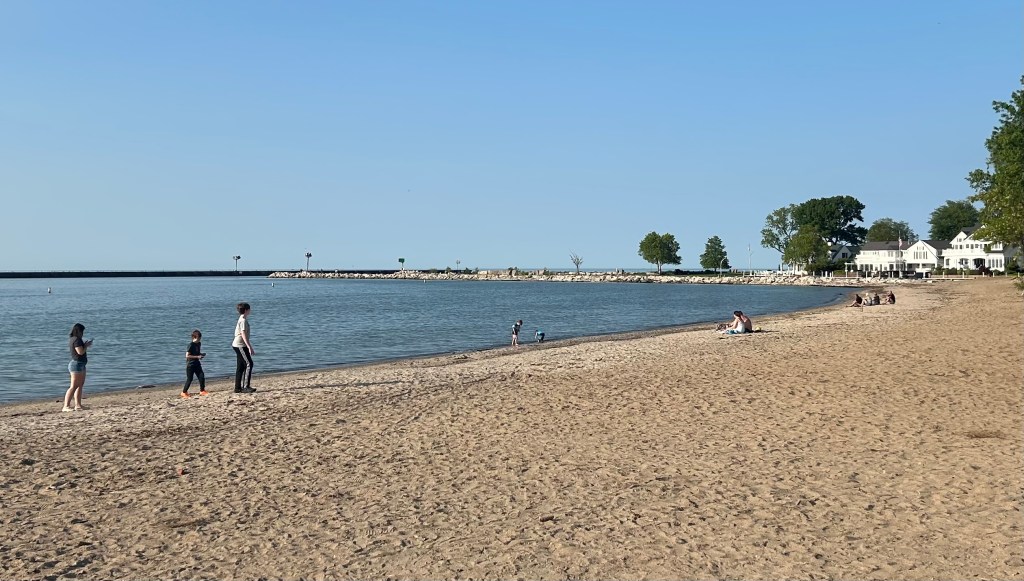
With Lorain County’s 35 miles of shoreline, May is one of the trickiest months for cold water safety concerns and for the entire 312 miles of Ohio’s Lake Erie coastline.
“That’s because in May we can have a very large difference between the air temperature and the Lake Erie water temperature,” according to Cleveland National Weather Service Meteorologist Nicholas Greenawalt.
That difference can be more than 30 degrees which can be a shock to the body and potentially lead to dangerous, or even deadly hypothermia, Greenawalt said.
“On May 6 of this year, the Lake Erie water temperature between Lorain and Cleveland, also known as the Central Basin, was a very cold 52 degrees,” he said.
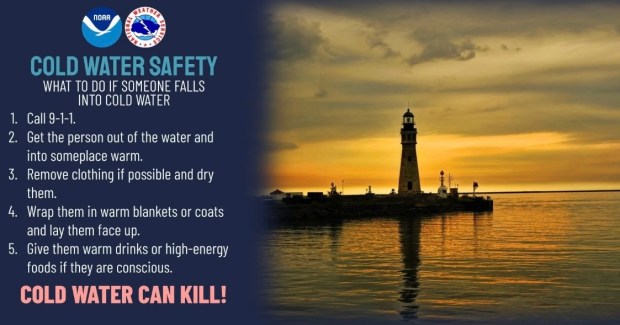 The Cleveland National Weather Service said May is one of the trickiest months for cold water safety concerns, and for the entire 312 miles of Ohio’s Lake Erie coastline. (Courtesy of Cleveland National Weather Service)
Greenawalt said air temperatures can climb into the upper 70s and into the 80s sometimes in mid-May when the water temperature still is only in the lower to mid-50s as it struggles to warm-up after winter.
This year, Lake Erie froze over for the first time since 2015, which means it’s taking longer for the lake to warm up, he said.
“People can be tempted to think it’s really warm outside, so maybe they’ll want to cool off with a swim in Lake Erie,” Greenawalt said. “But, if they go in the water, it’s very cold by comparison.”
Hypothermia can set in, in only 10 to 15 minutes when the lake temperature is in the 50s, he said.
Lorain’s half mile of Lakeview Beach is a big draw for residents and visitors, as are other scenic beaches like Huron’s Nickel Plate Beach, Main Street Beach in Vermilion and Veterans Memorial Park Beach in Avon Lake.
According to the Cleveland Clinic, hypothermia happens when your body temperature drops below 95 degrees. The average body temperature is between 97 and 99.
According to the American Heart Association, water below 60 degrees can trigger cold shock quickly and lead to drowning, hypothermia or even death.
Lake Erie water temperature still is under 60 degrees on average each Memorial Day.
Usually, Lake Erie above 70 degrees by July 4 and even a bit warmer in the shallow western basin of Lake Erie near Port Clinton.
By Labor Day, water temperatures can be 75 or higher on the southern most Great Lake.
According to Cleveland Clinic, common signs of hypothermia include shivering, pain and clumsiness.
Worsening symptoms are slurred speech, slow breathing and drowsiness.
Life threatening signs are little or no shivering, blue or gray skin, especially the lips and a very slow heart rate.
The Cleveland NWS recently posted to its Facebook page on how to help someone you believe might have hypothermia: Call 911, get the person out of the water into someplace warm, remove their wet clothing, wrap them in blankets, coats, lay them face-up and give them warm drinks.
The National Center for Cold Water Safety says to treat any water less than 70 degrees with caution and how much time to spend in the water, and that a water temperature of 70 and above is less strenuous on the body.