
An April freeze with record-breaking temperatures has left Pennsylvania fruit farmers facing devastating crop losses, ranging between $150 million to $200 million, with some orchards forced to close for the season. Governor Josh Shapiro visited Cherry Hill Orchards in Lancaster, Pennsylvania, where he shared how special orchards like this are to his family, recalling annual apple-picking trips and measuring his children’s growth. However, families visiting Cherry Hill and other orchards across the state may have a different experience this fall due to the impact of the freeze.Secretary of Agriculture Russell Redding described the situation as the worst losses farmers have faced in decades.”April 21st is really a day that will define the fruit industry in Pennsylvania for 2026,” Redding said.Temperatures as low as 24 degrees in April across the Susquehanna Valley have left farmers like Corey McCleaf, owner of Cherry Hill Orchards, without a harvest this year.”We will not have any apples this fall, so it won’t be till next fall till we harvest any apples. So that would be the first income that we can have coming in from this orchard,” McCleaf said.Blossoms on trees throughout the orchard that should be growing apples this fall remain bare, leaving farmers in need of urgent assistance. Governor Shapiro and Secretary Redding visited Lancaster as farmers hope for a disaster declaration to help them recover.”We’re going to fight to make sure that all of this gets done. The USDA disaster declaration, the direct support from the feds. The direct support, from the state. We’re going to work together, to get all this done,” Shapiro said.State leaders have already requested that some of the $75 million in funding from the High Path Avian Influenza Fund be redirected to fruit farmers. However, the recovery timelines for poultry farmers and fruit farmers differ significantly.”How do you build that bridge between the moment you’re in and the better day?” Redding said.He added, “And I think all of that is transferable here. Maintenance costs, bank and finance concerns and then labor.”Senator James Malone highlighted the broader impact of the losses on local communities.”Whether you’re, you know, going out to pick a crop or you’re looking at supporting a local food bank. Whether you’re, looking at, you know, your preferred PA wines, any of this area, it gets an impact,” Malone said.Farmers compared the current situation to the plum pox outbreak in 2000, which was the last time they experienced devastation of this magnitude. While the timeline and amount of assistance remain uncertain, state leaders assured farmers they are working with the federal government to expedite aid.
LANCASTER COUNTY, Pa. —
An April freeze with record-breaking temperatures has left Pennsylvania fruit farmers facing devastating crop losses, ranging between $150 million to $200 million, with some orchards forced to close for the season.
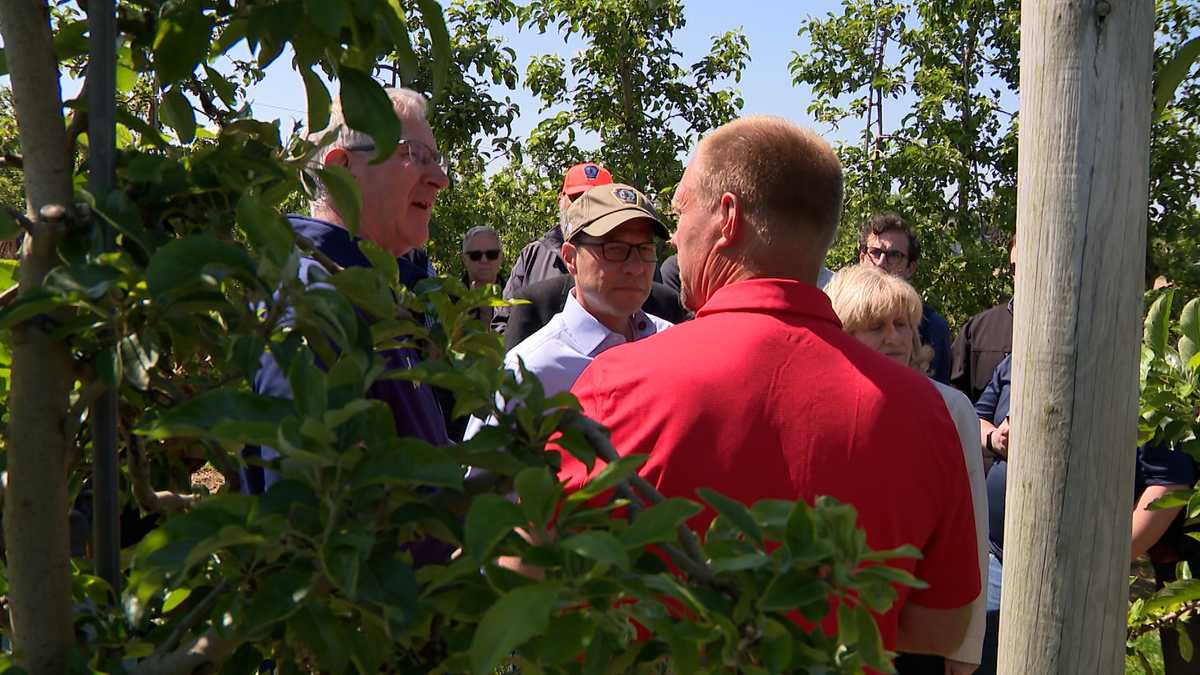
Governor Josh Shapiro visited Cherry Hill Orchards in Lancaster, Pennsylvania, where he shared how special orchards like this are to his family, recalling annual apple-picking trips and measuring his children’s growth. However, families visiting Cherry Hill and other orchards across the state may have a different experience this fall due to the impact of the freeze.
Secretary of Agriculture Russell Redding described the situation as the worst losses farmers have faced in decades.
“April 21st is really a day that will define the fruit industry in Pennsylvania for 2026,” Redding said.
Temperatures as low as 24 degrees in April across the Susquehanna Valley have left farmers like Corey McCleaf, owner of Cherry Hill Orchards, without a harvest this year.
“We will not have any apples this fall, so it won’t be till next fall till we harvest any apples. So that would be the first income that we can have coming in from this orchard,” McCleaf said.
Blossoms on trees throughout the orchard that should be growing apples this fall remain bare, leaving farmers in need of urgent assistance. Governor Shapiro and Secretary Redding visited Lancaster as farmers hope for a disaster declaration to help them recover.
“We’re going to fight to make sure that all of this gets done. The USDA disaster declaration, the direct support from the feds. The direct support, from the state. We’re going to work together, to get all this done,” Shapiro said.
State leaders have already requested that some of the $75 million in funding from the High Path Avian Influenza Fund be redirected to fruit farmers. However, the recovery timelines for poultry farmers and fruit farmers differ significantly.
“How do you build that bridge between the moment you’re in and the better day?” Redding said.
He added, “And I think all of that is transferable here. Maintenance costs, bank and finance concerns and then labor.”
Senator James Malone highlighted the broader impact of the losses on local communities.
“Whether you’re, you know, going out to pick a crop or you’re looking at supporting a local food bank. Whether you’re, looking at, you know, your preferred PA wines, any of this area, it gets an impact,” Malone said.
Farmers compared the current situation to the plum pox outbreak in 2000, which was the last time they experienced devastation of this magnitude. While the timeline and amount of assistance remain uncertain, state leaders assured farmers they are working with the federal government to expedite aid.