
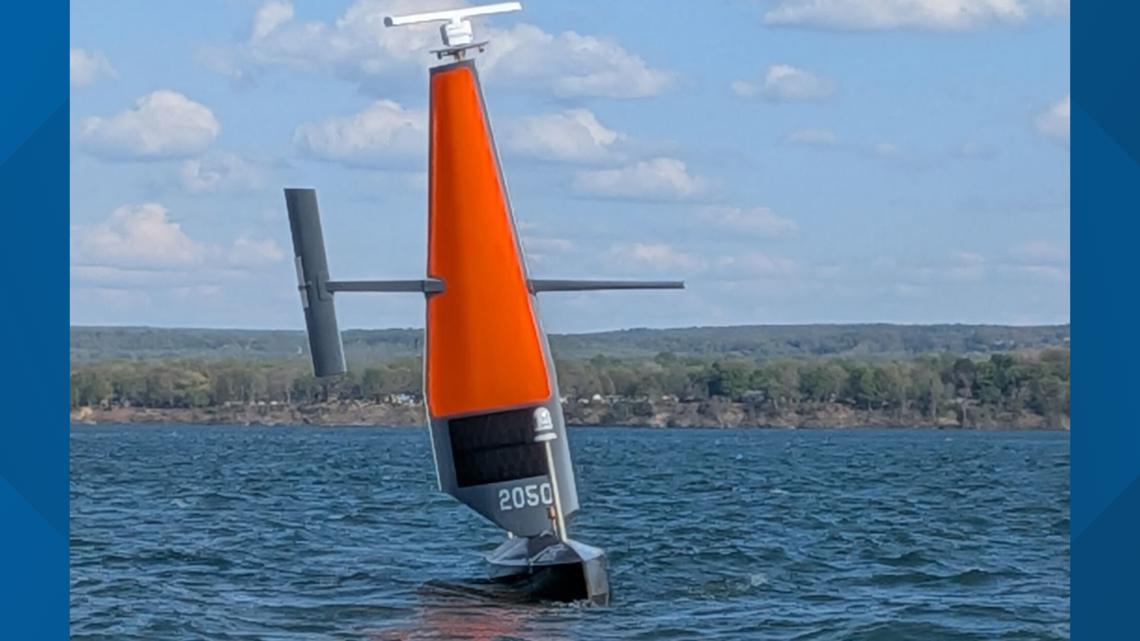
Autonomous Saildrones now patrol Lake Erie, enhancing Coast Guard surveillance over vast waters to improve border security, with technology once unimaginable.
CLEVELAND — Out on Lake Erie, something new is on the water.
Not boats. Not a new species of marine life. Instead, autonomous saildrones, which glide across nearly 10,000 square miles of open lake and quietly reshape how the Coast Guard watches what happens far from shore.
“Erie is one of the smaller of the Great Lakes. and it doesn’t take too much to transit across,” said Anthony Popiel, UAS program coordinator for the Great Lakes Coast Guard District.

This story continues below.
It is that openness, he said, that has always made the lake feel bigger than what crews can fully cover.
“This is really work that we haven’t been doing before, so our crews are pretty much consumed with conducting search and rescue,” Popiel said. “They’re doing harbor and port security through critical facilities or monitoring marine events. So, we don’t always get a chance to keep an eye farther out onto the lakes.”
So now, the U.S. Coast Guard is not stretching its crews thinner. It is pushing its vision farther out.
Six saildrones are moving across Lake Erie — part vessel, part sensor array, part floating set of eyes — scanning the surface with radar, cameras and onboard systems designed to notice what humans might miss.
“This should help shed a little bit of light on ‘what are are not seeing,”’ Popiel said.
The mission is funded through President Donald Trump’s Big Beautiful Bill.
While the drones move on their own, they are never truly alone. Every mile they cover is watched from shore, with human operators standing by ready to take control if needed.
If you spot one out on the lake, officials say the message is simple: Let it pass, let it work.
Each drone can remain on the water for up to 100 days at a time, continuously gathering data as it moves across Lake Erie.
Popiel, who has spent more than three decades with the Coast Guard, said the change feels less like a surprise and more like a shift in how the job itself is defined.
“It’s just that’s probably what they thought about going to the moon in the 1960s, right?'” Popiel said. “‘Oh, it’ll never happen,’ but, you know, here we are.”
He added that the goal is not to step back from the lake, but to finally see more of it at once.
“I think that the Coast Guard is just trying to elevate its game and monitoring border security, border integrity, and just maintaining the level of security that the country expects and the country deserves,” Popiel said.
For now, Lake Erie isn’t just being patrolled. It’s being translated into something that can finally be watched in full motion.
This initial mission will wrap up in October 2026.