
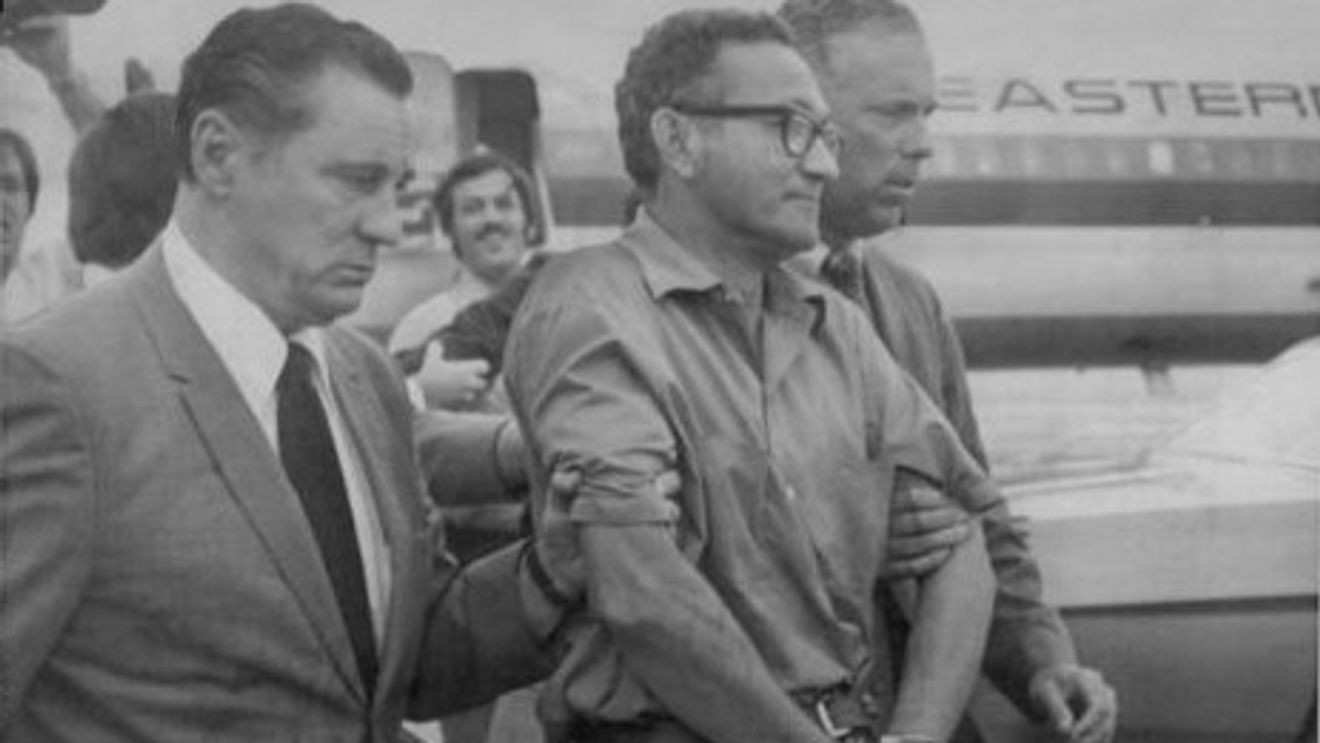
More than 50 years ago, a routine flight out of the Lehigh Valley turned into what is believed to be Pennsylvania’s first airplane hijacking—an incident that unfolded across multiple states and ended with a dramatic escape in Central America.
On May 5, 1972, 49-year-old Frederick W. Hahneman, an engineer from Easton, boarded Eastern Air Lines Flight 175 at what is now Lehigh Valley International Airport. At the time, airport security did not include metal detectors, allowing him to bring a handgun onto the plane undetected.
Shortly after takeoff, Hahneman pulled the weapon and took control of the aircraft, threatening the crew and demanding $303,000 in cash along with parachutes, tools, food, and cigarettes. The flight, which had been scheduled to travel to Miami with a stop in Washington, D.C., was instead diverted to Dulles International Airport.
As the plane circled the Washington area for nearly an hour, airline officials scrambled to meet the demands. Hundreds of people on the ground reportedly watched as the hijacked jet made repeated low passes over the city.
Once his demands were partially met, Hahneman allowed passengers to leave the plane, keeping only the crew. Dissatisfied with the cash provided, he forced the aircraft to land again to exchange the money for larger bills before continuing the flight.
The plane later diverted to New Orleans due to a mechanical issue, where Hahneman demanded a second aircraft. He used the crew as leverage while transferring planes, even placing a noose around the pilot’s neck at one point, according to investigators.
In the early hours of May 6, over Honduras—his country of birth—Hahneman ordered the aircraft to slow, opened the rear stairs, and parachuted into the darkness with the ransom money, an act reminiscent of the infamous D.B. Cooper hijacking months earlier.
What followed was a nearly month-long manhunt involving both the FBI and Honduran authorities. A $25,000 reward was offered for information leading to his capture. Hahneman ultimately surrendered at the U.S. Embassy in Tegucigalpa on June 2.
He later pleaded guilty to air piracy, kidnapping, and extortion, and was sentenced to life in prison. Despite initially claiming the ransom money had been deposited overseas, federal officials later announced the funds had been recovered, though details were never publicly disclosed.
Hahneman was paroled in 1984 after serving about 12 years and died in California in 1991. His motive for the hijacking was never fully explained.
The incident occurred during a period when aircraft hijackings were becoming increasingly common worldwide. In 1971 alone, there were more than two dozen attempted hijackings in the United States.
For Pennsylvania, however, the May 1972 incident remains a singular and dramatic chapter in aviation history—one that began locally but captured national and international attention.