
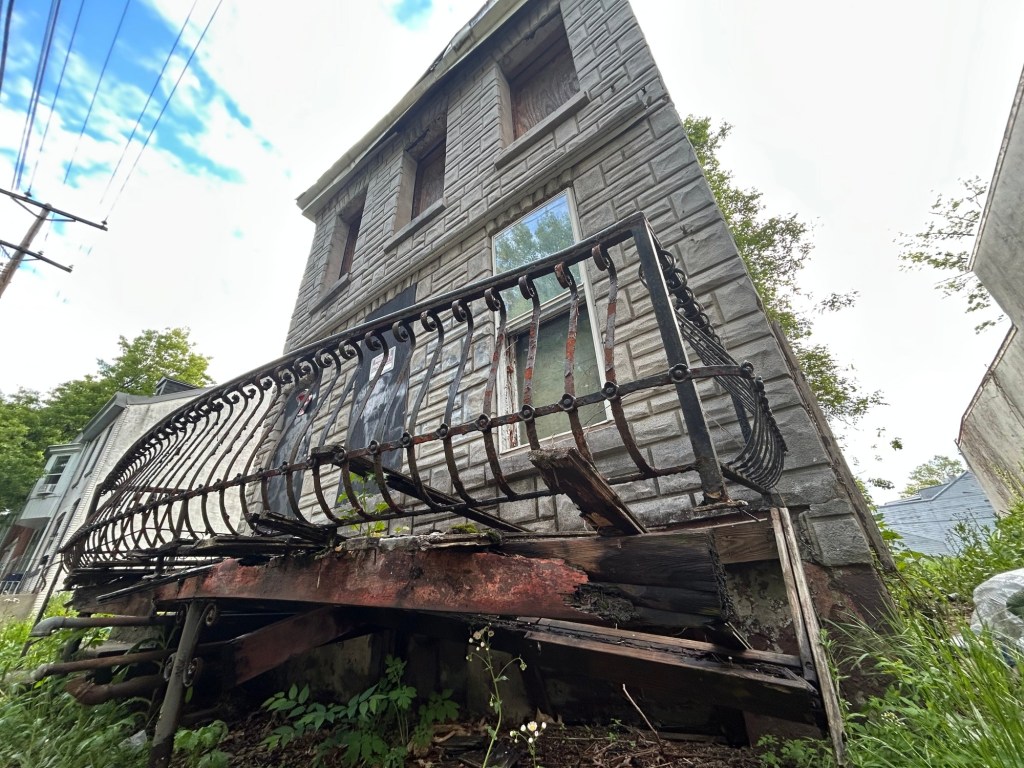
City residents must take primary responsibility for the conditions of their properties and neighborhoods, Reading’s community development director says.
“Your constituents have the primary responsibility for picking up trash, pulling their weeds, maintaining their properties, having pride in their homes and in their neighborhoods,” Community Development Director David Barr told City Council.
His message was part of an update on code enforcement presented Monday during council’s committee of the whole meeting.
As part of the report, Barr and Rudy Estrada, property maintenance division manager, outlined the progress and challenges of addressing codes and quality-of-life issues in the city over the past nine months.
Municipal action alone cannot resolve the problems, Barr said, noting the primary responsibility for property upkeep and maintenance rests with the occupants or owner.
“We can’t solve this problem ourselves,” he said. “We need the citizens of Reading and property owners to do their part.”
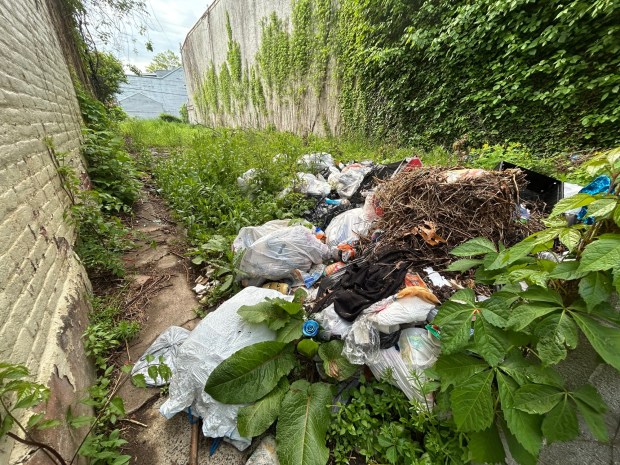 Blighted properties include vacant lots with high weeds and trash like this one at 551 S. Sixth St. (Bill Uhrich – Reading Eagle)
The city is also doing its part, he stressed, by stepping up enforcement by the property maintenance division.
Barr said city code inspectors completed 3,793 inspections in 2025, more than double the previous year’s total of 1,601.
Citations also rose sharply, he noted. The city issued 860 citations in 2025 compared to 254 in 2024. Barr attributed the increase to a more proactive enforcement strategy and staffing improvements.
Much of the recent progress, he said, followed the filling of long-standing vacancies in the department. However, Barr noted, the city is again down several inspectors and is working to restore staffing levels.
Beyond the numbers, Barr said his department has implemented recommendations from the city’s 2019 blight plan, including organizing inspectors into geographic districts, conducting targeted sweeps and expanding pre-sale inspections, 313 of which were conducted in 2025.
Estrada walked council through the citation process, emphasizing that enforcement is designed to secure compliance rather than penalize.
The department first notifies property owners of violations and allows time to fix the issues, Estrada said. The city only issues a citation when there is no response or the owner fails to comply, he said.
“Our purpose for citations is for nonresponsive constituents,” Estrada said. “Not just because we want to write a citation to anyone who legitimately tries to do the work.”
Citations can be issued for violations of the property maintenance code, housing ordinance and quality-of-life regulations, he noted.
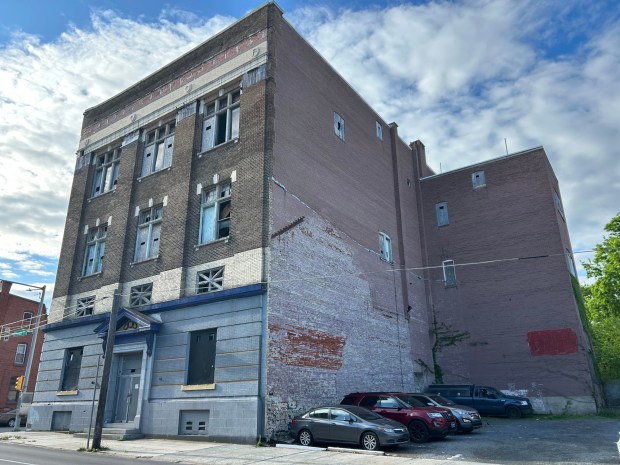 City officials say serving citations can be slowed, particularly when property owners do not live in Berks County or operate through limited liability companies. This blighted property at 740-744 Franklin St. is owned by a Wilkes Barre company. (Bill Uhrich – Reading Eagle)
Once issued, citations are filed through local district courts, where outcomes can vary from fines and compliance agreements to default judgments when property owners fail to appear.
In some cases, Estrada noted, unresolved violations result in liens placed on properties.
However, he said, the process is often slowed by difficulties in serving citations, particularly when property owners do not live in Berks County or operate through limited liability companies, making it harder to identify responsible parties.
Despite increased enforcement, officials acknowledged ongoing challenges, especially with repeat offenders and deteriorated properties that linger for years.
Barr pointed to the city’s blighted property review list as a key tool for addressing the most severe cases. Property owners who fail to respond to repeated enforcement actions can face legal action or acquisition through the redevelopment authority.
Illegal dumping remains the most common violation, Estrada said, followed by high weeds and grass during warmer months.
The problem is particularly acute in the city’s most densely populated areas, including Districts 2 and 3, he said.
Officials said enforcement is only part of the solution. Community reporting, camera surveillance and potential partnerships, such as tip-based programs through crime alert systems, can also help identify offenders.
Council members largely praised the department’s increased activity but asked for further discussion about enforcement strategies, particularly for repeat offenders and chronic problem properties.
Some council members raised the need for stronger enforcement or legislative changes, while others emphasized education and community outreach.
Estrada said the department continues outreach efforts through inspections, printed materials, social media and use of the city’s 311 system to remind residents of year-round maintenance responsibilities.
Barr pushed back on the idea that awareness alone will solve the issue.
“I don’t think this is an educational issue. I think this is a pride issue,” he said, recalling his youth when residents of many Reading neighborhoods maintained their properties despite limited means. “It’s about pride, and I don’t think that’s the city’s responsibility. I think we need to create a culture where people are proud of their neighborhoods. They’re proud of their homes.”