
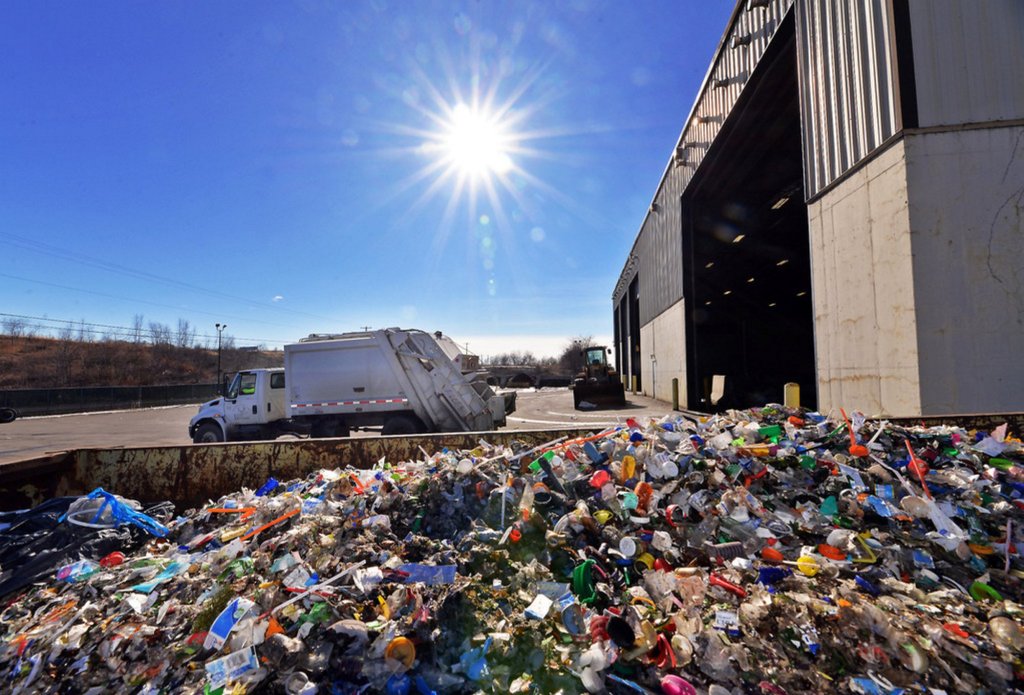
In a significant step advancing a 12-year-long litigation against Lackawanna Recycling Center Inc. and Lackawanna County, a judge determined the lawsuit can proceed as a class action by people jailed for failing to pay child support and who claimed they were coerced to work at the facility in Scranton for $5 a day.
A 66-page ruling issued Wednesday by U.S. District Judge Robert Mariani opens the potential pool of class-member plaintiffs to about 1,760 people, under four different categories of law and periods of time.
The litigation has had three initial plaintiffs — William Burrell, Dampsey Stuckey and Joshua Huzzard — challenging a policy that required anyone jailed for failing to pay child support to work at the recycling center on Boulevard Avenue for $5 a day before they could qualify for the prison’s work release program.
Recent proceedings had Burrell dismissed as an individual plaintiff in January and Stuckey dismissed under last Wednesday’s certification ruling, both for different legal reasons. That leaves Huzzard as the lead plaintiff in the lawsuit that now enters a new phase as a class action.
The lawsuit, which seeks retroactive pay for child support debtors, alleges, in part, that the county’s policy equated to forced labor and violated the Fair Labor Standards Act, which among other things sets the minimum wage employers must pay workers.
Burrell initially filed the suit himself in 2014. Attorneys with Towards Justice, a Colorado-based worker’s rights group, filed an amended complaint in 2019 that named as defendants the county, the Lackawanna County Solid Waste Management Authority and Lackawanna Recycling Center Inc., a private company owned by Louis and Dominic DeNaples that operates the center.
The work program at the recycling center was shut down in 2020 because of the COVID-19 pandemic.
Mariani dismissed the lawsuit in 2021 but the 3rd Circuit Court of Appeals reinstated it in 2023, when it essentially started anew.
Plaintiffs allege they “worked at the center because it was the only way they could qualify for work release, without which they could not pay their child support debt and regain their freedom. For just five dollars per day, approximately sixty-two-and-a-half cents per hour, they separated trash and recyclables on conveyor belts, frequently breaking out in skin rashes, suffering wounds from sharp pieces of glass, and vomiting from the stench of their abhorrent working conditions, which includes working in 100 degrees Fahrenheit … the Center provides them with unsanitary toilets that have been out of order and uncleaned for months to relieve themselves and takes away their food as punishment for working too slowly,” according to Mariani’s order.
Huzzard had testified: “I just want to make sure that everybody that’s in the class gets what they deserve and that it never happens again to anybody else.”
In May 2024, Mariani conditionally certified the case as a Fair Labor Standards Act case, which was a step that preserved the right to raise wage and hour claims under federal law.
The failure to pay child support cases were civil matters, not criminal cases. The class members will include those whose incarceration at the Lackawanna County Prison was based “only on the inmate’s status as a child support debtor and who worked at the Lackawanna County Recycling Center,” in four categories of classes and time periods, as follows:
• Trafficking Victims Protection Reauthorization Act class (TVPA): Over 590 people who worked at the center after Dec. 6, 2009.
• Racketeer Influenced and Corrupt Organizations Act class (RICO): Over 260 people who worked at the center after Dec. 6, 2015.
• Unjust Enrichment class: Over 260 people who worked at the center after Dec. 6, 2015.
• Pennsylvania Minimum Wage Act class (PMWA): About 650 people who worked at the center at the “entry of the May 3, 2006 Operating Agreement between Lackawanna Recycling Center Inc. and the solid waste authority.”
The total amount of money in question remains undetermined. Plaintiffs intend to use “attendance sheets, pay records and dates of confinement records sufficient to estimate the approximate number of days, and thereby hours, worked by each class member” to estimate the wages owed to each class member by multiplying the hours worked by the minimum wage and subtracting out the $5 per day that defendants paid.
Potential class members now will have to be notified of the lawsuit and informed of how to join the case, if they wish to do so. Mariani’s order requires attorneys for plaintiffs and defendants to meet within 14 days to discuss creation and dissemination of a proposed notice of the class action to putative members.
The decision also approves Towards Justice, the nonprofit Community Justice Project based in Harrisburg and the Handley Farah & Anderson law firm of Washington, D.C., as attorneys representing the class-action plaintiffs.
Efforts were unsuccessful Monday to reach attorneys representing the recycling center and the county.