
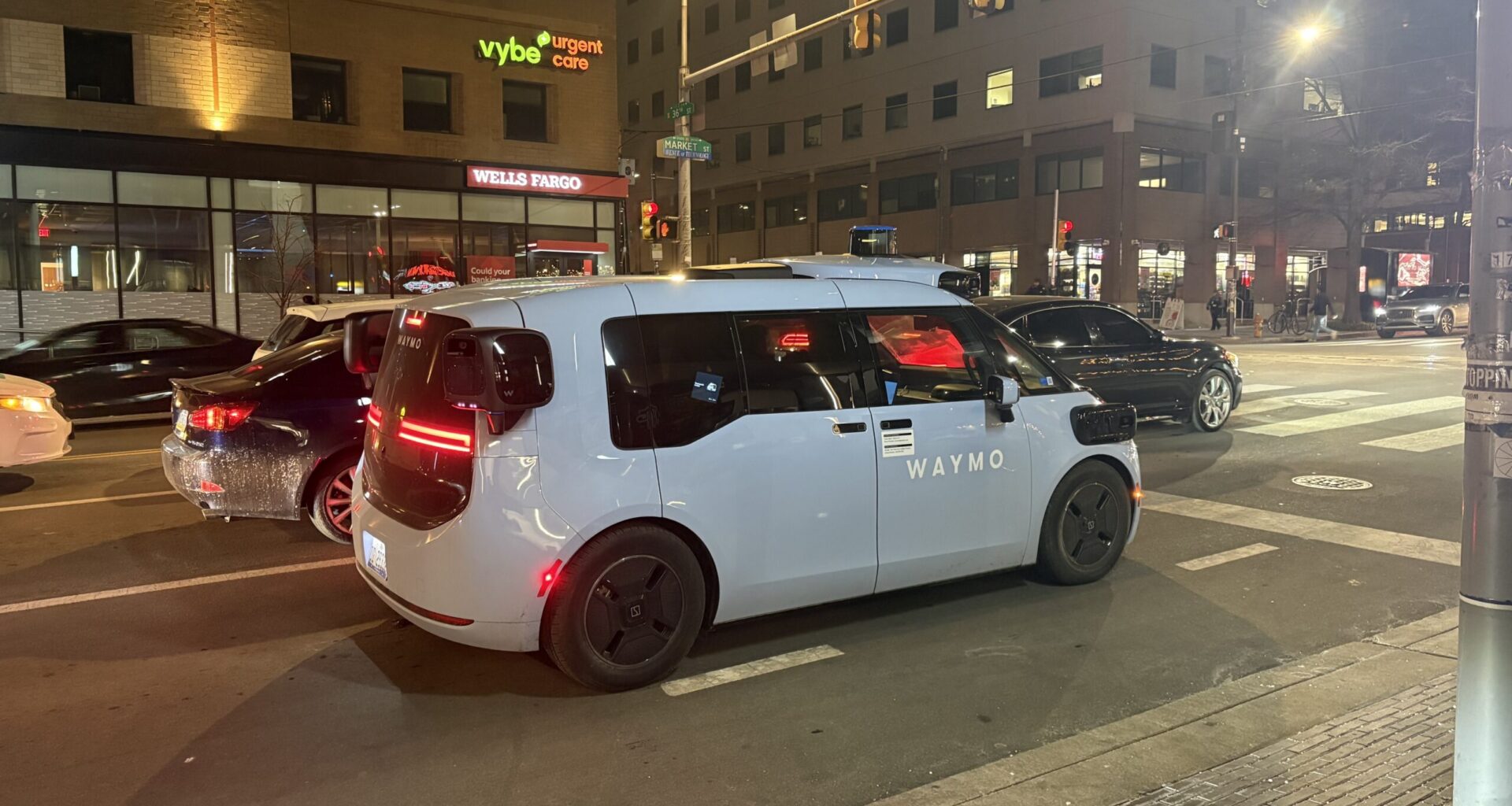
Waymo may trust cars without drivers. But after the company skipped a City Council hearing, Philadelphia officials are having a hard time trusting Waymo.
“Relitigating this decision in the City Council ignores the law and the opportunity fully autonomous vehicles will bring to Philadelphia.”
a waymo spokesperson
City Council’s Joint Committee on Labor and Civil Service and the Committee on Transportation and Public Utilities hosted a session today, an opportunity for the self-driving car company to testify and answer questions.
Despite several tech and transportation experts on the panel, without a corporate representative, many of the council’s questions about Waymo’s deployment and technology went unanswered.
“As Waymo begins pilot activity here, it’s important that we examine the impact of emerging technology before it becomes fully operational on our streets,” Councilmember Jim Harrity said. “While it would have been more beneficial to have them available for questions, they have submitted written testimony for our consideration.”
Waymo first came to Philly last summer to gather data about the city’s roads and driving conditions. At the time, the vehicles were only being operated by humans. Residents told Technical.ly they had mixed feelings about autonomous vehicles in Philly. Some seemed curious, but others didn’t think the cars could handle Philly’s driving culture.
Throughout the hearing, councilmembers emphasized the need for regulations around autonomous vehicles, guidelines for reporting traffic incidents and concerns about possible impact on transportation workers.
City officials and local academics who testified shared similar concerns, though they could not offer definitive answers without a Waymo official present. While Waymo’s written testimony addressed some of these topics, it was not read aloud at the hearing and has not been published online.
In a statement to Technical.ly, the tech company referenced Pennsylvania’s 2022 law that allowed autonomous vehicles on the roads and a 2024 update that allowed those vehicles to operate without a safety driver.
“Relitigating this decision in the City Council ignores the law and the opportunity fully autonomous vehicles will bring to Philadelphia,” a Waymo spokesperson said.
The tech company announced in December that it would be fully launching in Philadelphia.
“Waymo plans to invest tens of millions of dollars in local infrastructure and family-sustaining jobs to support the Philadelphia service,” the spokesperson added.
City oversight remains limited
Members of the city government, technology experts, representatives from local unions, active rideshare drivers and the general public all shared their thoughts about autonomous vehicles in Philly during the hearing.
Since receiving a permit to start testing its vehicles in Philadelphia last summer, Waymo has mostly been in touch with the Pennsylvania Department of Transportation, Anna Kelly, a senior policy advisor for the city’s Office of Transportation and Infrastructure Systems (OTIS), said at the hearing.
Staff from OTIS and the Department of Commerce have met with Waymo representatives a few times to request information about the company’s plans in Philly and to discuss training resources for the city. Ultimately, the city government has very little control of the company’s rollout in Philadelphia, she said.
The limited city control left many at the hearing focused on what Waymo’s rollout could mean for people on the ground.
Rideshare drivers said that Waymo’s arrival in Philadelphia could put their livelihoods at risk. During the public comment period, members of the public expressed concerns about accommodations for people with disabilities, disinvestment in public transportation and the vehicles’ abilities to navigate Philly’s streets.
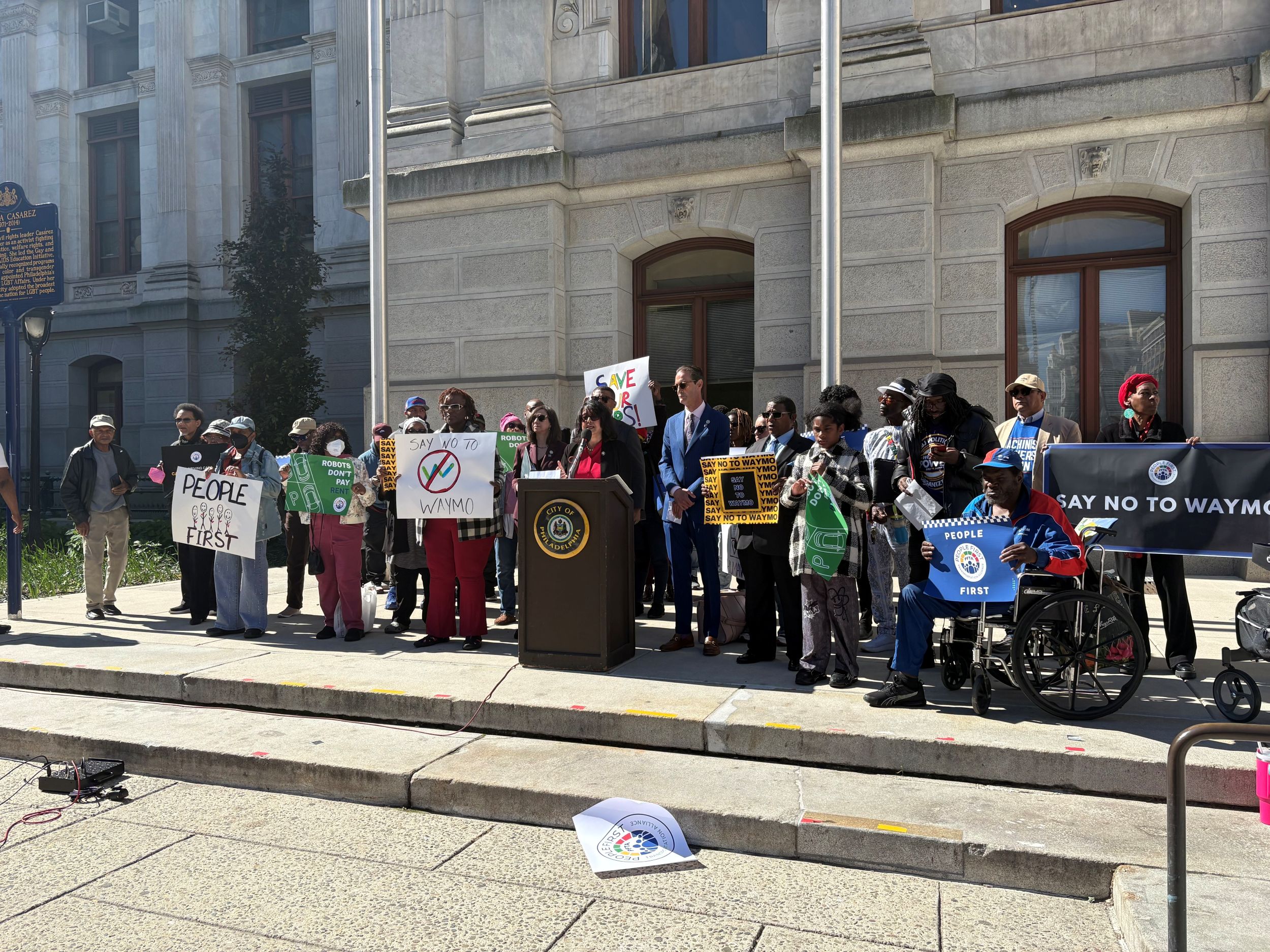 City councilmembers hosted a press conference and hearing about Waymo’s impact on the city. (Sarah Huffman/Technical.ly)
Moving forward, City Council should consider how current driving safety laws and regulations may need to be updated to include driverless vehicles, Matthew Stamm, an associate professor of electrical and computer engineering at Drexel University, said. The city should ask questions about how Waymo stores and uses the data it collects.
The city should also consider independent audits of Waymo’s cybersecurity and overall safety practices, Sorelle Friedler, a computer science professor at Haverford University, said.
“You want to be able to effectively do the safety analyses,” Friedler said, “that you care about right now.”
Updated at 4 p.m. to include comment from Waymo.