
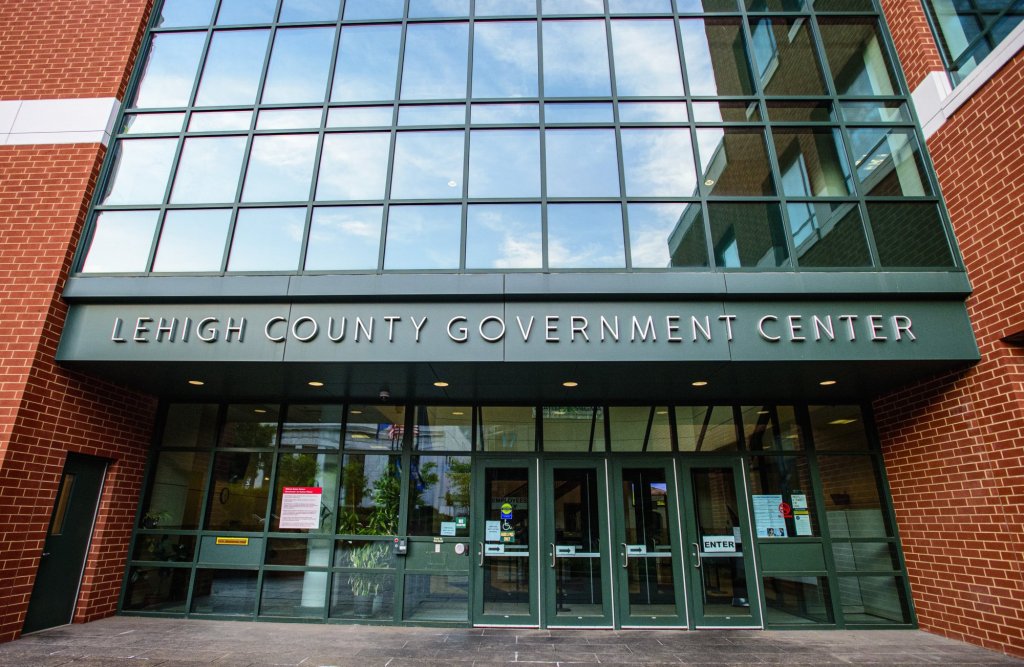
The Lehigh County commissioners will hold a public hearing June 17 on a proposed “wealth tax” that proponents say could generate more than $25.5 million annually by taxing Lehigh County residents who own stocks, bonds and other assets.
In a report circulated earlier this month, County Controller Mark Pinsley proposed a flat four per mill tax — 0.4 percent, or $4 per $1,000 of asset value — on selected intangible financial assets. Without new revenue or cuts, Pinsley claimed, Lehigh County could be forced to increase property taxes as much as to 21% in the next budget cycle.
“Years of structural deficits have drained the stabilization fund,” Pinsley said. “If that gap is closed through property taxes alone, working families will carry the burden.”
Lehigh County Executive Josh Siegel said he supports the tax.
“Reckless and dangerous funding cuts to finance tax cuts for the wealthy by Donald Trump and years of severe underfunding of the state have put counties around the commonwealth on a collision course with fiscal catastrophe,” Siegel said.
By Pinsley’s calculations, households earning more than $200,000 would pay at least 91% of the projected revenue, while households bringing home less than $100,000 would account for less than 4%. Primary homes, retirement accounts such as 401(k) plans and IRAs; owner-operated small businesses would not be included under the proposal.
However, implementing such a tax would likely face significant hurdles. Pinsley’s proposal cites the state’s 1913 Intangible Personal Property Tax Law as a legal basis. While that law remains on the books, state Supreme Court rulings in 1998 and 2000 found that part of the law — a provision exempting stock held in Pennsylvania corporations — violated the state constitution’s uniformity clause. No county has collected the tax since 1998.
Pinsley’s proposal drew mixed reaction from county commissioners at their meeting Wednesday night.
“It is my understanding that county intangible personal property taxes as defined in the statute referenced were deemed unconstitutional in the commonwealth by the courts in the late 1990s, early 2000s, and the statute is now obsolete,” said Commissioner Antonio Pineda. “Certainly, any county that would pursue implementing such a tax would face litigation that would result in substantial legal costs to taxpayers.”
Commissioner Ron Beitler said he was worried about the affect the tax would have on small business owners, and said he believed that it was unfair to families who save and invest instead of overspending and running up credit card debt.
“If enacted, this would place a new and significant tax burden on small businesses, savers and working families across Lehigh County. It penalizes people for working toward financial stability. It’s stymies upward mobility. It penalizes folks who work hard and do the right thing,” Beitler said.
Commissioner Jon Irons said the money generated from a tax could create affordable housing, help alleviate homelessness and provide mental health services.
“It makes sense to generate that revenue from some of the wealthiest among us in Lehigh County, Irons said. “We have a very real opportunity to provide shelter and housing services. The level of revenue that we’re projecting here opens up the possibility of addressing these problems in really meaningful ways, with sustainable revenue.”
In his report, Pinsley cited 2023 statistics that showed that Lehigh County households held a combined $148 billion in wealth, with the top income bracket — households earning $200,000 or more — holding approximately 69% of that wealth, about 2 times more than all other income brackets combined.
The June 17 hearing will feature a Q&A with financial experts as well as public comment. Pinsley is asking the commissioners to create a working group to evaluate the proposed tax, seek advice from tax attorneys and develop a detailed multi-year revenue forecast covering operating needs, Medicaid exposure and infrastructure costs.
Pinsley is running against fellow Democrat Bradley Merkl-Gump for the Democratic nomination in the race for a chance to unseat Sen. Jarret Coleman in Pennsylvania’s 16th Senate district. Merkl-Gump did not respond to an email about Pinsley’s proposal.