
Who’s winning?
Although the winner of the May 19 Democratic primary will almost certainly succeed Evans, observers have little to go by when judging whose message is most resonant.
“There’s no independent polling that’s been done,” Rashed said.
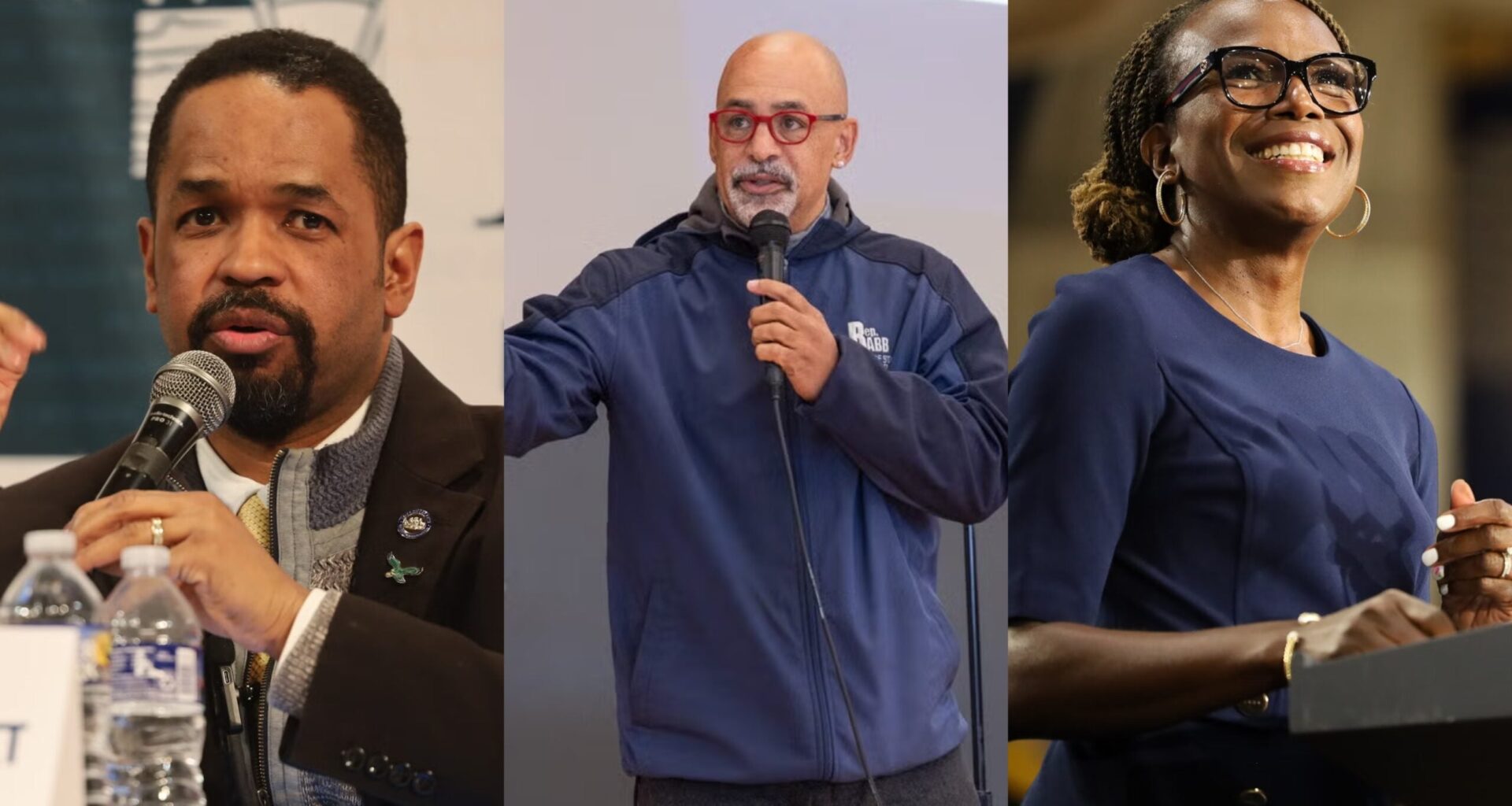
Instead, fundraising and endorsements have shaped the perception that Rabb, Stanford and Street are the leading candidates. For example, a fourth candidate, local lawyer Shaun Griffith, was not invited to participate in WHYY’s debate based on his fundraising totals.
“People just assume that these were the front runners just based on a media narrative, fundraising and endorsements and nothing objective,” he said.
That also probably had an impact on the race, he said, noting that other candidates such as Morgan Cephas might not have dropped out if polling showed they had a chance.
Street has significant Democratic institutional support, including endorsements from the city party and the 27th Ward, along with years of legislative experience. However, Rashed thinks that’s not enough to help in the primary election.
“Your average person who’s buying groceries and looking at the cost of gas in North Philadelphia or Southwest Philadelphia doesn’t know why that’s important,” he said.
Stanford has benefited from millions in outside spending that put her on TV weeks before her rivals. However, Rashad said that there are diminishing marginal returns on that strategy.
“Historically, money on the front end has not been enough to win a race on the back end if that money doesn’t translate into a ground game operation on Election Day,” he said.
Rabb has leaned on grassroots organizing, with progressive groups mobilizing volunteers to knock on doors and campaign across the district.
“When we endorse a candidate, it is not just a paper endorsement,” Rose said. “We’ve knocked on many thousands of doors already.”
Rashed points out that the size of a congressional district makes it impossible to canvass a win. Still, the progressive wing of the party might be doing more on the funding front, helping Rabb raise more than $200,000 in April, about twice as much as either Street or Stanford, leaving him with the most in the bank in the final stretch of the race.
By the start of this month, he and Street raised a total of around $1 million each, while Stanford came in just over $750,000.
Still, without reliable polling, the race remains difficult to predict.
“We’re going to find out on Tuesday,” Rashed said.