
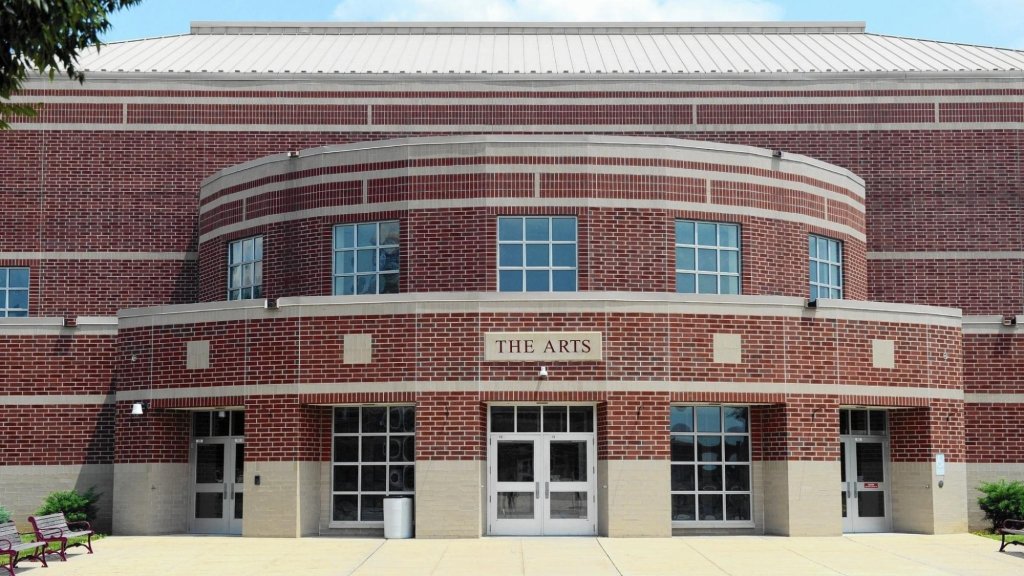
Parkland School District residents have been pushing for months for the district to take concrete action to oppose the proposed Project Atlas data center campus that would be located directly across the street from Parkland High School.
At a school board meeting this week, Superintendent Mark Madson updated the board and the public on the actions that have been taken so far to communicate concerns to the developer, local municipal authorities and the relevant water and utility managers.
The most concrete action so far is a letter Madson wrote and delivered to South Whitehall Township officials, the developer of the proposed data center campus, the water authority and PPL Electric Utilities documenting the district’s concerns. He told the public that his presentation, delivered during the school board’s workshop meeting Tuesday, summarized those concerns but that the letter, sent May 5, provided more detail.
The Morning Call requested a copy of the letter, but it was not immediately provided.
Madson and board members have emphasized that the district does not have a vote on whether or not the data center proposal is allowed to proceed. Madson said Tuesday that he’s been in close contact with South Whitehall Township officials, and that those officials had offered to send township representation to the school board meeting to discuss the proposal, which calls for five data center buildings within the township’s planned innovation, research and technology overlay district..
Madson said he told township officials he did not believe that was necessary for Tuesday, and he said he will continue to stay in touch with the township as its officials continue to review the developer’s plans.
Parkland School Board President David Hein echoed Madson’s remarks, saying the board has heard from experts that have presented context on data center-related issues. Concerns surfaced by Madson, board members and the public include noise pollution, air pollution from backup diesel generators, road safety, water usage for the data center’s chilling systems, and the storage of hazardous materials on a site located across from a high school.
Multiple speakers during public comment at Tuesday’s full board meeting said their concerns are primarily related to what it means to have a data center directly across from a high school, acknowledging that other local residents had presented comments in favor of the role a data center could play in the region’s overall economic development.
Scale of data center proposal
In his presentation, Madson emphasized the sheer scale of the proposed data center but also noted that the township is in talks with the developer, and plans related to the scope and size of the project are not yet final.
The proposal currently being debated at the township level is massive. It would cover approximately 400 acres, involve six buildings totaling more than 5 million square feet and would require the construction of a dedicated electric substation that would be located directly across from the high school and would be capable of producing 300 to 400 megawatts of power.
The sheer scale of the proposed data center campus would be equivalent to 10 times the current footprint of Parkland High School and would equate to 88 football fields, Madson said, noting that he drew his assessments of the current data center plans from South Whitehall Township’s publicly available updates on the developer’s proposals.
The township has adopted a “zoning overlay” that would require the data center developer to take steps to reduce the maximum level of noise and vibration allowed at the site, as well as increasing the requirements for roof screens, setbacks, planted buffers and a pedestrian path.
Parkland School Board Vice President Chris Pirrotta said requirements do not equate to enforcement, and specifically wondered whether a rich data center client would be willing to pay “easy fines” without making the changes necessary to actually reduce noise or air pollution from the site.
Backup power plans to ensure continuous service for data center clients currently include 356 diesel generators. The proposal also currently includes 1,056 rooftop chillers.
There has been discussion of closed-loop cooling that would mitigate the impact on local water systems, which are under strain due to persistent drought conditions, but that potential change to initial proposals has also not been finalized, Madson said.
Madson said he is not an expert on the science involved but that his consultations with scientific experts and residents have left him concerned that noise and vibration levels are a significant concern for the future well-being of students.
Madson also highlighted that the tenant of the proposed data center is not yet known and that nondisclosure agreements between developers and data center tenants often obscure who a tenant will be in a manner that “prevents a full vetting of safety and environmental risks” as municipal authorities reveal plans and assess risks.
Here’s a look at the presentation Madson reviewed Tuesday:
As of Wednesday morning, these slides had not been published to the district’s Board Docs page that documents meeting agendas and minutes. A printed copy was provided to The Morning Call during the workshop meeting Tuesday, and the slides were shared with The Morning Call during the meeting. Residents who offered public comment during the full board meeting, which began at 7 p.m., immediately following the 6 p.m. workshop, expressed a desire to hear more about actions the board has taken, and board members and district staff directed the public to the Board Docs page, saying they could check the livestream of the workshop meeting, in which the presentation is shown.
Many local school districts follow a similar strategy to Parkland, in that substantive discussions often occur during workshop meetings, while full board meetings are generally reserved for votes and other official board actions. Both workshop and full board meetings are public, and public comment is a part of both agendas. However, attendance tends to be higher during full board meetings, which are better known to the public as a place where residents’ concerns can be presented.
South Whitehall Township resident Karen Lowery was among those who offered public comment during Tuesday’s full board meeting. Lowery said she is a parent of three Parkland School District students, one of whom plays lacrosse on the fields that are directly across from the proposed data center campus.
“Those fields are an extension of our community,” Lowery said, expressing deep concerns about the impact Project Atlas could have on the high school and on district families.
Upper Macungie Township resident Laura Warmkessel argued that economic development is one reason the school district has been able to keep its property tax rate lower than other neighboring districts and echoed points made during the meeting that the property in question is zoned for industrial use and that other potential industrial uses could have more of an impact regarding concerns such as increased traffic.
Warmkessel told The Morning Call that other potential uses, such as a warehouse, would spike traffic more than a data center, considering the limited number of permanent employees that would be left on site after construction is done, and said local residents are not fully considering the difference between having a data center on that site versus potentially seeing a factory or other manufacturing facility installed there in the future.
The debate regarding the potential impact of the proposed data center is similar to the district’s ongoing discussions regarding a proposed tax break for pharmaceutical giant Eli Lilly in that the financial impact of both decisions is made more difficult to calculate because the scale of the projects is unlike any seen in previous local developments.
There is no proposed tax incentive in play for Project Atlas. If the data center property is ultimately assessed on the low end of the scale, estimated at $100 million, the district could see its annual tax revenue from the site rise from nearly $2 million in the 2028-29 school year to nearly $2.6 million in the 2037-38 school year, Madson said in his presentation. Those calculations assume annual increases in the district’s property tax millage rate.
If the data center property is ultimately assessed on the high end of the scale, estimated at $650 million, the district could see its annual tax revenue from the site rise from nearly $12.6 million in the 2028-29 school year to approximately $16.5 million in the 2037-38 school year, Madson said in his presentation.
Multiple school board members pushed Madson to take additional steps to make the district’s actions more transparent to the public.
School board member Lisa Roth said a recent library event had included a “rousing discussion” about the data center, and she asked for the district’s presentation to be sent to the library so concerned citizens could view the slides.
Pirrotta thanked Madson for his work on the issue and also said the letter that Madson sent should be posted publicly.
Madson told The Morning Call that he would share the letter after he had a chance to consult with district solicitors.