
This story is one in a series created in collaboration with Future-Driven Schools to celebrate the work of groundbreaking school districts in the Pittsburgh region. Kidsburgh will feature these stories on our homepage throughout the 2026-27 school year.
When educators talk about building true community and connection for their students, they often point to a moment that sparked their life’s work.
For the Aliquippa School District‘s superintendent, Phillip K. Woods, the catalyst was his own experience as MVP of Aliquippa’s high school football team during his senior year.
“I had a lot of friends who didn’t play sports, and they didn’t have that sense of belonging to the school like I did,” Woods says. “I remember my buddies. When I was going to practice, they might be out doing God-knows-what. And when I would get back from practice, they’d try to pull me in. I was like, ‘I’m not doing that,’ because I had another goal, another connection to something.”
Today, he says, “my passion and my goal is to make sure that all kids have opportunities to connect in school, so that they can reach success and have that same sense of pride.”
A similar mindset is taking root across Western Pennsylvania. Pittsburgh Public Schools, for example, has embraced “house systems” to help students find a sense of belonging and community. The Greater Latrobe School District is working to help kids build belonging as early as elementary school.
Each of these districts is part of Future-Driven Schools, a regional alliance of 47 school districts working to prepare every learner for tomorrow. Together, they share ideas and encouragement to help teachers, administrators, and board members do what they do best: innovate and collaborate in ways that benefit students.
Greater Latrobe: Learning early about the skills of connection
A few years ago, when Greater Latrobe began describing the strengths and skills they believed all students needed, they asked parents and community members what mattered most.
Much of what they heard was about human connection and communication. “Often, they didn’t necessarily care whether their child had an A or a B in the class,” says Becki Pellis, the district’s assistant superintendent for elementary education. “What they cared about was, ‘Does my child communicate with you as a teacher? Does my child work well in a group? Is my child friends with everybody? How are they in class? Do they raise their hand?’”
These are the vital skills that help someone become better connected with their school community — and eventually help them succeed as adults. Pellis and her team had long aimed to teach these skills, but they “were not necessarily giving feedback to parents about those skills.”
So, leveraging the school’s Wildcats mascot, they created “PAWs scores” to encourage and measure these skills at the elementary level.
P stands for “practice kindness and respect.” A is for “actively engaging in learning.” And W is for “work to do my best,” which includes separate assessments of three things: accountability, readiness to learn, and commitment to excellence.
“We do trimesters in our elementary school, so parents are now getting feedback three times a year on how their children are doing with those skills,” Pellis says. Students are being acknowledged as whole people, and learning a shared vocabulary that highlights skills like effort and kindness.
This shared vocabulary opens up conversations between parents and teachers, who can discuss ways to support each other. Teachers are with kids for multiple hours each day, gaining insight about how a child interacts in social settings, says Superintendent Kim Rieffannacht, whose own son receives PAWs scores in his third-grade class at Greater Latrobe.
At the same time, parents see their kids in a different context at home, which can be enlightening for teachers when shared through the language of PAWs scores. “And this language carries with students, too,” Rieffannacht says.
“So, next year, when my son is having a conversation with his fourth-grade teacher, he knows what that expectation is. Students can start growing in those skills.”
Pittsburgh Public Schools: Leveraging the power of “house systems”
To grow as human beings, young people need to see themselves reflected at their school and feel like a valued part of something greater than themselves.
“That’s lofty, right? That’s really hard to think about,” says Melissa Pearlman, assistant superintendent for instructional leadership at Pittsburgh Public Schools. “So, we were really strategic at looking across our district in spaces where we were seeing a decline in post-pandemic attendance and achievement.”
How might increasing belonging help with these challenges?
One strategy surfaced when Pearlman, Superintendent Wayne Walters, and other district educators visited the Ron Clark Academy, where “house systems” were created.
The system sorts students, Harry Potter-style, into “houses” that are each assigned a trait — strengths like altruism, friendship, or courage. House members strive to embody that strength throughout the school day.
It’s especially valuable in middle school, when students “may be struggling with peers or struggling with themselves,” Pearlman says.
After that initial visit, Pittsburgh Public Schools decided to learn more. Several school leaders chose teachers from their teams to visit the Ron Clark Academy themselves.
“We met with Ron and with many of the teachers,” Pearlman says, “and we met with some of their parents, which was really important.”
In some district buildings, it took time to get the entire staff on board. Visits helped, says Pearlman: “When you go to Ron Clark, the students are the tour guides who are telling you about their learning experience, talking to you about what it means to be in a house. They say, ‘I get to earn points in my classes for answering a question correctly, for coming on time 10 days in a row, for doing my homework. But what’s really powerful is that I get to show other people that my actions towards others also celebrate my house.’ So it’s a lot of team building.”
Today, 10 schools serving middle school students are at full implementation, meaning every child is in a house and knows what their house stands for. Nearly a dozen more are set to follow.
The principals at these schools have creative freedom. “Every school has four houses, but those houses should have their own identity and represent something based upon the young people that we’re serving,” Pearlman says.
“It’s important, when we talk about identity, that our young people see themselves in these houses. They need to know that their race matters, their ethnicity matters, their country of origin matters, the language they speak matters. So, some schools have utilized their demographics to represent in their house model.”
Though this program is still being built, Pittsburgh Public Schools is already seeing progress: “There’s an alignment to our Positive Behavioral Interventions and Supports work,” Pearlman says, “and we can look at that data and metrics to determine how young people are showing up, performing, and making better choices.”
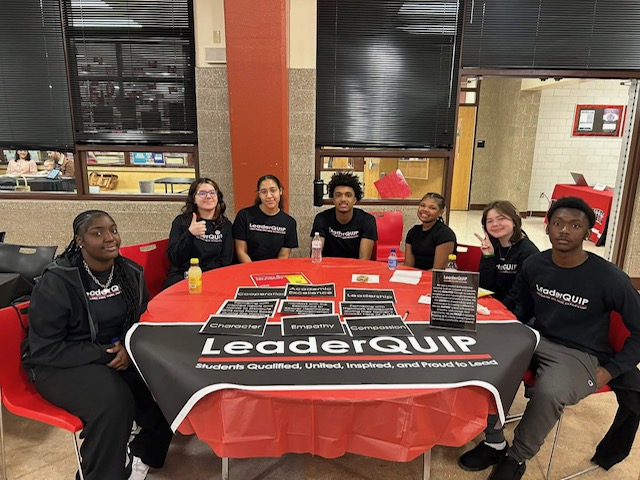 Photo courtesy of Aliquippa School District.
Aliquippa: Giving every student a place to grow
Most people in Western Pennsylvania know Aliquippa as a sports powerhouse.
“Our athletes get celebrated like you wouldn’t believe, because they’re always playing for a championship. Even when they’re not winning, they’re being talked about. And the cheerleaders have the opportunity to showcase their talent, and the band feels appreciated,” says Superintendent Woods. “But that’s only a third of your population. What’s left for the non-athletes? What’s left for the kids who don’t cheer?”
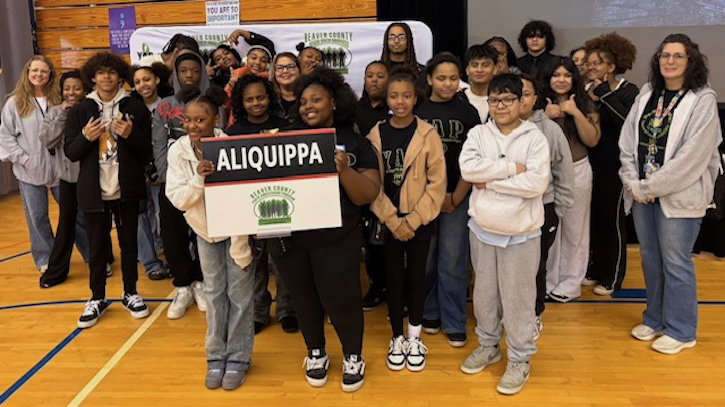
At Aliquippa Junior/Senior High School, opportunities for all students to shine are growing — and in some cases, this growth is student-led. New opportunities include a debate club, a robotics club, and a leadership club called Leadership Quip.
“We’ve developed the esports program, and our kids are competing — not only locally, but virtually across the state,” Woods says. “It provides another niche for a child who may not fit into any of those other categories.”
When students asked for a guitar club, “we bought a dozen guitars,” he adds. “I have a philosophy: If the kids want to do it, and they show interest, and we can find a staff member that has the expertise or a similar passion, it is our responsibility to help those kids nurture that.”
Echoing the region’s own Mister Rogers, Woods says that’s what education is about: “It’s an adult, passing on your passion for a subject matter or a sport or a foreign language or whatever, and then helping the young people nurture similar things.”
Along with having the clubs, Woods and his team are also making sure that every student knows about them.
Aliquippa Junior/Senior High School is home to grades 7 through 12. For sixth-graders, moving to that building is a major transition, so the district hosts an open house in March. It’s partly a curriculum night where students and their families meet teachers. But it’s also about face-to-face connection.
As they meet older students who participate in clubs — and they discover that they can start clubs of their own — the hope is that these rising seventh-graders feel more comfortable.
“Much as I love athletics, the athletic programs at school districts often take care of themselves. I advocate for those other programs because they’re not as widely known, so somebody needs to champion them. Let’s make these students feel welcome,” says Woods. “Let’s let them feel proud. Let’s let them be celebrated.”