
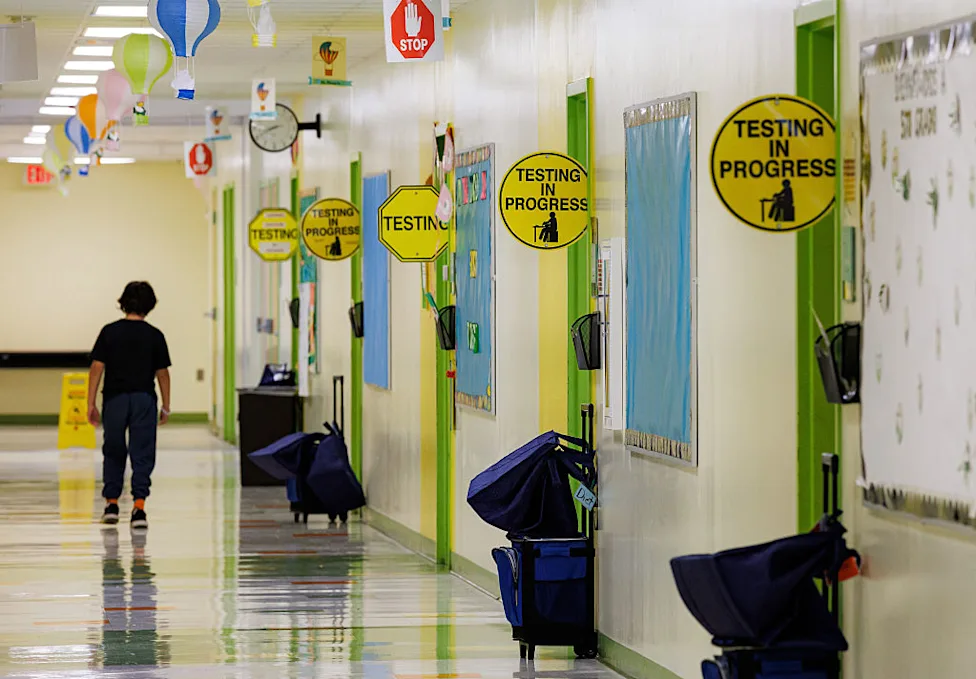
A sweeping new demographic analysis reveals that an unprecedented 70,000 Pennsylvania students are currently marooned on waiting lists for state-sponsored school choice scholarships, igniting a fierce debate over educational equity and taxpayer funding. The revelation exposes a massive structural bottleneck in one of the nation’s oldest voucher programs.
The crisis strikes at the heart of the American educational ecosystem. As demand for alternative schooling skyrockets across the commonwealth, the rigid legislative cap on the Educational Improvement Tax Credit program leaves tens of thousands of low-income families trapped in failing districts, forcing lawmakers to confront a fundamentally broken funding architecture.
A System at Capacity
Pennsylvania was a pioneer in the school choice movement, establishing the Educational Improvement Tax Credit in 2001. The framework operates by allowing individuals and corporations to donate capital to designated scholarship organizations in exchange for massive state tax refunds. These organizations then distribute the funds as tuition assistance for students seeking to exit the public school system in favor of private or religious academies.
However, the system has become a victim of its own popularity. Over the past decade, the number of families seeking tuition assistance has surged by 33 percent. According to data compiled by the Commonwealth Foundation, a conservative policy institute, demand has utterly outstripped the state-mandated funding limits. In the current fiscal cycle, the program is authorized to refund up to $575 million (approximately KES 74.7 billion) in donations, yet this massive pool of capital is insufficient to clear the backlog of applications.
The Equity Imperative
Proponents of the expansion argue that the current caps represent a profound moral failure. The data indicates that the overwhelming majority of families relying on these scholarships earn between $22,000 and $44,000 (KES 2.8 million to KES 5.7 million) annually—placing them well below the state’s median household income of $100,557. For these families, residing primarily in urban centers like Philadelphia, Allegheny, and Delaware counties, the tax credit scholarship is the only viable escape route from chronically underperforming public schools.
Conversely, teachers’ unions and public education advocates argue that siphoning over half a billion dollars annually into private institutions starves the public system of critical resources. They contend that if the state redirected those tax revenues directly into struggling municipal districts, the systemic failures driving the demand for private education could be mitigated at the source. This ideological trench warfare has paralyzed the state legislature in Harrisburg.
The Numbers Behind the CrisisAn estimated 70,000 eligible students are currently blocked from receiving tuition assistance due to funding caps.The program will issue up to $575 million (KES 74.7 billion) in state tax credits to corporate and individual donors in 2026.The number of private institutions designated as economically disadvantaged has surged by 69 percent over the last two academic years.Roughly 40 percent of all financial aid applications submitted through the program are ultimately rejected due to capital exhaustion.The Global Context of Educational Privatization
The fierce debate over the privatization of education is not unique to the American Rust Belt. Across the globe, developing nations are grappling with identical policy dilemmas. In Kenya, the explosive growth of low-cost private academies in informal settlements like Kibera highlights a similar systemic failure of the state to provide adequate public instruction. When governments fail to deliver baseline educational quality, parallel private systems inevitably emerge, heavily subsidized by non-governmental organizations or, in Pennsylvania’s case, corporate tax write-offs.
International education scholars warn that while voucher programs provide immediate relief for individual students, they often exacerbate long-term systemic inequality. By draining the most engaged parents and vital funding from the public sector, the institutions left behind suffer accelerated decay, creating a permanent two-tiered educational society.
The Legislative Gridlock
As the 25th anniversary of the Educational Improvement Tax Credit program approaches, the political pressure in Pennsylvania is reaching critical mass. Governor Josh Shapiro faces mounting demands from both conservative lobbying groups pushing to eliminate the funding caps entirely, and progressive coalitions demanding a halt to all public subsidization of private religious schools. The geographic footprint of the demand is also expanding, with eligible schools now operating across 42 distinct counties, up from 29 just two years ago.
The current equilibrium is unsustainable. With seventy thousand futures hanging in the balance, Pennsylvania lawmakers must decide whether to fully embrace the free-market privatization of childhood education, or finally commit the capital required to salvage the foundational promise of the American public school system.