
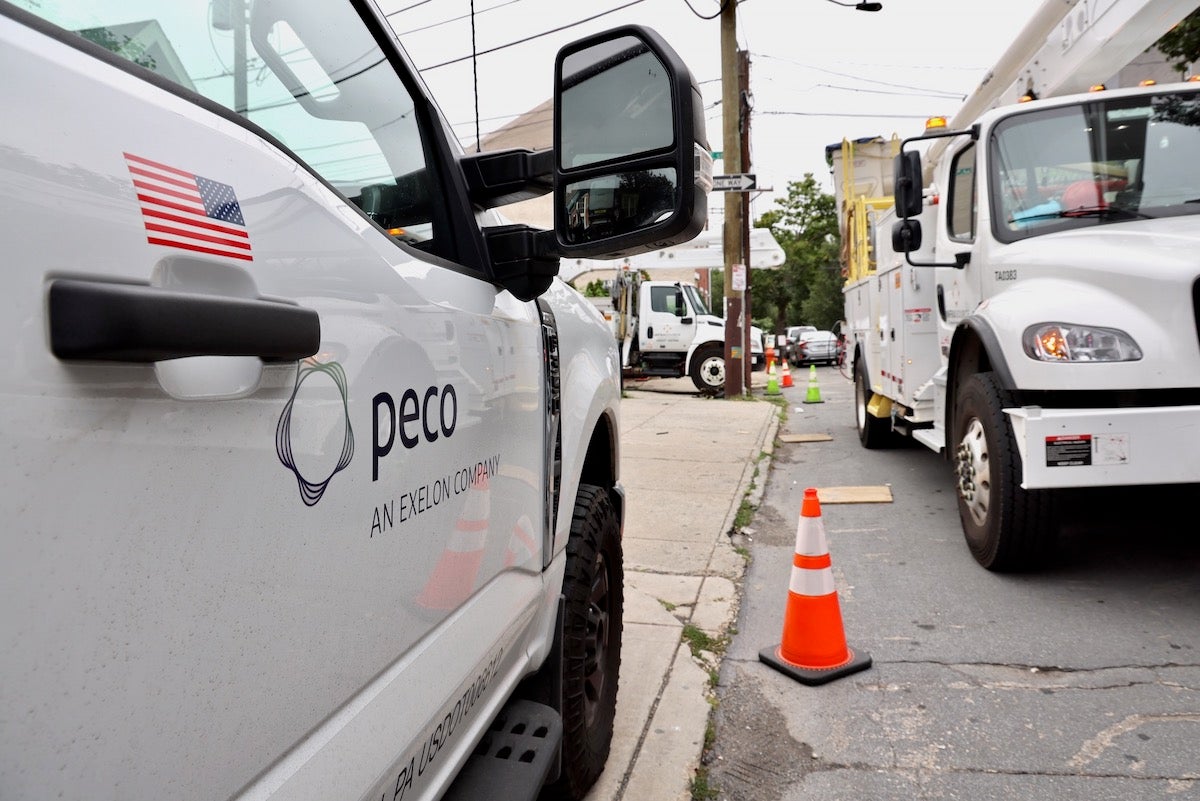
Utility infrastructure, including poles, wires and pipes, is financed through a combination of debt and equity, or funds contributed by their shareholders. The shareholders expect a return on that investment and the companies have a duty to provide it. But Fiedler, along with consumer advocates, say those returns have become too high and are the source of a growing affordability crisis for the average customer.
For example, PECO made record profits in 2025 after a rate increase that led to a second quarter rate of return of 10.59% for electricity and 10.19% for gas, according to a report issued by the Public Utility Commission. PECO’s third quarter 2025 return on equity was 13.1%. When the utility filed a rate case in March seeking a 12.5% rate hike for electricity and an 11.4% rise for gas, the requested return on equity was 10.95%. The request prompted a backlash, and the company withdrew it after pressure from Shapiro.
“Regular people may have a little bit of money in a savings account or in some sort of an account through their employer, but they certainly are not earning this sort of rate of return on those accounts that they are counting on for their retirement,” Fiedler said.
Defending the status quo as a ‘rigorous process’
Across the U.S., electric and gas utilities requested $31 billion in rate hikes in 2025, doubling the amount requested the year prior, according to a report by PowerLines. In Pennsylvania, the state is also seeing record-breaking requests, with 31 rate cases filed in 2024.
Spending by investor-owned utilities nationwide has grown 6% each year since 2014 in real terms, which is four times faster than in the previous two decades, according to a recent report by the Lawrence Berkeley National Laboratory.
But the proposal to cap profits is likely to get strong pushback from industry leaders who say it would limit the capital needed to provide safe and reliable services.
“Water systems are capital-intensive and depend on continuous long-term investment to replace aging infrastructure and meet increasingly stringent health and environmental requirements including recent mandates on PFAS, which will cost tens of billions of dollars to remediate,” Jenn Kocher, vice president of communications for the National Association of Water Companies, wrote in an email.
“The return available to investors is what allows regulated, private water utilities to attract the money needed to make the necessary improvements to protect safety and reliability,” Kocher said.
The utilities defend the current rate-making system as a fair way to balance the needs of utilities to build new infrastructure, make a profit and maintain affordability.
They say it has been operating for almost 100 years and does not need major reform.
“It’s a rigorous nine-month, fully public process,” said Andy Tubbs, president of the Energy Association of Pennsylvania, a trade group that represents electric and gas utilities in the state. “It’s not just the commission and the utilities that are part of the conversation.”
Rate-making cases have dozens of participants, including those who advocate specifically for consumers like the Office of Consumer Advocate and the Office of Small Business Advocate.
“And the commission staff that’s called the Bureau of Investigation Enforcement, they’re separate from the commissioners,” Tubbs said. “And then you also have other low-income advocates and industrial customers. So you have a breadth of stakeholders in those cases that look at how utility costs are being incurred, whether or not they’re prudent, and you get a full accounting of the utilities operations and whether or not any request for increase is justified.”
Tubbs said the process takes into account the current market conditions along with analysis of what other similarly situated utilities are earning.
Utilities have “a reasonable opportunity to earn a fair rate of return,” and utility rates must be “just and reasonable,” according to decades-old U.S. Supreme Court rulings.
“When the commission says that a utility has an opportunity to earn a rate of return on its investment, it’s not guaranteed,” Tubbs said. “It is set in that proceeding. It’s probably one of the most heavily litigated aspects of a rate case with experts … challenging one another.”
Tubbs said there are other ways to bring down utility bills, including reforming the regional grid operator PJM Interconnection’s capacity market and tackling supply costs that the utilities do not control. Tubbs, who once worked at the Public Utility Commission, said he disagrees with Shapiro, and praised the current rate-making process as free from political interference. He said that implementing a cap would mean that investors would flee to other states to invest in utilities and raise the price of capital for the providers in Pennsylvania, which would then increase costs for consumers in the state.