
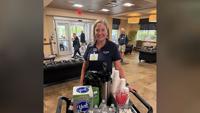
I recently started volunteering at St. Luke’s Anderson Campus.
I push a coffee cart around and hand out snacks and fun-size chocolates. Peppermint Patties seem to be the favorite. I spend a few hours a week walking through waiting rooms and floors, smiling at people, offering coffee, and thanking staff members for what they do every day.
That’s basically the job. So, why can’t I stop thinking about it?
One morning, I offered a Peppermint Patty to a member of the janitorial team as he walked by. He smiled politely and said, “No, thank you.” A young guy nearby — he couldn’t have been more than 21 — watched the interaction and casually said to me, “You’re very kind.”
I don’t think anyone has ever really described me as kind before. Or if they did, I never internalized it. People have called me funny, easygoing, nice enough. At work, they say I’m fast. But kind? I don’t know that I ever saw myself that way.
It isn’t that I don’t do kind things. I do. But kindness always felt like something different to me, less about specific acts and more about the feeling a person leaves behind. You know it when you’re around it. Some people have a warmth that changes the atmosphere without even trying.

Kellie Walenciak
I never really thought of myself as one of those people, which is why hearing it from a stranger in a hospital hallway stayed with me so long afterward.
What struck me was how small the interaction had been. I wasn’t doing anything extraordinary. I was offering someone a Peppermint Patty. Yet somehow that tiny moment communicated something I hadn’t expected.
What I’m discovering at the hospital is this: small gestures seem to matter to people in ways I never fully understood before. Maybe it’s because pushing a coffee cart changes the way you move through a day.
It’s very different from most of my professional life, where interactions are usually moving quickly toward something — a decision, an idea, an outcome. This isn’t like that. The entire focus is on the person in front of me: what they need or what might make their day a little easier. My role is to notice.
The volunteers I’ve met really do seem happy to be there. Most are retired. They take the work seriously, almost tenderly, even though nobody is paying them and very few people outside those walls probably know what they do all day. They seem to understand something I’m only now figuring out — that feeling useful and feeling connected are often the same thing.
Meanwhile, every person I encounter — nurses, doctors, visitors, families waiting outside the OR — seems genuinely appreciative. People who look exhausted still smile back. Stressed people soften for a second.
I asked a couple in the waiting area if they wanted coffee, and they looked up as if they hadn’t expected anyone to speak to them. They were already holding big, insulated tumblers, so I offered to refill them.
The way they thanked me was out of proportion to what I’d done, which was nothing, really. But maybe that was the point. For a moment, they weren’t waiting. They were just getting coffee.
Last week, a nurse asked if we had green tea. We only had two kinds of black, so I told her I’d bring some the next shift, and I did.
An ER worker mentioned he didn’t really like any of the snacks, so I asked what he might like instead. He said healthier things. The next week, I brought in Larabars.
That’s exactly what that place does to you. The smile behind the stress, the appreciation behind the exhaustion — it makes you want to do more.
I went into volunteering thinking I was there to give something. What I didn’t expect was how much I would receive from it.
Because the truth is, when I’m slowly walking through those halls every week, I’m not thinking about myself at all. I’m thinking about the people holding that place together day after day, often while carrying far more than anyone around them realizes.
And somehow, in the middle of all that seriousness and stress, handing someone a coffee or a Peppermint Patty can feel oddly meaningful.
Not because the gesture is big, but because the person receiving it is.
***********************************
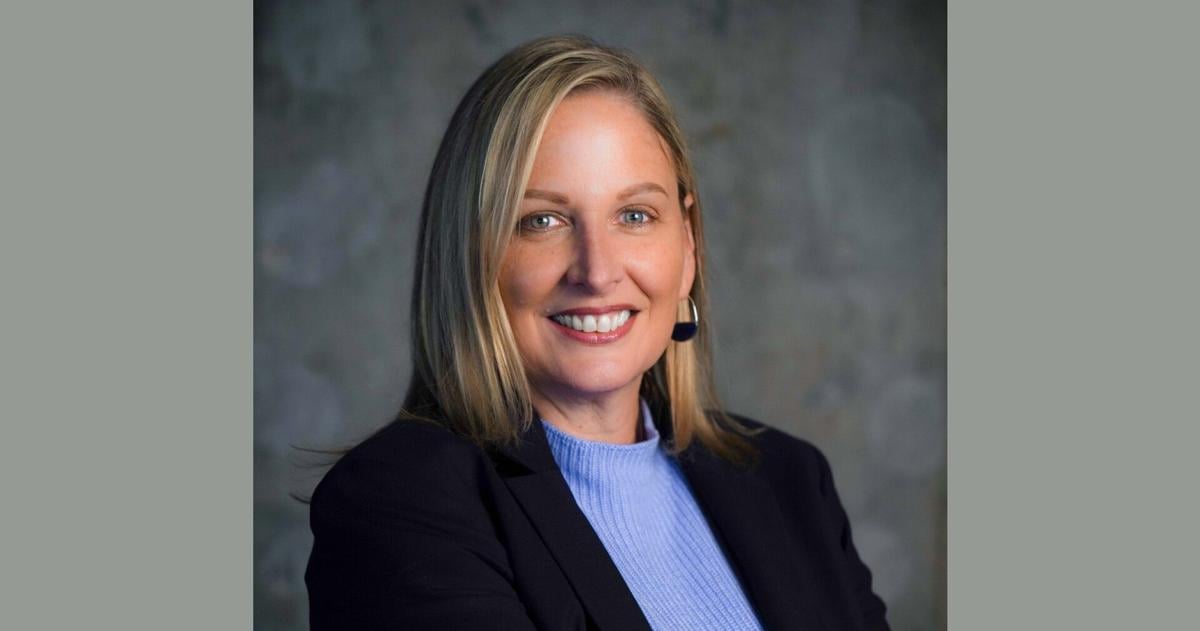
Kellie Walenciak of Forks Township is a volunteer at St. Luke’s Anderson Campus and a communications executive.
Kellie Walenciak of Forks Township is a volunteer at St. Luke’s Anderson Campus and a communications executive.


By Sara Emerle, Center Valley

By Matt Assad, the Managing Editor of the Lehigh Valley Planning Commission.

He wants to restore honor to the Justice Department, to our government.
Tony Iannelli, host of “Business Matters,” reflects on hosting the District 7 Democratic Congressional Debate.
Load more