
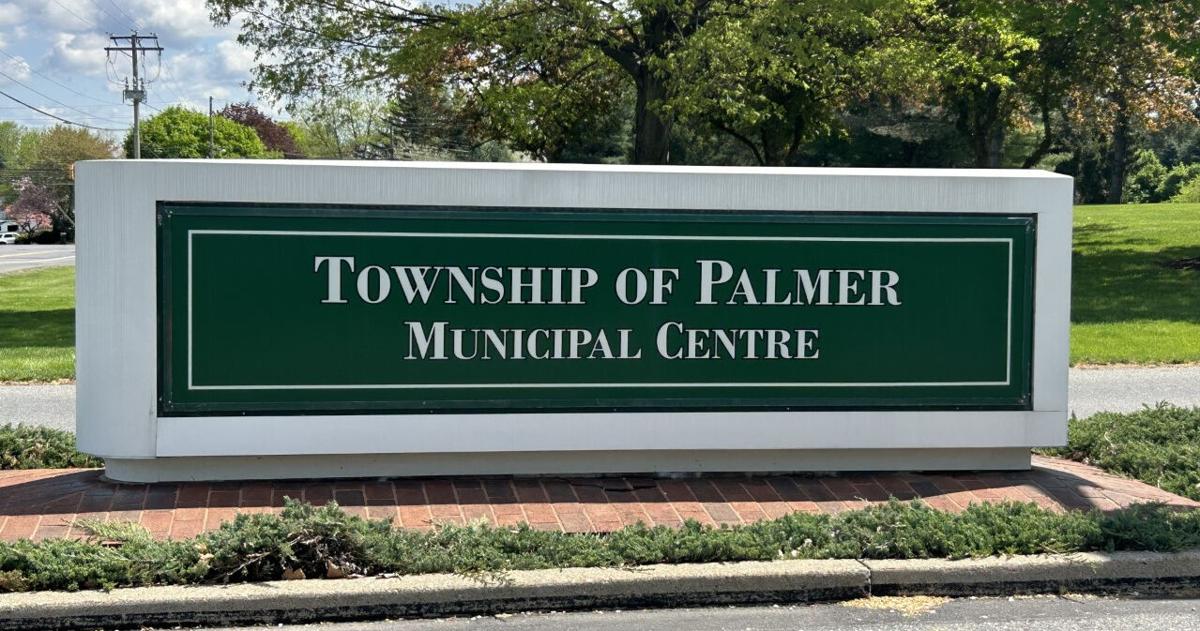
PALMER TWP., Pa. – The Palmer Township Board of Supervisors continued its efforts to alter the municipality’s government structure Monday night at the municipal building.
Supervisors focused on outlining the steps involved and then establishing a date for adopting a formal resolution to transition from a second-class township to a first-class township.
The township is the most basic form of local government in the Commonwealth of Pennsylvania, ranging from rural areas to urban population centers. They are divided into two types: second class and first class.
Second-class townships are the default government type, with 1,454 currently existing across the commonwealth. They are often characterized by lower population densities and less developed infrastructure. First-class townships are the more developed classification, with 93 currently existing across Pennsylvania. They are often “outer-ring” suburbs of highly developed urban areas. All townships start as second-class. First-class townships must have at least 300 people per square mile.
Director of Planning Craig Beavers said Tuesday night that Palmer Township has 2,100 people per square mile. He added that a benefit is that first-class townships, on average, receive more grants.
Supervisors who are elected to six-year terms govern second-class townships, typically with three members —although some such as Palmer have five. They combine legislative and executive powers, setting policies, passing ordinances and managing operations.
First-class townships utilize commissioners, elected for four-year terms, for their governance, featuring anywhere between five and nine members. Commissioners are elected by ward or at-large and act more like a legislative body. In most cases, they appoint a township manager to handle day-to-day administration. Robert Williams is currently Palmer Township’s manager.
Both first- and second-class townships provide similar core services. Those services are maintaining roads, zoning, parks and sometimes police protection. First-class townships predictably have larger budgets, more departments and more full-time government employees. Second-class townships often have part-time staff or regional partnerships for some services.
Legally, first-class townships are required to provide specific services such as police, sanitation and fire protection of some type. Second-class townships have fewer mandates.
Should Palmer make the switch, legislators under the first-class township designation would receive about the same or possibly less in compensation. Initially, a court would appoint the board members who would serve until the next election cycle. There would be two-year terms and four-year terms initially so that all five members would not be up for election at the same election cycle. Eventually, at least two members would run for four-year terms every two years.
During public comment, one resident inquired as to how other townships who had made the transition fared. Beavers mentioned Lower Macungie Township in Lehigh County. Voters approved the change in 2007, and since that time, Beavers said generally residents have found the change favorable.
Supervisors are expected to vote whether to place a referendum concerning the issue on the general election ballot at their July 20 meeting.