
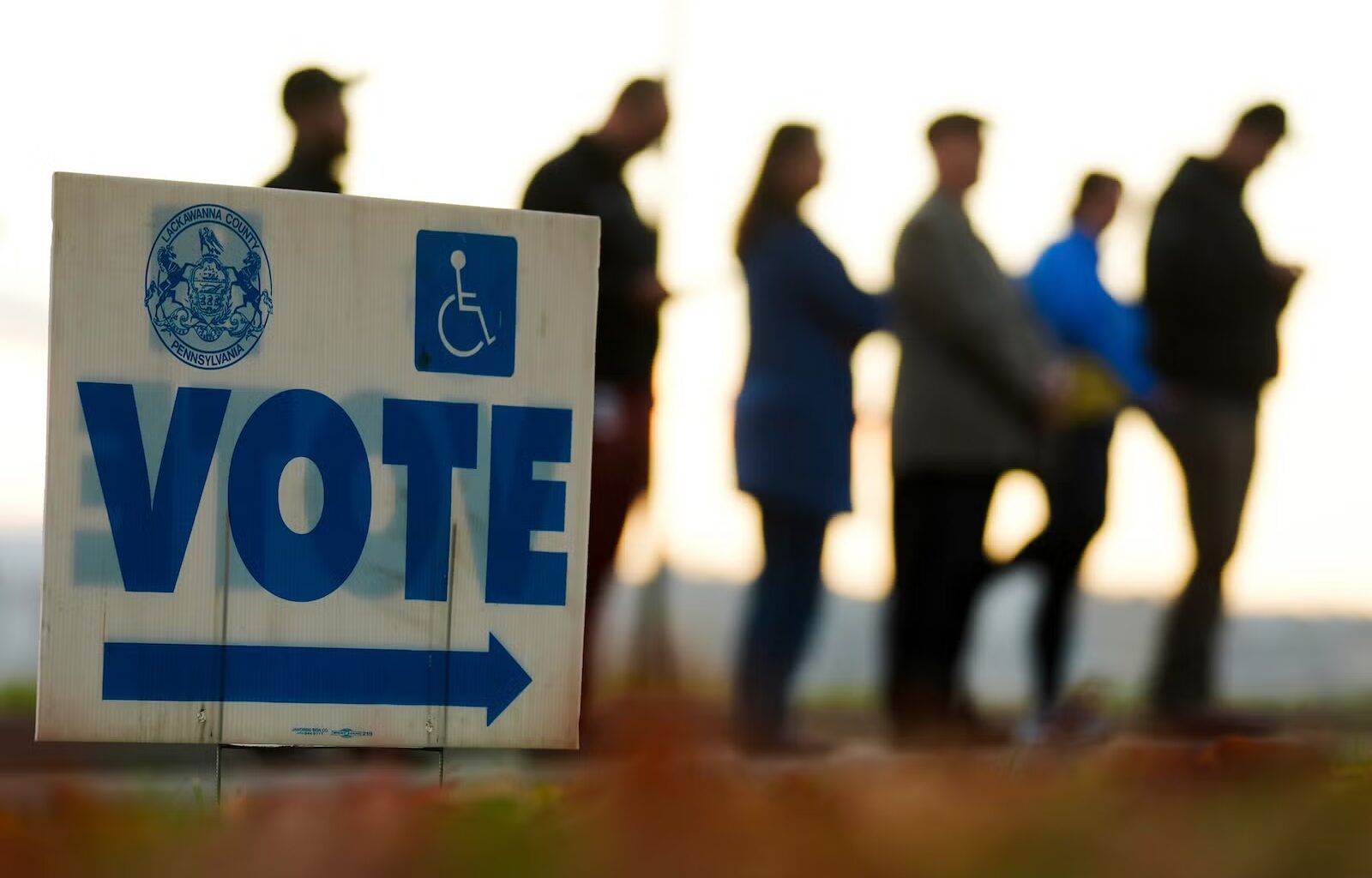
As voters head to the polls Tuesday, here are some of the key facts about the election and data points the AP Decision Team will monitor as the votes are tallied:
Who gets to vote?
Only voters registered with a political party may participate in that party’s primary. Democrats may not vote in the Republican primary or vice versa. Independent or unaffiliated voters may not participate in either primary.
How many voters are there?
As of May 11, there were nearly 9 million registered voters in Pennsylvania. Registered Democrats outnumbered registered Republicans, 3.8 million to 3.6 million. About 1.2 million were not registered with any party.
How many people actually vote?
Roughly 1.1 million Democratic primary votes and about 953,000 Republican primary votes were cast in the 2024 presidential primaries, held long after Trump and President Joe Biden had clinched their nominations.
In the more competitive U.S. Senate primaries in 2022, Republican and Democratic voters each cast roughly 1.3 million votes.
How much of the vote is cast early or by absentee ballot?
About 45% of 2024 Democratic presidential primary vote and 17% of the Republican primary vote was cast before primary day.
As of Thursday, about 385,000 Democratic primary ballots and about 129,000 Republican primary ballots had already been cast in Tuesday’s election.
When are early and absentee votes released?
Vote release practices vary from county to county, but most counties release results from absentee voting along with in-person Election Day voting throughout the night. Roughly a third of the counties release all or almost all of their early and absentee vote results in the first update of the night.
How long does vote-counting usually take?
In the 2024 primary, the AP first reported results at 8:01 p.m. ET, or about a minute after polls closed. The last vote update of the night was at 2 a.m. ET with about 91% of total votes counted.
When will the AP declare a winner?
The Associated Press does not make projections and will declare a winner only when it’s determined there is no scenario that would allow a trailing candidate to close the gap. If a race has not been called, the AP will continue to cover any newsworthy developments, such as candidate concessions or declarations of victory. In doing so, the AP will make clear that it has not yet declared a winner and explain why.
How do recounts work?
Pennsylvania requires an automatic recount for statewide races with a vote margin of 0.5 percentage points or less. For non-statewide races, voters may petition an individual county board of elections or the courts to order a recount. The AP may declare a winner in a race that is subject to a recount if it can determine the lead is too large for a recount or legal challenge to change the outcome.
Are we there yet?
As of Tuesday, there will be 168 days until the 2026 midterm elections.