
As you fly over the Pittsburgh International Airport, there are workers you may not even realize are below you. Nine yards are filled with dozens of honey bee colonies hard at work pollinating plants and producing honey. The colonies, cared for by beekeeper Steve Repasky, are home to millions of bees.”It sounds impressive, but when you look here,” he said, “I mean, you would never guess there are a million bees in this yard.”The initiative began in 2014 when swarms of bees started appearing on the airfield. Instead of exterminating them, the airport decided to keep the bees and put them to work.”These bees are actually going outside the airport environment. They’re pollinating trees or pollinating plants. People with gardens that are down the road — we’re helping in being good neighbors by doing it,” said Ben Shertzer, wildlife administrator at the airport. Repasky has been caring for the colonies ever since, noting that they generally grow every year. However, last year saw a 20% decline.”Some of it was related to the climate disruption of blooming times. Even this year, you know, I should be pulling supers of honey here in about a week or two. And our supers are empty, you know, so we’re trying to recover from that. But overall health here at the airport is very good,” Repasky said. Despite the bees’ overall health, Pittsburgh’s fluctuating climate presents challenges.”They’re generally pretty docile. But a couple of things we have going against us. One, it’s been cold lately, so they’re a little agitated from that. And then there’s not any or very little nectar and pollen coming in. So they’re kind of just hangry, if you will,” Repasky said. Even with these obstacles, the bees are still trying to produce honey.”This is the honey they bring in,” Repasky said. “They’re getting there.” Looking to the future, the hope is that the honey produced by the airport’s bees could eventually be sold in the new terminal.
PITTSBURGH —
As you fly over the Pittsburgh International Airport, there are workers you may not even realize are below you.
Nine yards are filled with dozens of honey bee colonies hard at work pollinating plants and producing honey.
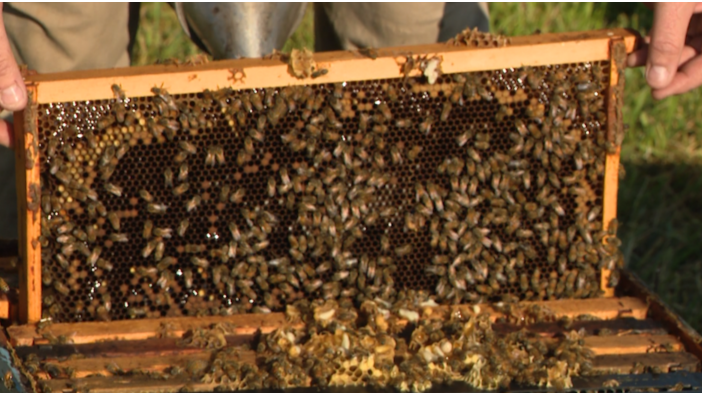
The colonies, cared for by beekeeper Steve Repasky, are home to millions of bees.
“It sounds impressive, but when you look here,” he said, “I mean, you would never guess there are a million bees in this yard.”
The initiative began in 2014 when swarms of bees started appearing on the airfield. Instead of exterminating them, the airport decided to keep the bees and put them to work.
“These bees are actually going outside the airport environment. They’re pollinating trees or pollinating plants. People with gardens that are down the road — we’re helping in being good neighbors by doing it,” said Ben Shertzer, wildlife administrator at the airport.
Repasky has been caring for the colonies ever since, noting that they generally grow every year. However, last year saw a 20% decline.
“Some of it was related to the climate disruption of blooming times. Even this year, you know, I should be pulling supers of honey here in about a week or two. And our supers are empty, you know, so we’re trying to recover from that. But overall health here at the airport is very good,” Repasky said.
Despite the bees’ overall health, Pittsburgh’s fluctuating climate presents challenges.
“They’re generally pretty docile. But a couple of things we have going against us. One, it’s been cold lately, so they’re a little agitated from that. And then there’s not any or very little nectar and pollen coming in. So they’re kind of just hangry, if you will,” Repasky said.
Even with these obstacles, the bees are still trying to produce honey.
“This is the honey they bring in,” Repasky said. “They’re getting there.”
Looking to the future, the hope is that the honey produced by the airport’s bees could eventually be sold in the new terminal.