
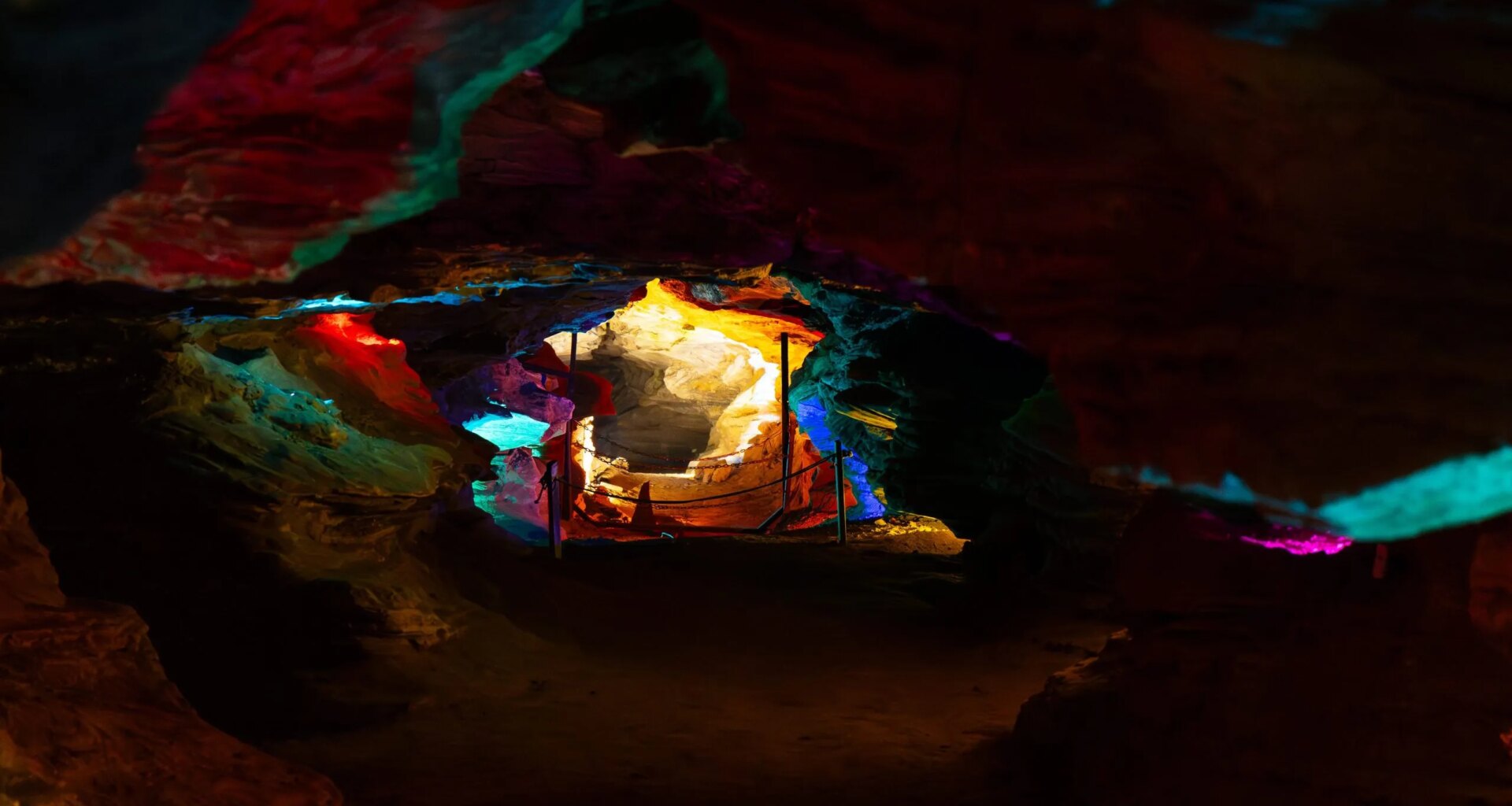
Laurel Caverns State Park is living proof that a cave is more than a hole in a rock.
Located 50 miles southeast of Pittsburgh and 11 miles south of Uniontown, Laurel Caverns is a natural calcareous sandstone cave system that extends 4 miles underground beneath Chestnut Ridge, the westernmost ridge of the Allegheny Mountains in Pennsylvania rising 2,778 feet above sea level.
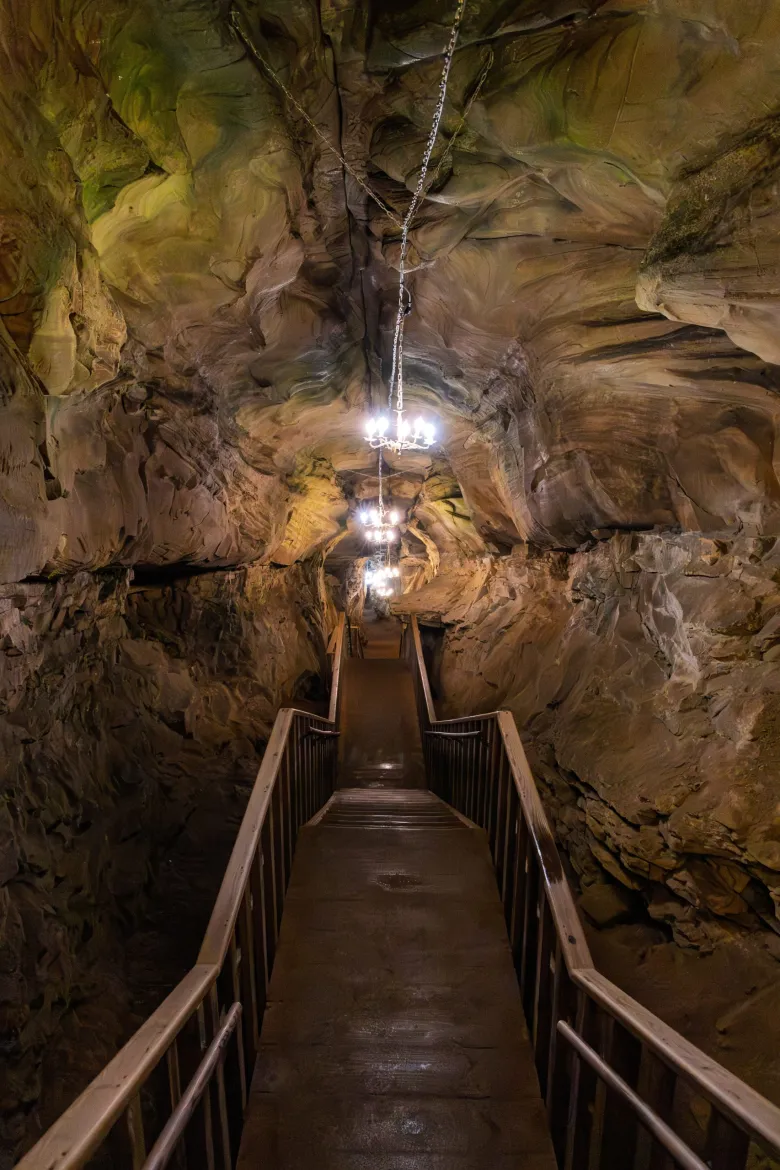
It is Pennsylvania’s largest cave (above or below ground) and is the state’s first entirely underground state park. Most of the passageways in its labyrinthine expanse have an average width of 12 feet, with ceilings between 10 and 20 feet high and some as high as 50 feet. Parts of the cave reach depths of 452 feet, approximately 45 stories.
The cave sat on private land until this April, when owners David and Lillian Cale transferred the deed to the Pennsylvania Department of Conservation and Natural Resources (DCNR). The Cale family had owned and managed the cave since 1933, when David Cale’s grandfather, Norman, and his cousin, Roy, vowed to preserve the site from commercial developers and miners.
Geologists estimate the caverns have existed for 320 million years, forming adjacent limestone beds that attracted the attention of Uniontown entrepreneur James Downard, who began a small mining operation in 1776. However, the cave system itself was not discovered until the 1790s, notes David Cale.
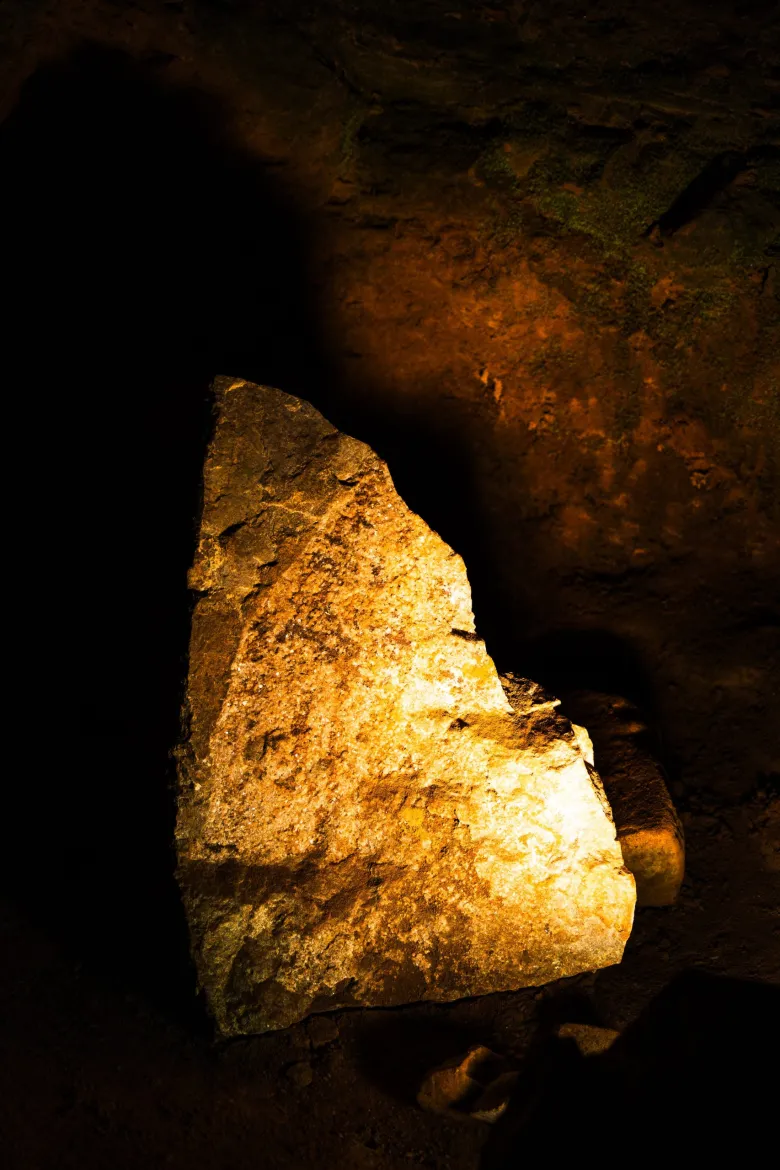
Magnetite, a mineral and one of the main iron ores, can be found inside Laurel Caverns. An iron oxide, it is attracted to a magnet and can be magnetized to become a permanent magnet itself. Photos by Rob Liggett.
“The land had by then been purchased by a farmer named John Delaney, and when he would take his dogs out hunting, he noticed they would always want to explore a certain spot. It was a thicket of trees growing out of a huge depression in the ground, and when he cut back the trees he saw the cave entrance.”
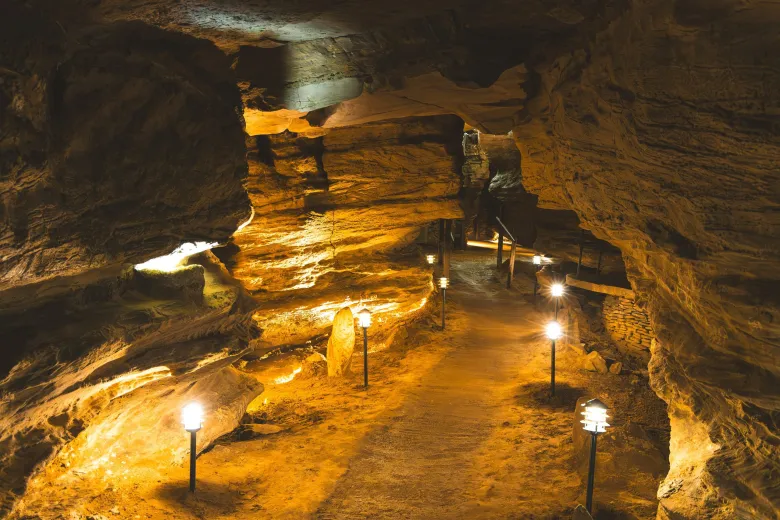
The caverns formally opened to the public in 1964, says Cale, who helped his parents with tours and maintenance while earning a bachelor’s degree in political science from California University of Pennsylvania. Over the years, 25 miles of electrical cable supporting a full theatrical lighting system were added, along with a visitors center, souvenir shop and a large, wheelchair-accessible “simulated cave” built in the 1980s that spotlights what Cale calls “the science of the cave.”
Today, the site draws more than 50,000 visitors a year with around 100 school tours each spring. The DCNR’s Corie Eckman is the new park manager. She believes Laurel Caverns represents a unique environmental resource for the public.
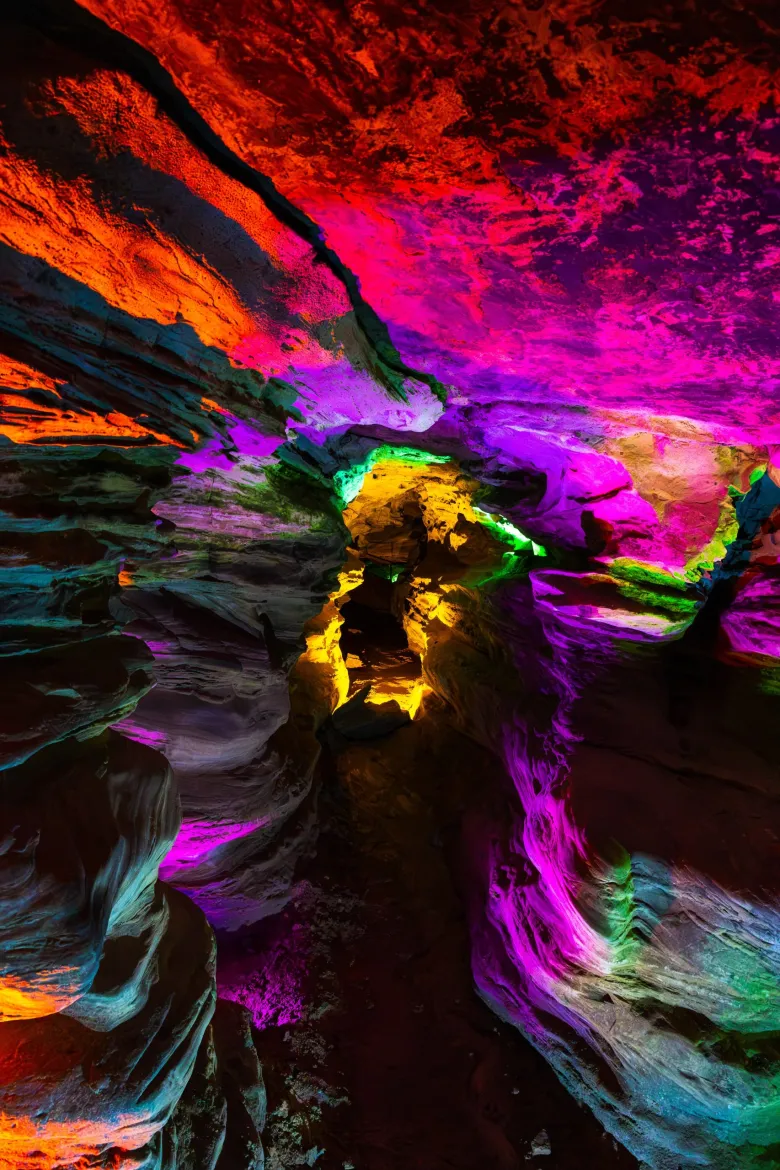
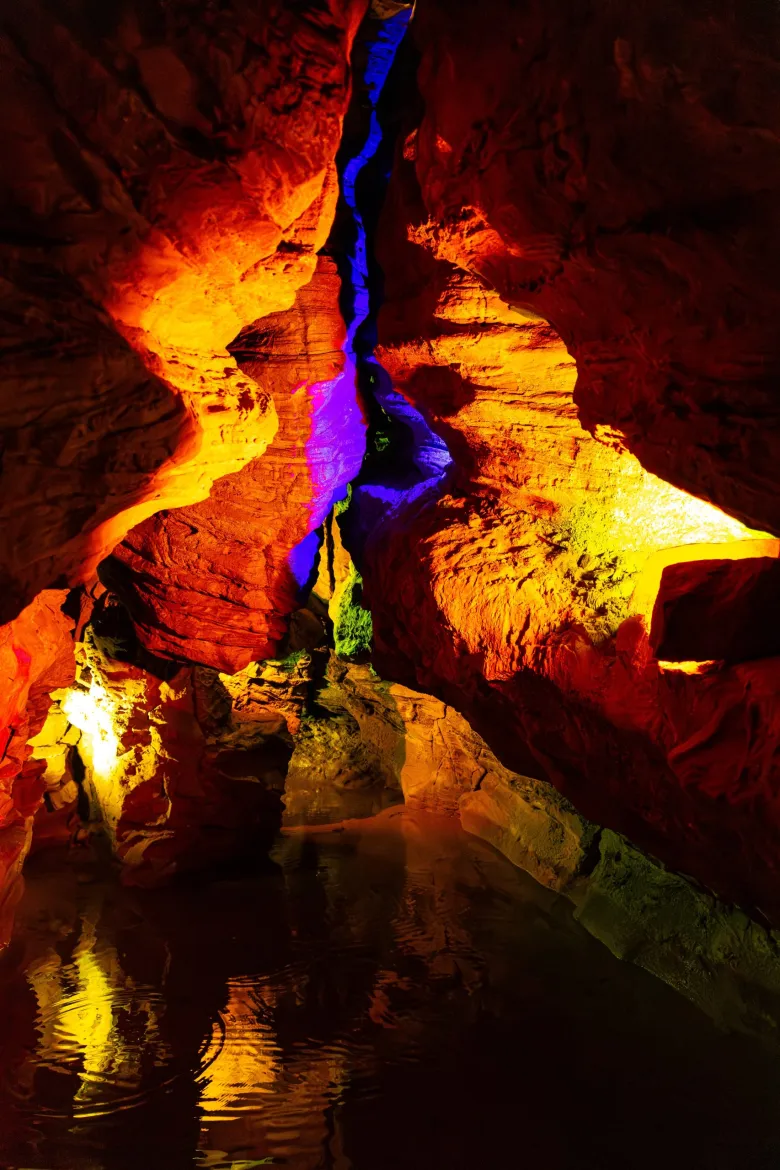
The unique underground lighting system at Laurel Caverns. Photos by Rob Liggett.
“It’s kind of like the ocean,” she says. “There is a lot of unknown when you enter a cave. I think that makes people curious. We can look up in the sky and see birds and stars and planes, but it’s harder to look down into the earth and see the part of the world that is present there.”
The caverns offer a valuable window into how our planetary structure reshapes itself over time, says Katie Schmid, a senior geoscientist with the DCNR’s Pennsylvania Geological Survey. Schmid produced a video that features a virtual geological field trip inside Laurel Caverns.
“Laurel Caverns is great for the geology that you can see and learn about in the cave. It provides habitat for several rare and endangered species. In Laurel Caverns, you can see some faults and folds that resulted from the construction of the Appalachian Mountains. You can also find some nice fossils in the cave.”
The caverns have also hosted weddings, choir performances, family gatherings, photo shoots and, recently, a sound bath session held by violinist Monique Mead, director of music entrepreneurship at Carnegie Mellon University.
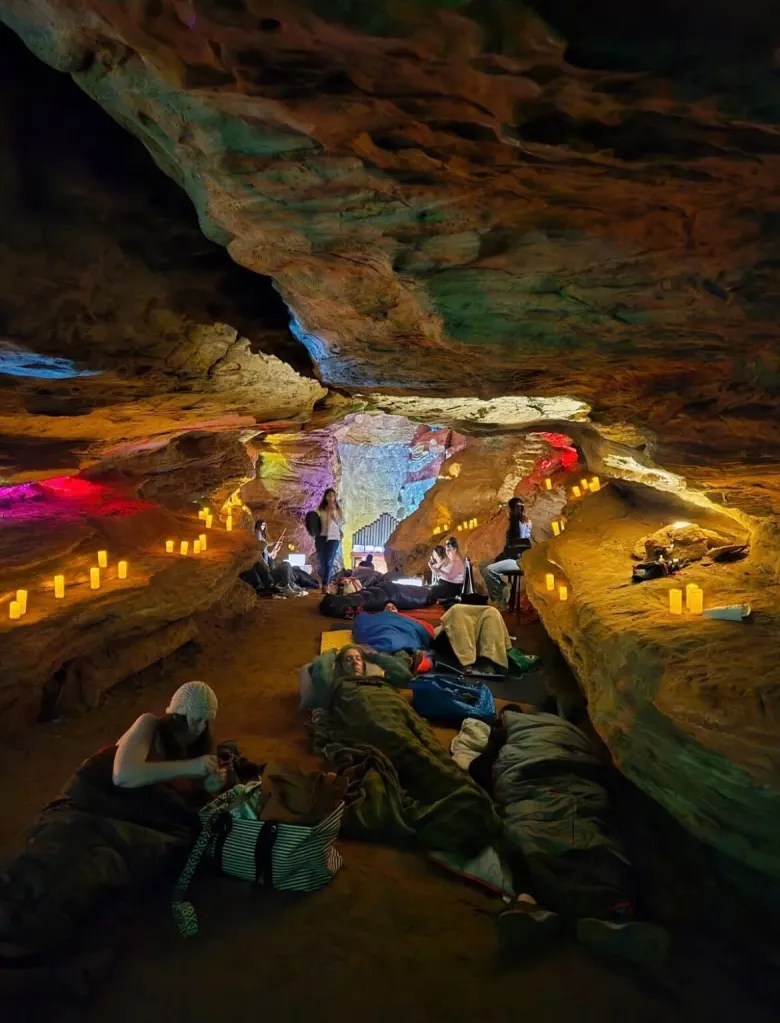 A sound bath inside Laurel Caverns last summer (2025). Photo by Jennifer Baron.
Mead’s sound baths use live meditational music to induce deep relaxation and unlock the body’s natural healing power. On her first visit to the cave, Mead was intrigued by possibilities for enhancing the sound bath imprint.
“There is no place on earth I have ever been where you experience silence in a way that is louder than a sound,” she recalls. “I originally thought what would be so special would be the acoustics of the hard surfaces and rocks bouncing the sound back. But what turned out to be the most profound part of it was the silence.”
Mead charted out a program that began with the group moving through the caverns and encountering musicians along the way. Returning to the sound bath site, she led a meditation that concluded with the group singing “Hallelujah” amid a cascade of layering echoes.
“You can see why yogis and religious thinkers came to caves to retreat and meditate,” she says. “They needed protection from the elements, and they also needed to be away from distraction. In a cave like this, you’re in the belly of the earth that has been there for millions of years. You’re enveloped in it, like going back to the womb of creation. You’re aware of ancient people who might have been in that spot and ceremonies that might have taken place. It has a presence that infuses you.”
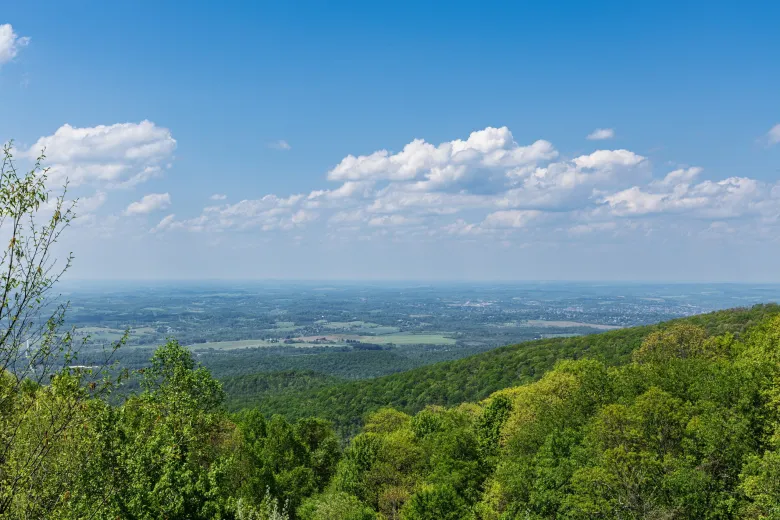 The observation deck outside of the gift shop at Laurel Caverns: A view of seven counties all at once.
In the future, Laurel Caverns is likely to become part of the DCNR GeoTrail, a network of 25 Pennsylvania state parks with strong links to local history such as Oil Creek State Park, where oil was first discovered in the United States in 1859; Little Buffalo State Park and the early 1800s Juniata Iron Works; Shawnee State Park, an 18th-century Native American village that hosted George Washington in 1758; and Ryerson Station State Park, home to the mound-building Adena Culture that flourished in Western Pennsylvania from 500 B.C. to 100 C.E.
DCNR anticipates the site will become increasingly popular due to its proximity to nearby visitor attractions including the Summit Inn, Fort Necessity National Park, Nemacolin Woodlands, Ohiopyle State Park, Kentuck Knob and Fallingwater.
“Laurel Caverns offers so many interesting ways to learn about our geology,” says Eckman. “When people finally get to experience it, if they’ve never experienced any sort of cave system before, it creates a different type of wonder.”
Laurel Caverns State Park is open throughout the year; check laurelcaverns.com or call 724-438-3003 for schedules. For permission to hold group events or special activities, see this form on the Pennsylvania State website.