
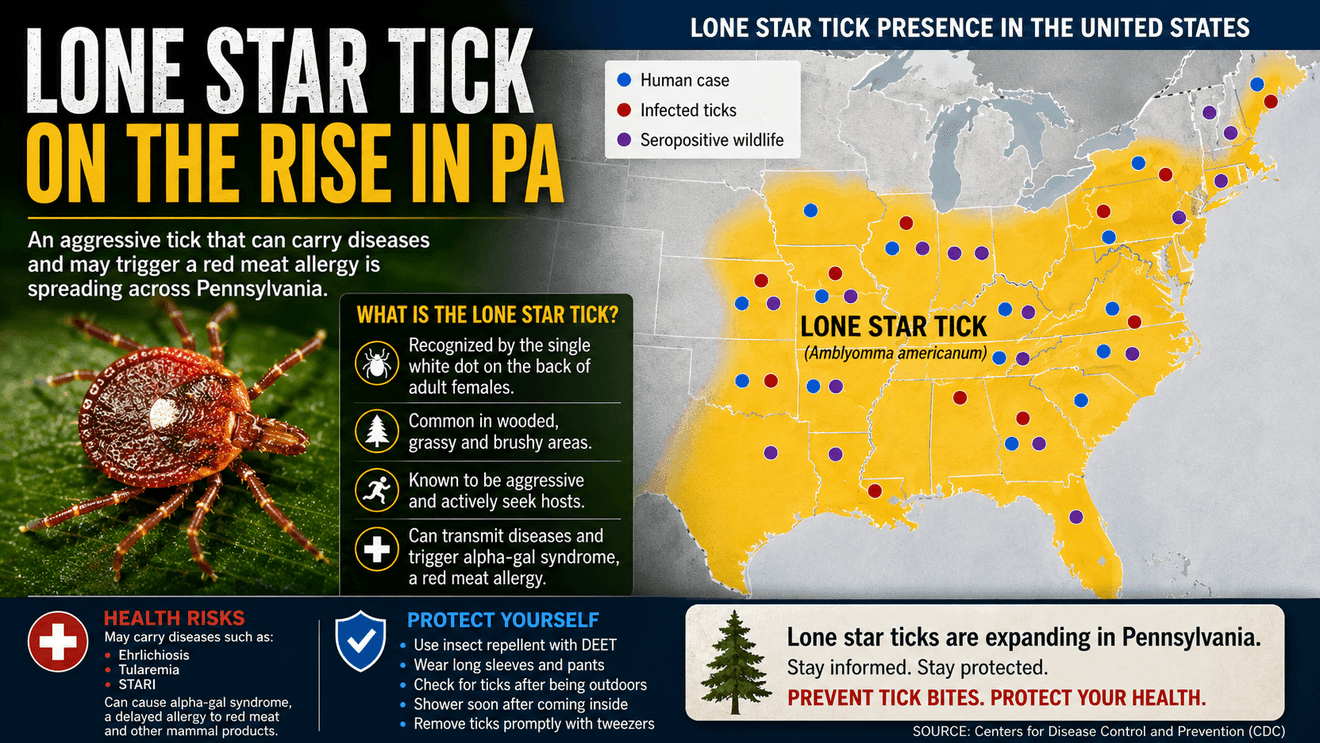
Health experts are warning Pennsylvanians to be on alert as the lone star tick continues spreading across the state and raising concerns about unusual illnesses, including a rare allergy linked to red meat.
The lone star tick, identified by a single white spot on the back of adult females, has become increasingly common in Pennsylvania over the past several years, particularly in wooded and grassy areas.
Unlike some tick species that wait on vegetation for a host to pass by, lone star ticks are known for aggressively moving toward people and animals.
Experts say the tick can carry several diseases, including ehrlichiosis and tularemia, but one of the biggest concerns involves a condition known as alpha-gal syndrome.
The syndrome can develop after a bite from a lone star tick and may trigger an allergy to red meat and other mammal products.
People affected by alpha-gal syndrome can experience symptoms ranging from hives and stomach pain to severe allergic reactions hours after eating foods like beef or pork.
Doctors say the delayed nature of the reactions often makes the condition difficult to diagnose.
The Pennsylvania Department of Environmental Protection and health officials have reported increasing sightings of lone star ticks in central and eastern Pennsylvania as the species expands farther north.
Tick experts say mild winters and growing deer populations have helped the species spread more rapidly.
The ticks are commonly found in wooded trails, tall grass, brushy areas and locations frequented by deer.
Health officials recommend residents take precautions when spending time outdoors, including:
Using insect repellents containing DEETWearing long sleeves and pantsChecking for ticks after being outsideShowering soon after outdoor activitiesRemoving ticks promptly with tweezers
Experts also advise pet owners to keep animals protected with veterinarian-approved tick prevention treatments.
Symptoms of tick-borne illness can include fever, fatigue, headaches, muscle aches and rashes.
Anyone who develops symptoms after a tick bite is encouraged to seek medical attention.