
From hyacinth beans to chewing gum
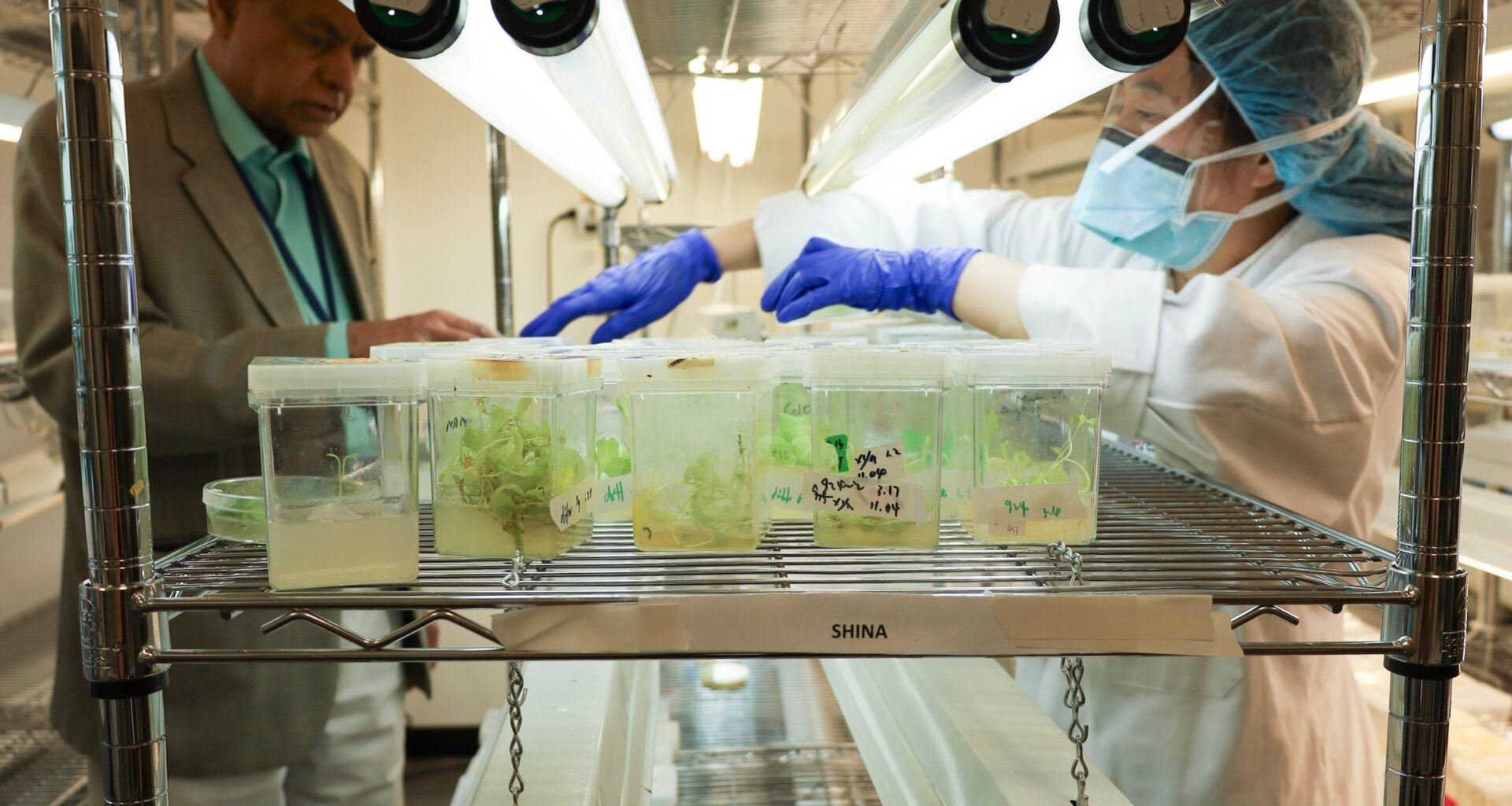
Two assistants dressed in long white coats, gloves, masks and face shields were busy on a recent Tuesday afternoon inside Daniell’s laboratory in Philadelphia on the Penn campus.
This is where scientists and researchers grow hyacinth beans, also known as Lablab purpurpeus, which contains a natural antiviral protein called FRIL. The plant is turned into a powder and then sent to a third-party company, which manufactures the powder into a chewing gum.
Researchers also add an antimicrobial peptide called protegrin, which can kill harmful bacteria.
The final product is designed to kill or neutralize different kinds of viruses including HPV and types of bacteria like Porphyromonas gingivalis and Fusobacterium nucleatum ⸻ all of which are linked to multiple kinds of cancer.
To do that, the bioengineered gum acts like a “fly trap,” Daniell explained.
“The virus [particles], when they are separate, they enter the cells and infect the human cells, but if they are aggregated, they cannot,” he said. “So, this FRIL gum, it aggregates them. When they are a lump, it sticks to the chewing gum.”
Researchers have tested the effectiveness of this method against HPV in saliva samples taken from people who’ve tested positive for the virus.
Early data shows that the gum reduced the viral load of HPV by 93%. When combined with an antimicrobial peptide, a single piece of gum killed nearly all levels of Porphyromonas gingivalis and Fusobacterium nucleatum bacteria.
The team at Penn will continue to study the effectiveness of the gum in an HPV clinical trial this year based at Penn Medicine.
Co-investigator and dentist Dr. Marc Henschel said the outcome of the clinical trial could strengthen evidence, and show how the gum could potentially help protect a spouse or intimate partner of someone who has already been diagnosed with an HPV-related cancer.
“The idea with the antiviral HPV chewing gum is to try to mitigate and minimize that viral load intra-orally, which will have a better outcome for future patients if they should have cancerous lesions,” Henschel said. “If there’s a way to minimize a viral load from significant other to significant other, that’s a no-brainer right then and there.”
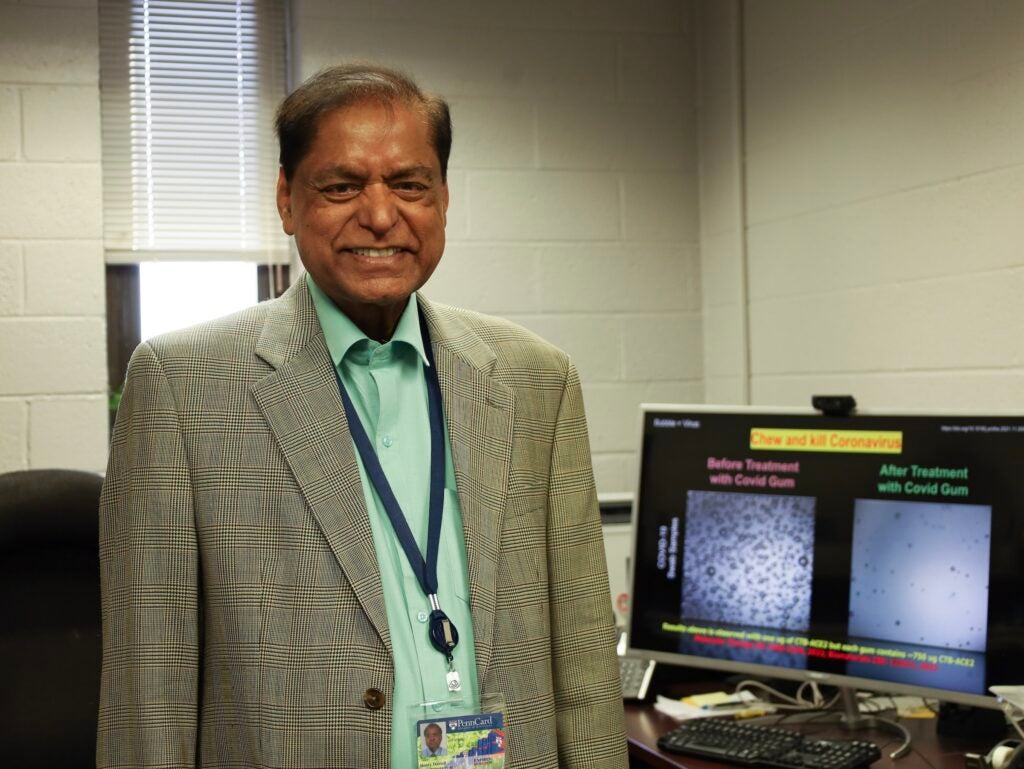 Researcher Dr. Henry Daniell and researchers at the University of Pennsylvania School of Dental Medicine are investigating the effectiveness of a bioengineered chewing gum that they hope can prevent oral, head and neck cancers by killing the viruses and bacteria that are linked to disease, May 5, 2026. (Nicole Leonard/WHYY)
From Philly to London to outer space?
Daniell’s vision is for this chewing gum to one day be available as a prophylactic tool ⸺ something people could buy off the shelf at a reasonable cost to use before a possible exposure to a cancer-causing virus or bacteria.
But the possibilities go beyond that, he said. The chewing gum is also being tested and studied in separate clinical trials for its effectiveness against infectious diseases like COVID-19 and influenza, which can spread from person to person through respiratory droplets that they breathe in or ingest.
A larger influenza clinical trial in patients is planned to take place in London this summer, Daniell said.
A chewing gum that could reduce viral load for diseases like this could have broader public health benefits, especially if it can help limit transmission, he said.
“In our class in dental school, I have hundreds of students packed inside there. So, if they are in a public place, they will be better protected by chewing [the gum] before going to the class, right?” Daniell posed. “Public transportation and things like that.”
Even teams at NASA have expressed interest in the chewing gum and how it could help astronauts stay healthy. Meaning that their little piece of bioengineered chewing gum may even one day end up in space, he said.