
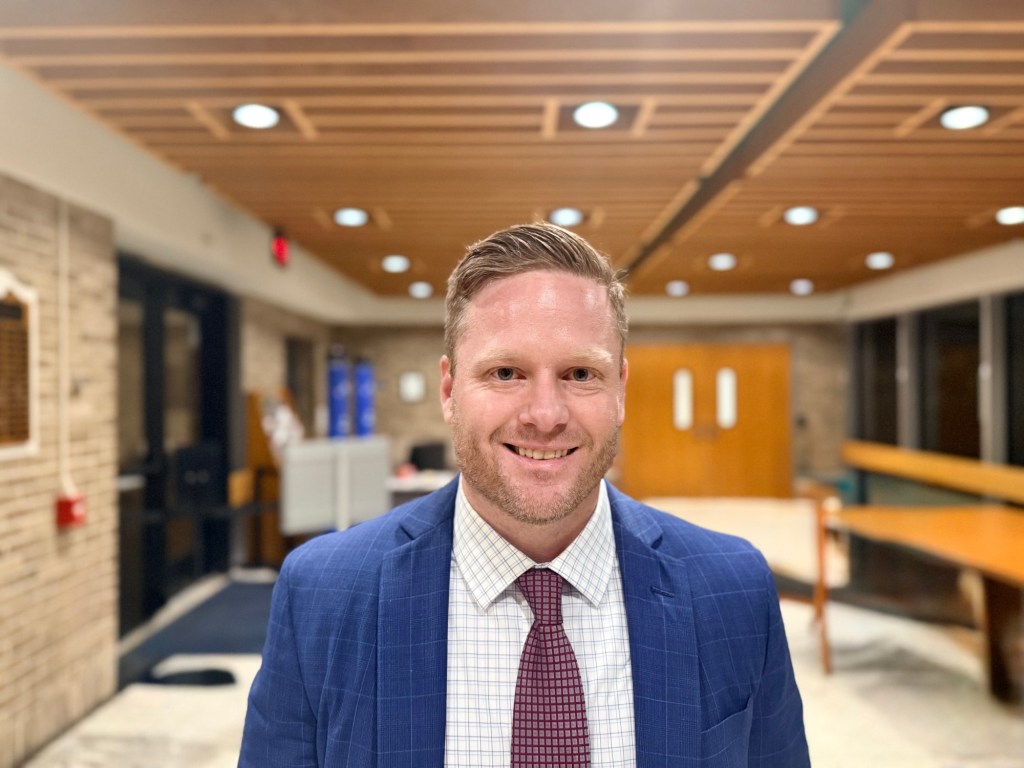
The Allentown School District has a new chief financial officer for the first time in three years. It also has a preliminary budget, now open for public review before the final approval vote in June, that includes a 2.9% property tax increase for district residents.
The CFO position has been filled by officials brought out of retirement for a temporary assignment that was designed to last three months, Superintendent Carol Birks told The Morning Call, before thanking the current team of interim chief financial officers for their work and saying they will stay on for a transition period.
“Often times in education we don’t give people the space to transition,” Birks said, noting that incoming CFO Jack Trent will benefit from the expertise of interim CFOs Jeffrey Cuff and Richard Fazio as they transition into “strategic advising” roles. The full timeline for when Cuff and Fazio will retire from district duties is undetermined, Birks said, emphasizing that the transition period will allow Trent to use the outgoing interim CFOs as resources.
Trent comes in with a long resume of school district experience. He currently serves as CFO for the Easton Area School District, and he also has prior experience with New Jersey districts, serving as a business administrator / board secretary for the Montgomery, Holland and Alexandria townships.
Trent told The Morning Call his official ASD start date will be Aug. 31.
The district closes its monthly meetings by introducing newly hired or newly promoted district leaders to the school board. At last night’s meeting, Chief of Talent Management & Labor Relations Herman James ended his introduction of Trent by saying, “And, he was a math teacher, let’s give it up!”
That math teacher experience also occurred in New Jersey, where Trent started his education career by teaching middle school math in the Pohatcong Township School District and then high school math in the Phillipsburg School District.
Trent declined to comment further on his future role with the district, deferring to the district leaders who had enthusiastically promoted him.
At Easton Area, Trent “manages a $214 million annual budget for a K-12 district serving 8,000 students,” James said in his introduction of Trent. “Upon his arrival, successfully closed a $7.5 million budget gap to deliver the district’s first balanced budget in five years. He also oversees a massive $298 million building project and commands a diverse team of 150 personnel, spanning the business office, facilities, transportation and food service.”
Easton Area School District previews plans for new $298 million high school
The team structure of interim CFOs that ASD has used in the years the CFO position was vacant also includes Wayne McCullough, who serves in an operations role, ASD Chief Operations Officer Robert Whartenby told The Morning Call.
Whartenby said he’s not sure yet exactly how the team structure will work now that Trent is coming on board. Whartenby has been collaborating with Cuff to build a budget plan that incorporates priorities from the $463 million in districtwide facility improvement needs identified in a 2025 study from Breslin Architects.
Cuff has repeatedly told the school board, including as part of his budget presentation Thursday, that funding infrastructure upgrades for aging buildings and outdated athletic facilities will require a 2.9% increase in the property tax rate for district residents. Last year, an influx of state funds allowed Allentown to be one of only three Lehigh Valley districts that did not raise taxes.
Thursday’s preliminary budget approved by the school board included that tax increase. That vote followed tense discussions kicked off by an effort from board member Denzel Morris to introduce a resolution to zero out the proposed tax increase.
Board member Dianne Michels initially supported that motion, but backed off after district solicitor Jeffrey Sultanik led a discussion in which he emphasized that the school board needed to pass a preliminary budget Thursday to meet requirements for a 30-day public review period before the legally mandated June deadline for approval of the final budget. Sultanik prompted Cuff to explain the ripple effects of removing the proposed tax increase from budget projections and to detail how much work it would be to redo budget projections to reflect a zeroing out of the proposed tax increase.
Sultanik also clarified for the board that the final budget, approved in June, can include changes from the preliminary budget, which is required to be posted for public review for the aforementioned 30-day review period. Discussion among board members centered around whether or not it would be useful to propose a preliminary budget that included no tax increase if it was likely that a June final budget would include the 2.9% tax rise.
ASD holds its monthly committee meetings starting at 6 p.m. on board meeting nights and then holds the main board meeting immediately after. The meetings are livestreamed. Thursday’s meetings ran until nearly 11 p.m. Approval of the finance committee agenda that included the preliminary budget, with the 2.9% tax rise included, was the last action of the night. The vote was 9-0 in favor.
Morris also made a motion to separate out the appointment of Trent from the rest of the night’s personnel agenda. That motion failed to gain a second. Morris was the only board member to vote no on the personnel agenda.
Trent’s appointment comes with a $200,000 starting salary, according to board documents.