
Data center guidelines were released this week from Gov. Josh Shapiro’s office. Critics and supporters have responded.
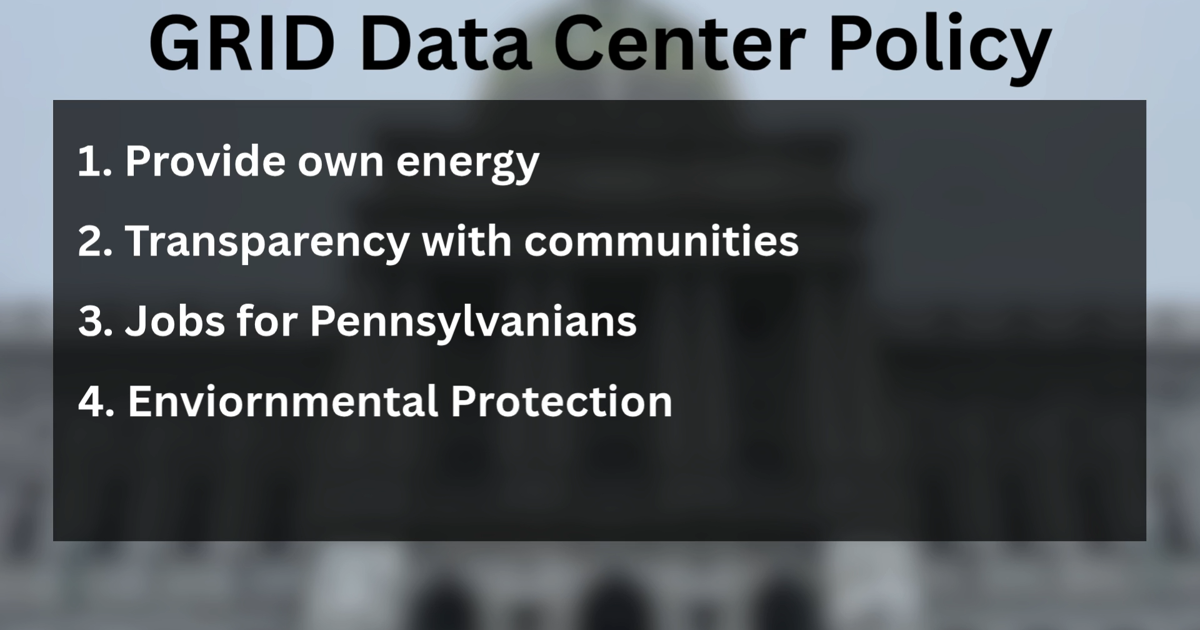
The Governor’s Responsible Infrastructure Development policy- GRID for short- lists priorities for data center projects. If a project meets standards around things like energy production or community transparency, they get put in a permit fast track program.
“I’ve heard directly from Pennsylvanians who are concerned about the impact data center development could have on their communities, the environment, and their utility bills,” said Shapiro in a press release quote. “That’s why I am putting clear guardrails in place to hold developers accountable.”
It is unclear how timelines compare for projects in the permit fast track versus those who process permits traditionally.
“We think that all four of his initiatives or parts of his initiative are weak,” said Karen Feridun, co founder of the environmental advocacy group No False Climate Solutions PA.
The organization, and other data center critics, say the policy lacks teeth. Many want all large projects to be paused for the foreseeable future. GOP gubernatorial candidate Stacy Garrity giving a campaign promise to that end-
“As governor, I will pause data center development in Pennsylvania. We should not be rushing into massive projects before local communities have the opportunity to protect themselves,” Garrity said in a campaign video.
In the GRID policy, companies building large data centers need to do four things to qualify for the fast track:
Provide their own energy.Be transparent with communities.Create jobs for Pennsylvanians.Have plans for environmental protection.
Shapiro promised to lay out accountability measures for data centers in his February budget address. The governor has championed the commonwealth as a place open for business.
“Bring your own energy means more power plants. It means more infrastructure,” Feridun said.
Some environmentalists worry about a return to carbon emitting energy sources with the data center expansions. Noise and water concerns are immediate environmental and quality of life impacts from the projects.
“We can’t just give over everything to business. We have to rein everything in. That’s why we have a government,” Feridun said.
Cautionaries say waiting on development could let the actual need for artificial intelligence be determined. It could also give tech a chance to get smaller before massive, permanent projects are launched.
“The cell phone that we had years ago looked like a suitcase compared to what a cell phone looks like now,” Feridun said. “The thing that we’re developing today could be done much more efficiently.”