

Why (fast) testing matters
The lab is best known for its tick testing, which has been free to state residents since 2019, when a spike in Lyme disease prompted state legislators to fund the lab’s work.
Part of what’s made it such an important service is the nature of tick-borne illnesses — and the tests available to catch them.
“The pathogens that cause these diseases are really smart,” Chinnici said. “They don’t circulate in our blood system, so we can’t just do a test like we do on the tick from your blood.”
Instead, human tests have to rely on the body’s antibody response, which can take six to eight weeks to emerge. That presents a problem for treatment.
“With Lyme disease and some of these other tick-borne illnesses, we know from researchers that you need to get treated within the first 30 days to have a really good battle against it and reduce the long-term symptoms that you may experience from it,” Chinnici said.
In fact, the official advice concerning Lyme disease — especially high-risk bites, which include bites by blacklegged ticks that are attached for 36 hours or longer — is to begin a course of antibiotics within 72 hours of removing the tick.
But most people don’t know what kind of tick they’ve plucked off their bodies, or how long it was attached — which is where the Tick Research Lab comes in. Despite receiving hundreds, and sometimes upwards of a thousand, ticks in the mail every day, the lab manages to return results to most people within 36 hours.
“And that’s really important because when we’re talking about tick-borne illnesses, our goal is to get you results before you have symptoms,” Chinnici said. “So if you have a tick that’s attached to you and you’re very concerned, I would priority ship that to us to speed that up.”
In addition to testing for pathogens, the lab provides tick identification, revealing which diseases it’s most likely to harbor, as well as an estimate of how long the tick was feeding.
“So a tick that’s on you for 24 hours or more would mean a greater risk for a disease to have transmitted,” Chinnici said. “So we look at the engorgement of the tick and then we test it for five different tick-borne illnesses.”
Those are the five most common — and dangerous — tick-borne illnesses in Pennsylvania: Lyme disease, Powassan virus, two forms of anaplasmosis, babesiosis and hard tick relapsing fever, or HTRF.
The lab also offers two higher tiers of testing: the advanced panel ($50 for state residents) and the comprehensive diagnostic panel ($100 for state residents), which screen for dozens more tick-borne diseases that are rarer in Pennsylvania.
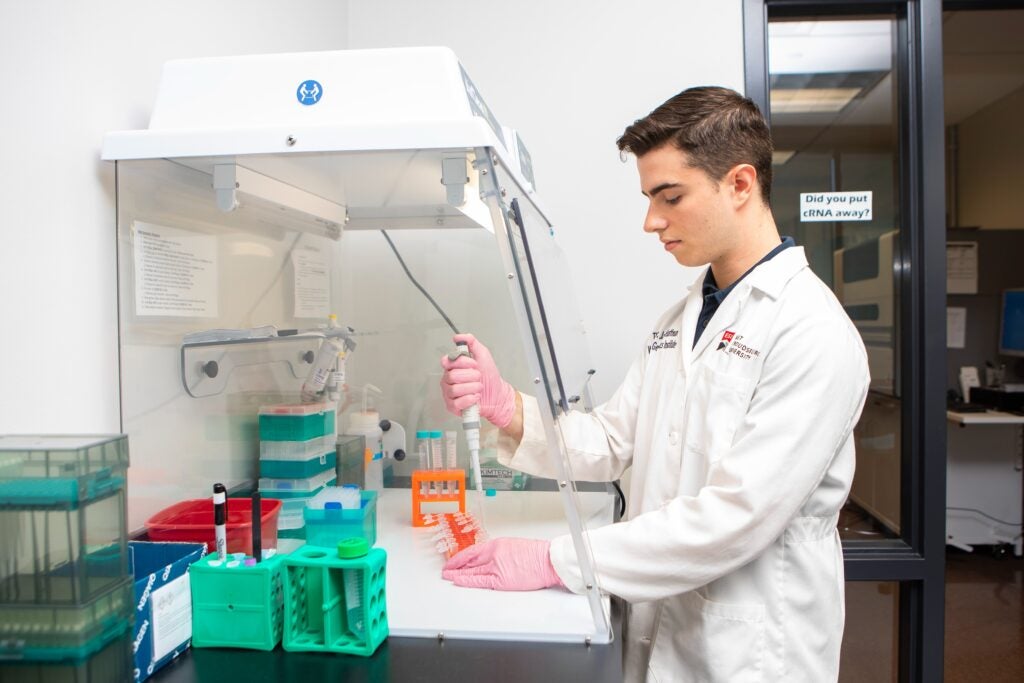 Staff members at work at the Pennsylvania Tick Research Lab, which provides state residents with free tick identification and testing for some of the most common tick-borne diseases. (Courtesy of the Pennsylvania Tick Research Lab)
For anyone stuck on choosing a panel, Chinnici recommends starting with the basic, free option — and sending your tick off as soon as possible, since symptoms can take days or weeks to appear.
“If you can find that tick bite — and you’re lucky enough to have seen that, because not everyone will see a tick bite — you send that in for testing, and you can always start out with the basic panel tick testing and allow our researchers to give you an understanding of what that tick is, how engorged it was,” she said. “Because if we send it back and tell you you’ve been exposed to a blacklegged deer tick, but it was only on you for seven hours, even if that tick is carrying a tick-borne illness, most of the tick-borne illnesses take 24 hours to transmit.”