
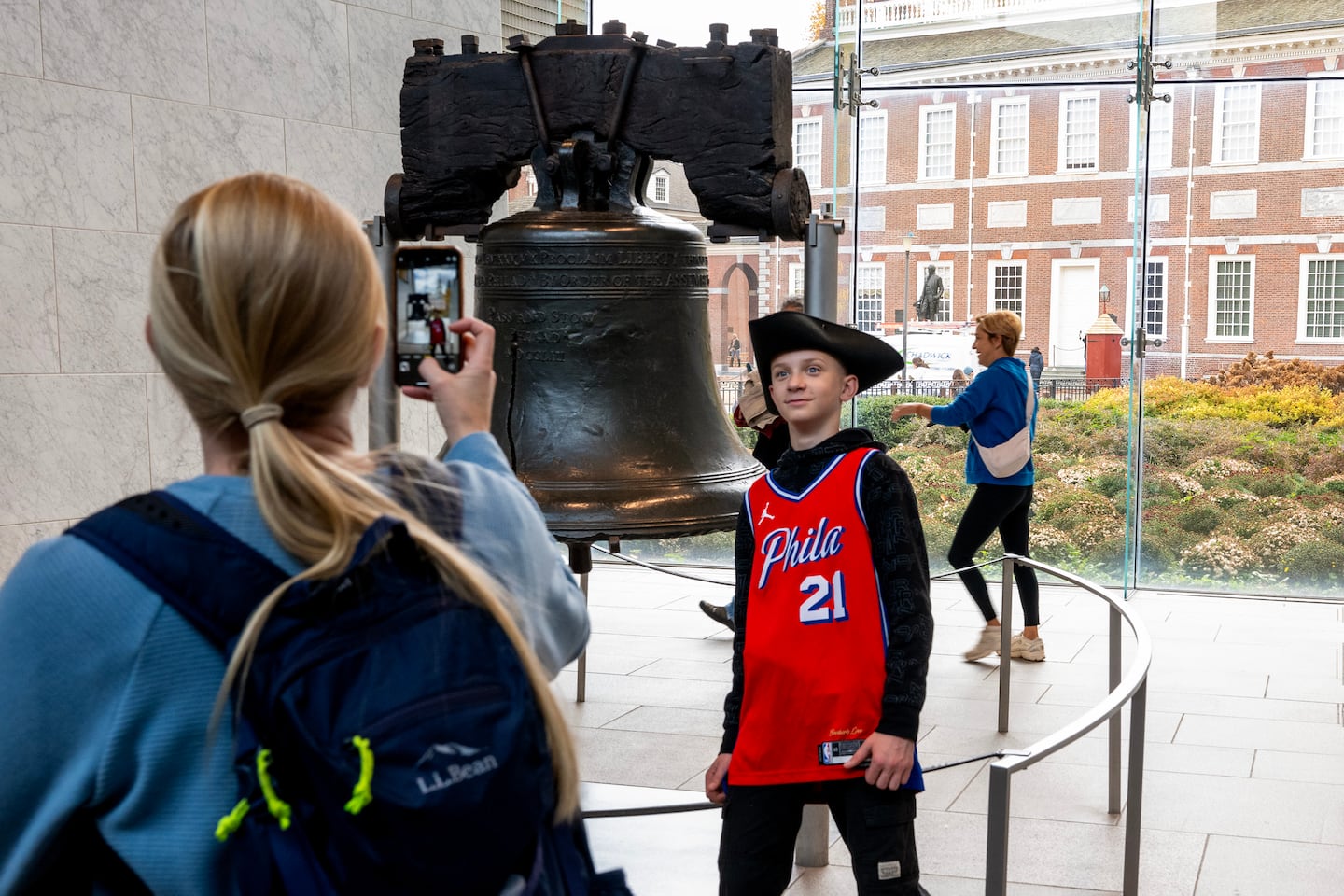
For Philadelphians, this rivalry is more than cheesesteaks versus chowder.
“The Revolution might have been started in Boston, but we delivered,” said Sean Connolly, executive director of the Arch Street Meeting House, a historic Quaker site. “Yes, you had a bunch of battles, but where were the documents signed?”
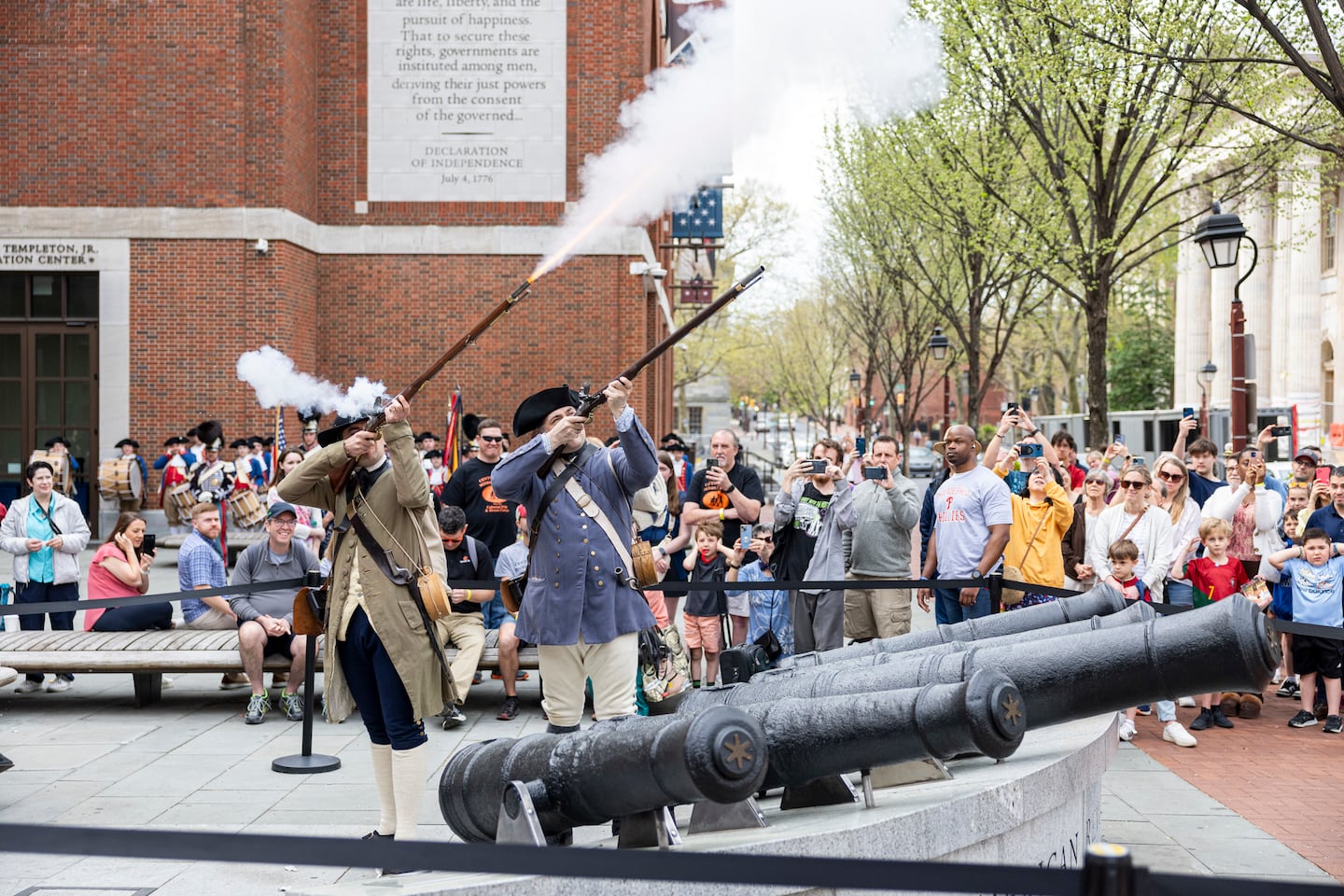 Matthew Skic (left) and Michael Hensinger dressed as Minute Men from the Massachusetts Militia for the opening of the new exhibit Banners of Liberty which showcases the original revolutionary war flags at the Museum of the American Revolution in Philadelphia.Tyger Williams/Philadelphia Inquirer
Michael Norris, executive director of Carpenters’ Hall, where the First Continental Congress met in 1774, cut to the chase when asked whether Boston or Philadelphia played the greater role.
“Don’t get me started,” Norris said, shaking his head as he stood on Independence Mall. “To me, Philadelphia is the ideological center. It’s where revolutionary thinking turned into action.”
Throughout 2026, Philadelphia has been making the 250th commemoration a mammoth, global advertisement for a city that its supporters argue is overlooked and underappreciated.
That perception didn’t always apply to Philadelphia, which was the largest city in British North America in 1776. As proof of its 18th-century appeal, Norris cited an early lifestyle choice made by Benjamin Franklin, a Boston native and printer who decamped for Philadelphia as a teenager.
“He was running away for a reason,” Norris said with a laugh.
The rivalry extends to how the two cities are commemorating the historical events of the American Revolution. Each metropolis has been looking over its shoulder at the other.
This sprawling city of 1.6 million people, nearly three times the size of Boston, is playing host this year to World Cup matches and the baseball All-Star Game, plus the PGA Championship in golf that recently concluded here. Pennsylvania’s tourism officials even splashed advertisements in Paris’s Louvre subway station to promote the soccer games.
The Boston area will also play host to World Cup matches, and a fleet of Tall Ships will arrive in Boston Harbor in mid-July after bypassing Philadelphia in the midst of its US tour.
For many Massachusetts historians, Boston’s crowning role in the revolutionary story surpasses that of a certain city of “Rocky” fame on the Delaware River.
“It’s absurd,” said Jonathan Lane, executive director of Revolution 250, a Massachusetts nonprofit group. “The people of Massachusetts sent more men to the battlefield than any other colony. Obviously, we were leaders in the early Navy and privateering, too. And we were among the early thought leaders.
“You can’t discredit Benjamin Franklin’s contribution,” Lane added. “But at the beginning of the war, he’s a bit wishy-washy.”
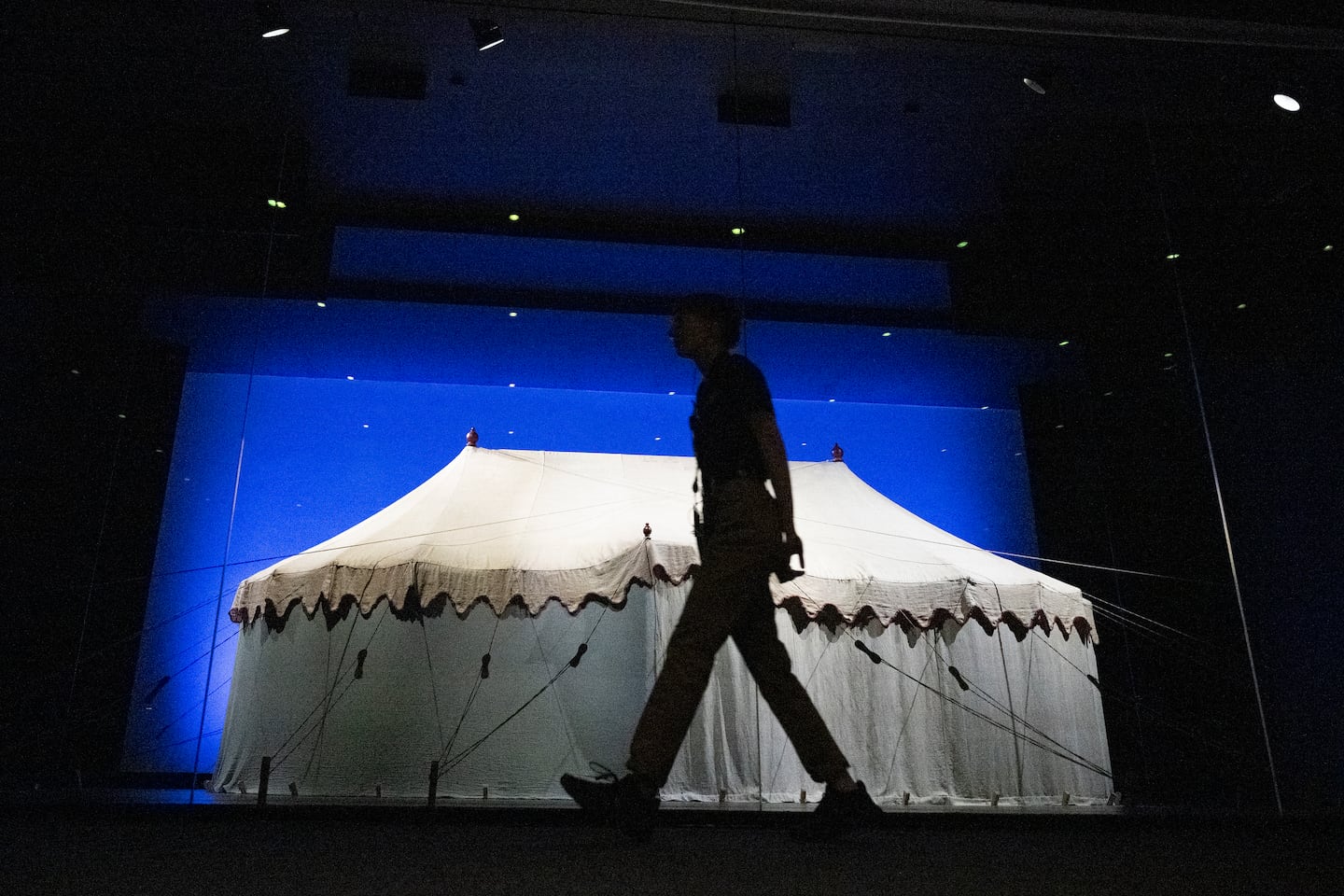 A fragment of Washington’s tent is displayed Wednesday, July 10, 2024, at the Museum of the American Revolution in Philadelphia.Jose F. Moreno/Philadelphia Inquirer
Boston’s role in fomenting the Revolution through ideas and force of arms is well documented in Philadelphia, most notably at the Museum of the American Revolution and the National Constitution Center. From Stamp Act protests in 1765, to the Tea Party in 1773, and the battles of Lexington and Concord in 1775, the story of the run-up to the Revolution is nearly all Boston, all the time, at those museums.
“For Boston, it’s impossible to ignore the chain of events that led to the birth of the United States,” said R. Scott Stephenson, president of the Revolution museum, which attracted 190,000 visitors in fiscal 2025 and is expecting to surge by 20 to 30 percent this year.
“The two cities feel so connected,” Stephenson said of the historical ties between Boston and Philadelphia. “I don’t know two other East Coast cities that should be more bosom buddies in a way that New York can’t even touch.”
Another reason to high-five: The colony of New York, a Loyalist stronghold, initially abstained from voting for independence because its delegates hadn’t received the go-ahead from the home office. That wouldn’t occur until July 9, 1776.
Still, there’s a simmering sense of gritty urban rivalry between Philadelphia and Boston, and it goes beyond sports grudges.
Sarah Baldauf, a Suffolk University graduate who tends bar at the Founding Fathers sports pub in Philadelphia, thinks that city takes better care of its past.
“Philly honors the history more. The entire Independence Hall area is still intact,” she said. “In Boston, you have to look for it because a lot of it has been paved over.”
Philadelphia’s civic cheerleading is led by Kathryn Ott Lovell, who holds two busy jobs as president of the Philadelphia Visitor Center and Philadelphia 250.
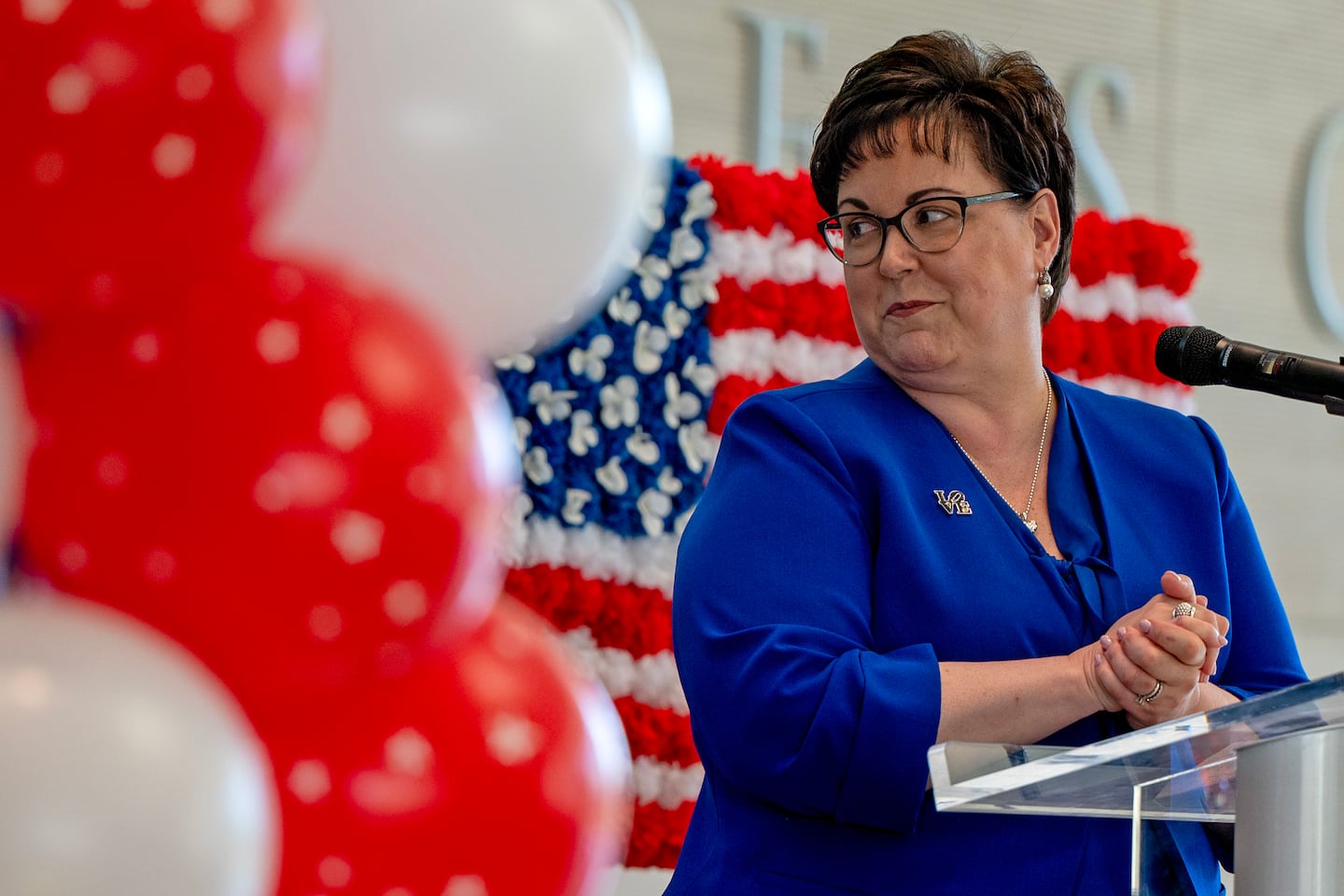 Kathryn Ott Lovell, president & CEO of the Philadelphia Visitor Center Corporation and Philadelphia250.Tom Gralish/Philadelphia Inquirer
“Sometimes, the only thing you need to hear in Philly is that someone wants to outdo you,” Lovell said in an office facing Independence Mall. “There are a lot of people who talk smack about Philly, but not enough to spread the love.”
Lovett, a fourth-generation Philadelphian, is unequivocal in whether Boston or Philadelphia has greater claim to the Revolution’s success.
“This is the birthplace of democracy,” she said of Philadelphia, repeating a mantra heard over and over from the 250th contingent here. “We have the documents, and we have the bell and the building.”
For those needing a primer, that would be the Declaration of Independence, the Liberty Bell, and Independence Hall, where the declaration was approved on July 4, 1776.
“What do they say? Possession is nine-tenths of the law,” Lovett added with a smile.
In terms of possession, Boston can point to the Freedom Trail, where the iconic Revolutionary sites of Faneuil Hall, the Old State House, the Old South Meeting House, and the Old North Church sit within easy walking distance of each other.
“Philadelphia claims to have the most historical square mile in America, and I would certainly be delighted to argue that point with them,” said Lane, the Revolution 250 director in Massachusetts. “The original Boston is only about one square mile.”
Physical landmarks aren’t the only supporting evidence for Boston’s claim to Revolutionary preeminence, Bay State historians say.
They point to the long history of self-government in Colonial Massachusetts, its early resistance to British parliamentary overreach, and the early, critical organizing efforts of Samuel Adams and other Sons of Liberty.
“As the old saw goes, Boston did the hard work of making the Revolution, while Philadelphia did the paperwork,” said Nathaniel Sheidley, president of Revolutionary Spaces, which stewards the Old State House and Old South Meeting House.
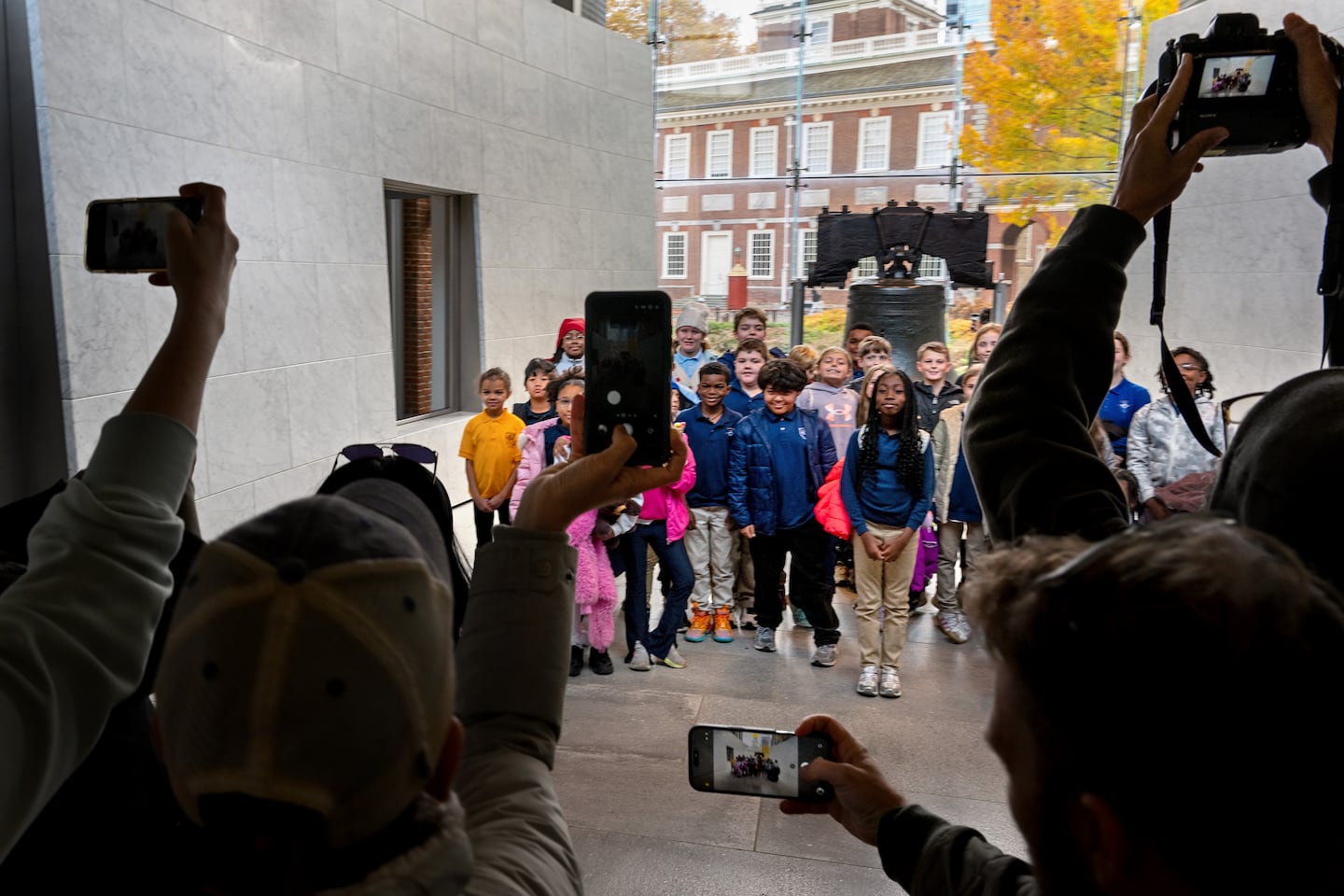 Students on a field trip from the Christian Academy in Brookhaven, Delaware County, pose for a group photo in front of the Liberty Bell in Independence National Historical Park.Tom Gralish/Philadelphia Inquirer
“Without question, Boston played the leading role in driving the impasse between the colonies and Britain,” Sheidley said.
Although Philadelphia “sometimes claims to be the birthplace of the union of the states, and it’s true that it hosted the Continental Congress,” he said, “I think it’s pretty clear that Boston birthed the idea of the union and created the communications infrastructure to support it.”
Historical competition aside, Lane said that Philadelphia deserves to be congratulated for its unrelenting promotion of the 250th.
“Nobody does it better. They have so tied their identity to the events of 1776,” Lane added. “What is the symbol of Boston, the one symbol that everyone looks at and says, that’s Boston?
“In Philadelphia, everybody says it’s the bell. It’s on signs, bumper stickers, and license plates. I’m sure they put it on their pancakes. In Boston, not so much.”
Anne Ryan, Pennsylvania’s deputy secretary of tourism, conceded that the cities share much of the credit. But she added a caveat.
“This is where I suppose my competitive spirit comes in,” Ryan said. “Boston played an incredible role in the Revolution. But the moment they declared independence, the moment when they were sure they would be charged with treason, that moment happened here.”
In the end, historians say, both Boston and Philadelphia obviously made outsize contributions to create the country — intellectually, philosophically, and militarily.
But 250 years later, the sounds of sibling bickering remain.
“Why can’t we all get along? Maybe it helps that I’m from Pittsburgh,” Stephenson said with a chuckle. “We ought to make up and be friends. It’s us against the world.”
Brian MacQuarrie can be reached at brian.macquarrie@globe.com.