
Solving problems
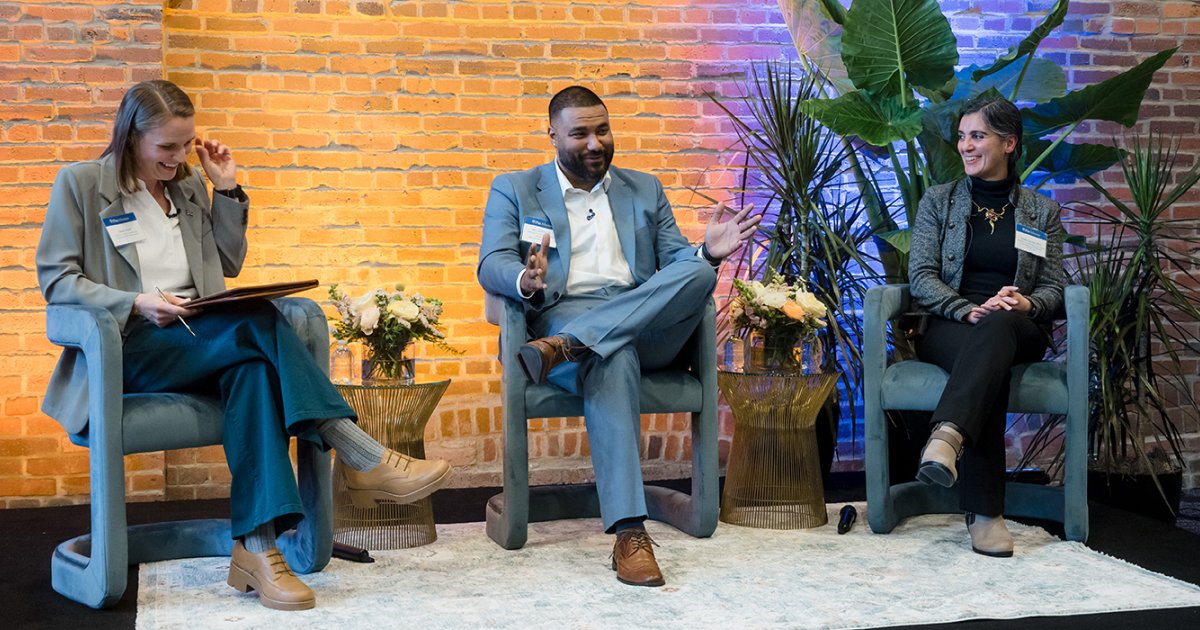
Farzan (SCI ’06G, ’09G), whose research focuses on community engagement and technology design, discussed how residents themselves help shape research priorities.
Working with neighborhood organizations including Center of Life and Hazelwood Initiative, Farzan and her colleagues have developed projects that combine technology, environmental monitoring and community participation.
One initiative centered on neighborhood air quality. Community members helped identify locations for sensors that collect pollution data, while students participated in monitoring and public education efforts.
Farzan emphasized that successful collaboration requires patience, consistency and trust, particularly in neighborhoods where residents may be skeptical of large institutions because of historical experiences.
In Pitt’s case, when the University listens to local residents and community partners, Farzan said, “that is actually how we learn a lot about how to best solve these problems and build technologies that are actually better for everyone.”
The panel made clear that Greater Hazelwood’s progress depends on relationships built over time and ensuring that residents are active participants in shaping the future of their neighborhood. That progress is accelerated by emerging industries and access to opportunities created by those industries is made possible through concerted efforts, such as those represented by the panelists.