
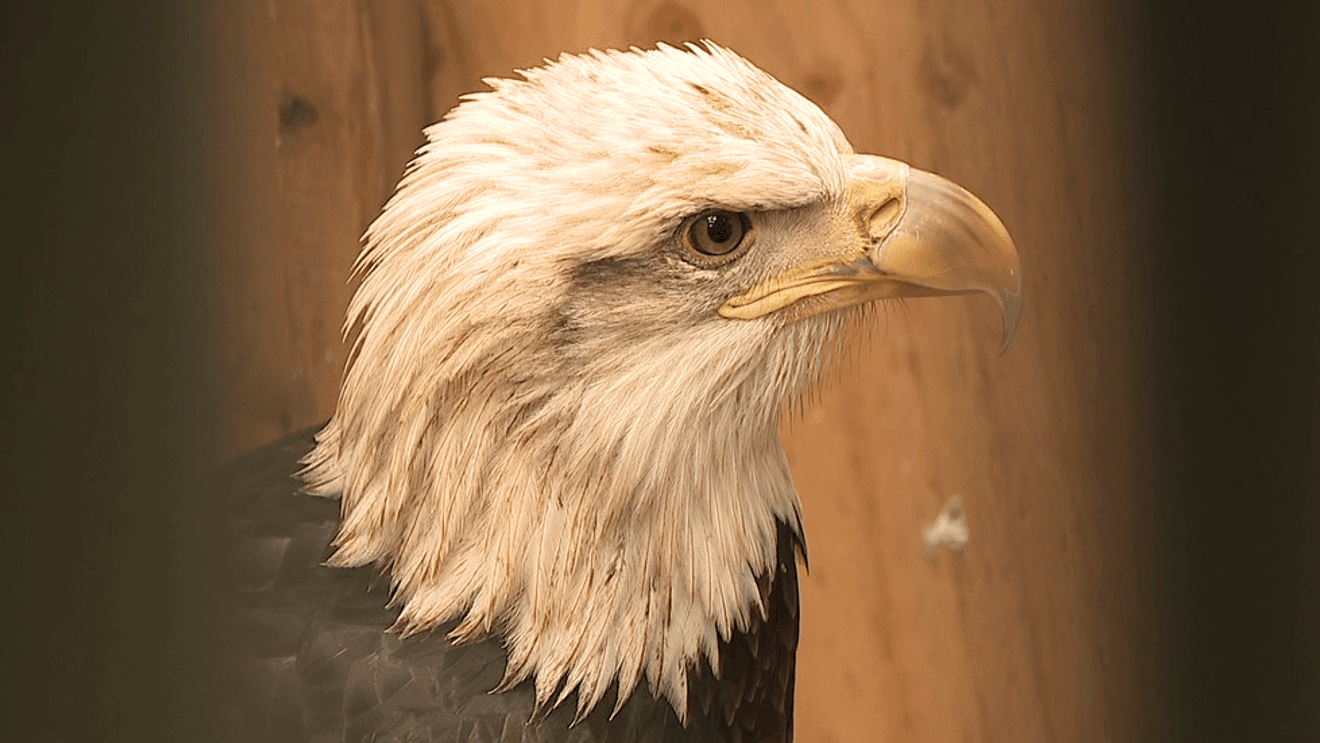
HARRISBURG, Pa. (WHP) — It’s common knowledge that the bald eagle is the symbol of our country, but less common is the fact that the birds nearly disappeared from Pennsylvania and much of North America decades ago.
Today, experts estimate Pennsylvania has more than 500 bald eagle nests. But back in 1980, Pennsylvania had a scarce three nests, all located in Crawford County.
“It’s one of the most renowned conservation success stories, the bald eagle across North America,” said state ornithologist Sean Murphy.
Murphy said Pennsylvania’s eagle population had declined so much due to a number of factors. For one thing, farmers had a history of killing bald eagles because they were seen as a threat to crops and wildlife.
The widespread use of a pesticide called DDT in the ‘40s, ‘50s and ‘60s also played a large role in limiting the bald eagle population. DDT caused eggshell thinning that ultimately caused nest failure, Murphy said.
“Despite its status as a national symbol, the bald eagle has been one of most persecuted birds in the county,” the Pennsylvania Game Commission writes on its website.
But once federal protections against bald eagles were strengthened in the ‘40s, the use of DDT was federally outlawed in 1972, and certain environmental protections were also strengthened, Pennsylvania gradually started to regain its eagle population.
Another big push came in 1983, when the Pennsylvania Game Commission began relocating bald eagles from Saskatchewan, Canada, in a process known as “hacking.”
“That’s a process where birds are raised and released in a new location with minimal imprinting from humans,” Murphy said.
Murphy said one of the old “hacking towers” still stands today on the Haldeman Island in Dauphin County.
“There’s public access there, and folks can walk across that island and actually see that hacking tower still standing, which is kind of a neat artifact of this great conservation story,” he said.
By 2006, Pennsylvania was finally estimated to have around 100 bald eagle nests, according to the game commission. In 2007, the bald eagle was removed from the federal endangered species list.
By 2013, Pennsylvania had more than 270 known bald eagle pairs with nests in each of the state’s 67 counties, which allowed the bird to be removed from the state’s own threatened species list.
That was the last year the Pennsylvania Game Commission had a full survey of the state’s bald eagle population.
But based on the recordings of volunteer bird-watchers involved in the Pennsylvania Bird Atlas project, Murphy said he estimates that today the Keystone State boasts at least 500 bald eagle nests—but the number is likely higher.
“When that Atlas is completed in 2028, we’ll probably have an even more confident number to share with the public,” he said.
Today, bald eagles are protected under the federal Migratory Bird Treaty Act and the Bald and Golden Eagle Protection Act, as well as Title 34 in Pennsylvania, which protests all nesting birds, Murphy said. He added that our environmental regulations also play a huge part in maintaining a healthy eagle population.
“Often I will look back to the three species of birds that we have delisted in Pennsylvania–the bald eagle, the peregrine falcon, and the osprey–and you look at those three birds, and they all kind of fit the same story: the threats were identified, protections were provided, resources were invested in recovering those populations, and we’ve been able to celebrate their recovery.”
But with a larger eagle population also comes more potential for human interaction, which doesn’t always bode well for the bald eagle.
Tracie Young is the founder of the Raven Ridge Wildlife Center in Lancaster County, where she runs the nonprofit rescue out of her home.
“We didn’t take in any eagles until like almost our third year into rehabilitating, and then we started getting eagles maybe one or two a year, and every year it has increased dramatically,” Young said.
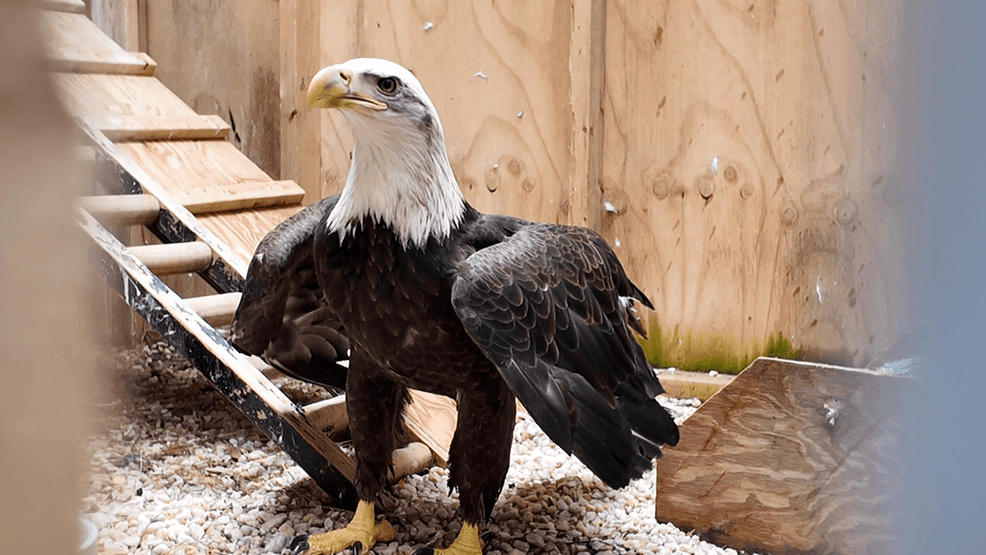
A bald eagle, named Welisewakan, who lives at the Raven Ridge Wildlife Center in Lancaster County, Pa., because she can no longer fly. (WHP)
This year so far, she said she’d taken in around 10 bald eagles. Most suffer from lead poisoning.
She said the eagles contract lead poisoning after they eat animal carcasses that had been shot and killed with lead bullets, or fish that have ingested lead sinkers.
That’s why Young and the Pennsylvania Game Commission alike advocate for sportsmen to use non-lead bullets and fishing tackle.
Young said she hopes Pennsylvanians can learn from the past to better protect its bald eagle population.
“We still have the upward battle of what these eagles are facing,” Young said. “And again, habitat loss, lead poisoning, rodenticides, pesticides. We don’t wanna go back that way, so I’m hoping it’s a learning lesson.”