
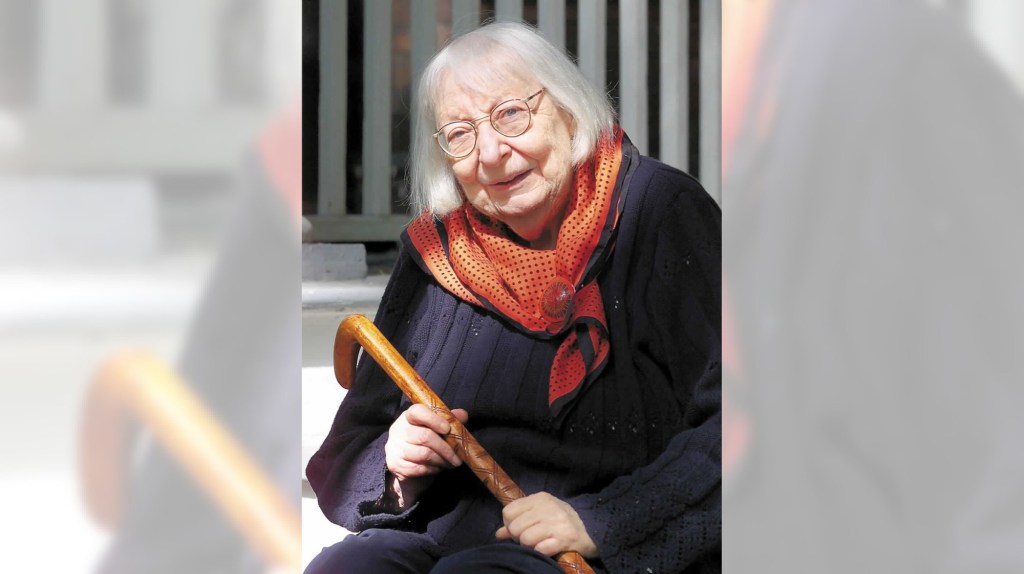
Walk around downtown Scranton today and you can almost feel the spirit of Jane Jacobs. The pioneering urban planner — who was born in Scranton in 1916 and never went to school for urban planning — saw cities as dynamic ecosystems, hungry for mixed-use development, thriving on the energy of the people who live there. Her landmark 1961 book, “The Death and Life of Great American Cities,” revolutionized the way municipal design is taught and practiced. In terms of real-world impact, she’s arguably the most influential person ever to call Northeast Pennsylvania home.
National ripple
When Jane Isabel Butzner was a child in Scranton’s Green Ridge section and in Dunmore, the automobile was in its infancy; five decades later in New York City she would become famous for organizing grassroots efforts to stop an expressway project that would have bulldozed Manhattan’s West Village. It was in New York — where she married architect Robert Jacobs Jr. — and later in Toronto that she nurtured a prolific writing career, eventually publishing seven major books, primarily focusing on urban planning, economics and social systems. She was an octogenarian when her final book, “Dark Age Ahead,” was published in 2004. Many of her ideas were considered radical when they were published but eventually became settled thought. But it was in Scranton that the Central High School graduate began developing her philosophy about what cities could and should be.
Living legacy
When Jacobs died in Toronto in 2006, her years as a fervent activist were behind her, but her impact has not diminished. You’d be hard-pressed today to find a vibrant American city that she hasn’t influenced, either directly or indirectly. She helped governments, economists and everyday people in neighborhoods understand how each element of a city functions together, how integration of different building types and uses, old and new, serves the whole, and how walkable downtowns, small businesses and local input keep a community vital. Jacobs was the subject of at least three biographies. Another writer, in a 2016 article in London’s The Guardian, called her “the architect of the modern city.”
Sidelights
The life and work of Jane Jacobs is celebrated annually through Jane’s Walk, a movement of citizen-led walking conversations that encourages people to share stories about the places they live, discover unseen aspects of their communities and use the art of walking as a way to connect with their neighbors. The event, founded in Toronto in 2006 by a group of Jacobs’ friends and colleagues, initially included only a handful of walks in Canada’s largest city. The movement saw rapid global growth; within a decade, 1,700 Jane’s Walks took place in 225 cities around the world, spanning 37 countries and six continents. It has since reached more than 500 cities, according to organizers.
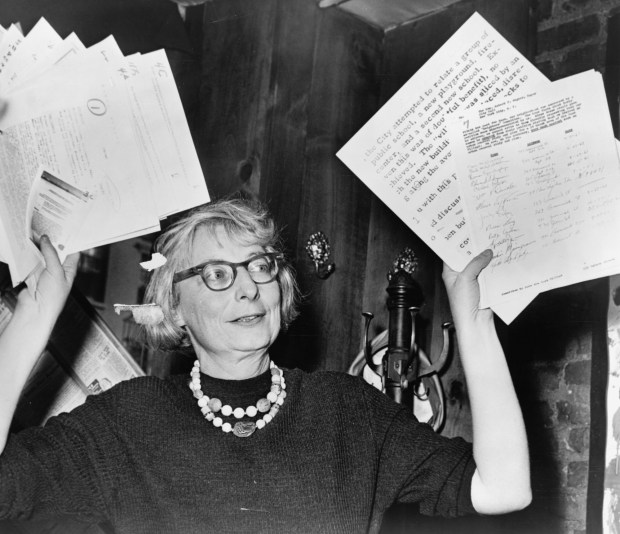 Jane Jacobs, then the leader of the Committee to Save the West Village, holds up documentary evidence at a press conference at the Lions Head restaurant in New York on Dec. 5, 1961. (U.S. LIBRARY OF CONGRESS PRINTS AND PHOTOGRAPHS DIVISION)
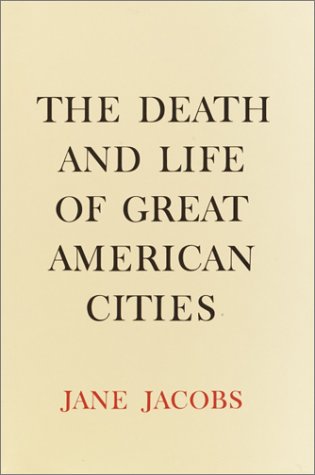 The cover of Jane Jacobs’ 1961 book, “The Death and Life of Great American Cities.” (SUBMITTED)
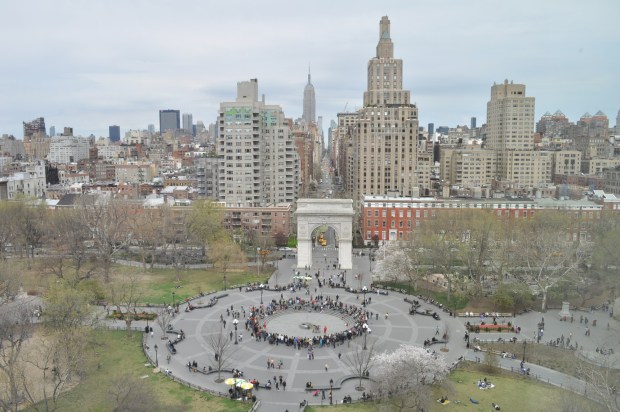 Washington Square Park in March 2012, in a photograph by Joe Mabel taken from the ninth floor of New York University’s Kimmel Center, on the south side of the park. Jane Jacobs was instrumental in halting plans for the Lower Manhattan Expressway to be built through the park and West Village. Jacobs’ efforts to stop the expressway led to her arrest during a demonstration in 1968. (U.S. LIBRARY OF CONGRESS PRINTS AND PHOTOGRAPHS DIVISION)
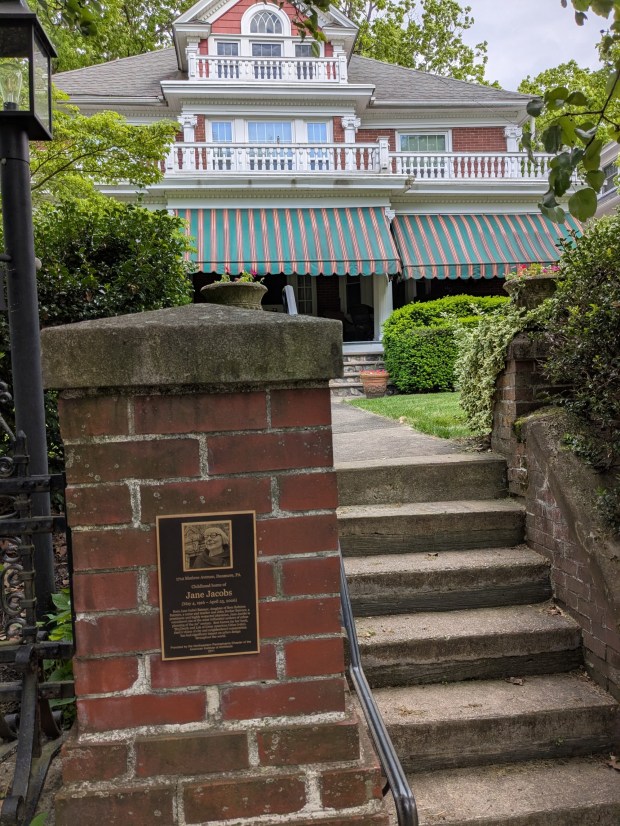 Jane Jacobs was born Jane Isabel Butzner on May 4, 1916, when her family lived on Electric Street in Scranton. When she was 5 they moved about a mile away to this house on Monroe Avenue in Dunmore. In April 2011 the Northeastern Pennsylvania Chapter of the American Institute of Architects unveiled a plaque honoring Jacobs at the front of the property, shown here in May 2026. (STAFF PHOTO)
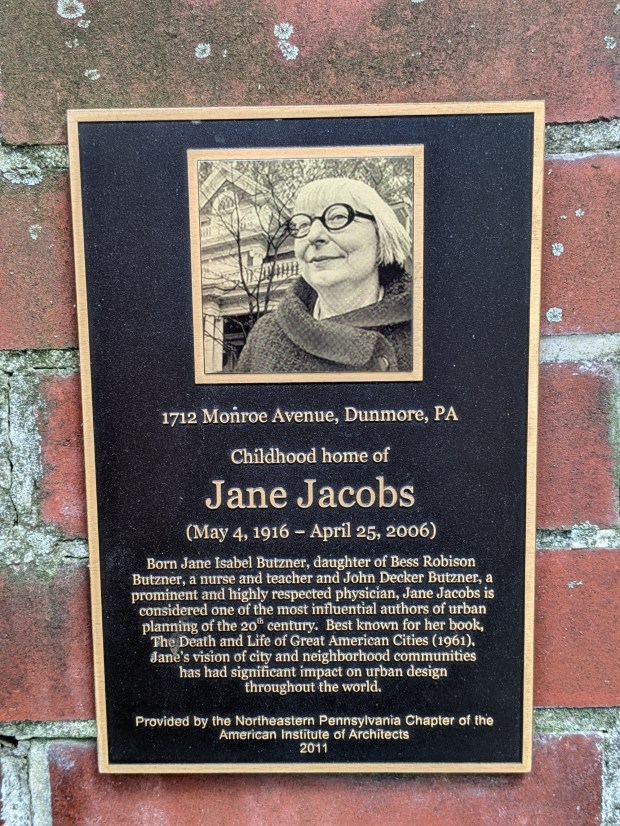 Jane Jacobs was born Jane Isabel Butzner on May 4, 1916, when her family lived on Electric Street in Scranton. When she was 5 they moved about a mile away to a house on Monroe Avenue in Dunmore. In April 2011 the Northeastern Pennsylvania Chapter of the American Institute of Architects unveiled this plaque honoring Jacobs at the front of the Dunmore property, shown here in May 2026. (STAFF PHOTO)
About the series
For 250 years, the story of the United States has been told through its biggest cities and its grandest battles. But look closer at the foundation of the American superpower, and you will find the fingerprints of Northeastern Pennsylvania everywhere.
NEPA wasn’t just a place where coal was mined; it was the “Silicon Valley” of the 19th century — a hub of engineering that sparked the railroad revolution and the “Electric City” of the 20th century that redefined how we move. It was the training ground for the labor laws that protect your weekend, the birthplace of the media models that power your living room, and the home of medical pioneers who changed the way the world saves lives.
As we approach America250, we are counting down 30 ways NEPA changed America. From the legal precedents set in our courtrooms to the literal fuel that fired the Industrial Revolution, this is the story of how our region didn’t just participate in history — it powered it.
Today, is No. 26: A Scranton native changes the way the world looks at cities