
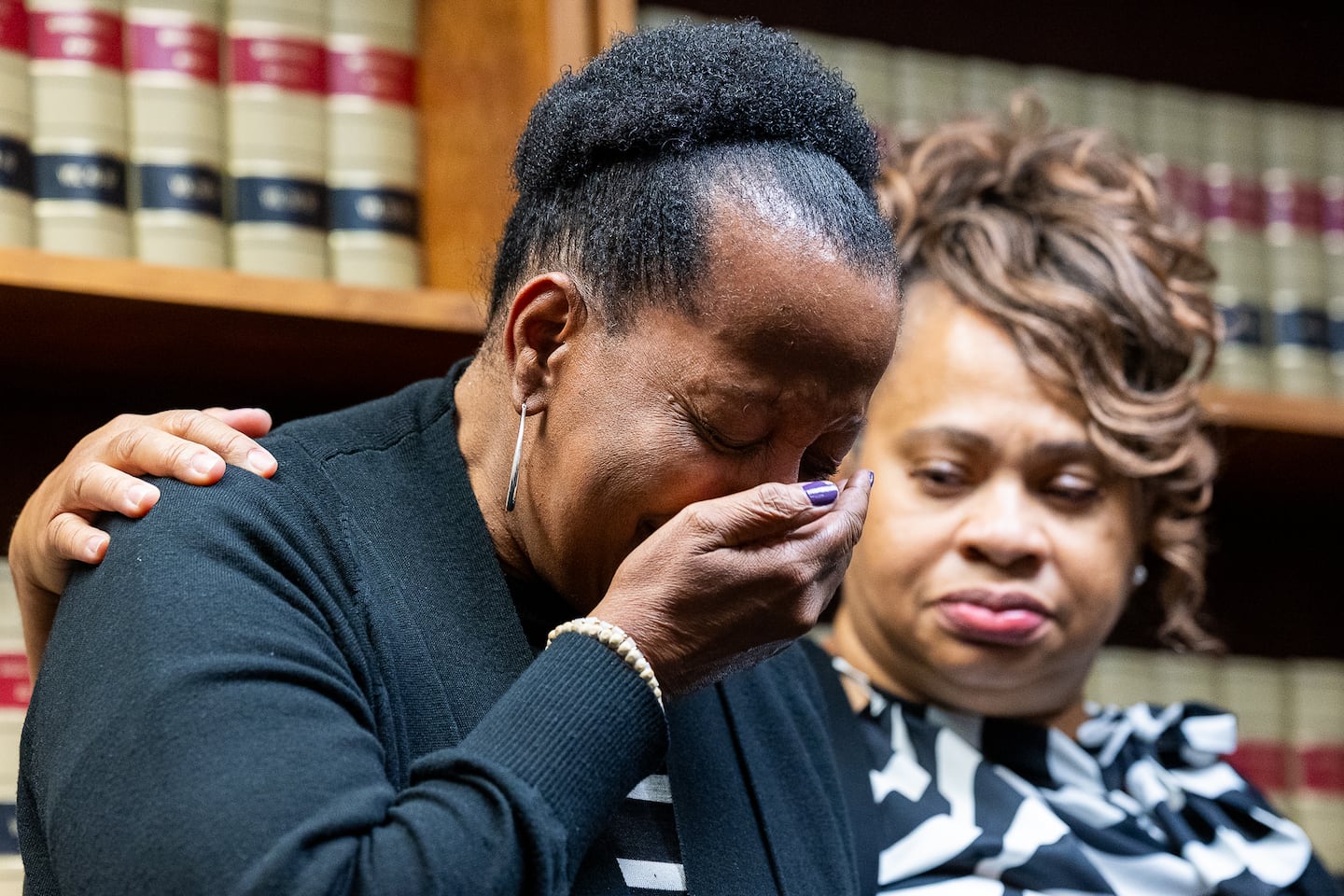
“The fact that we are here today is a miracle,” Shakirah Wiggins, Bradley’s niece, said at the briefing. “It is totally amazing that after 26 years, people care enough to give her a name and return her to her family.”
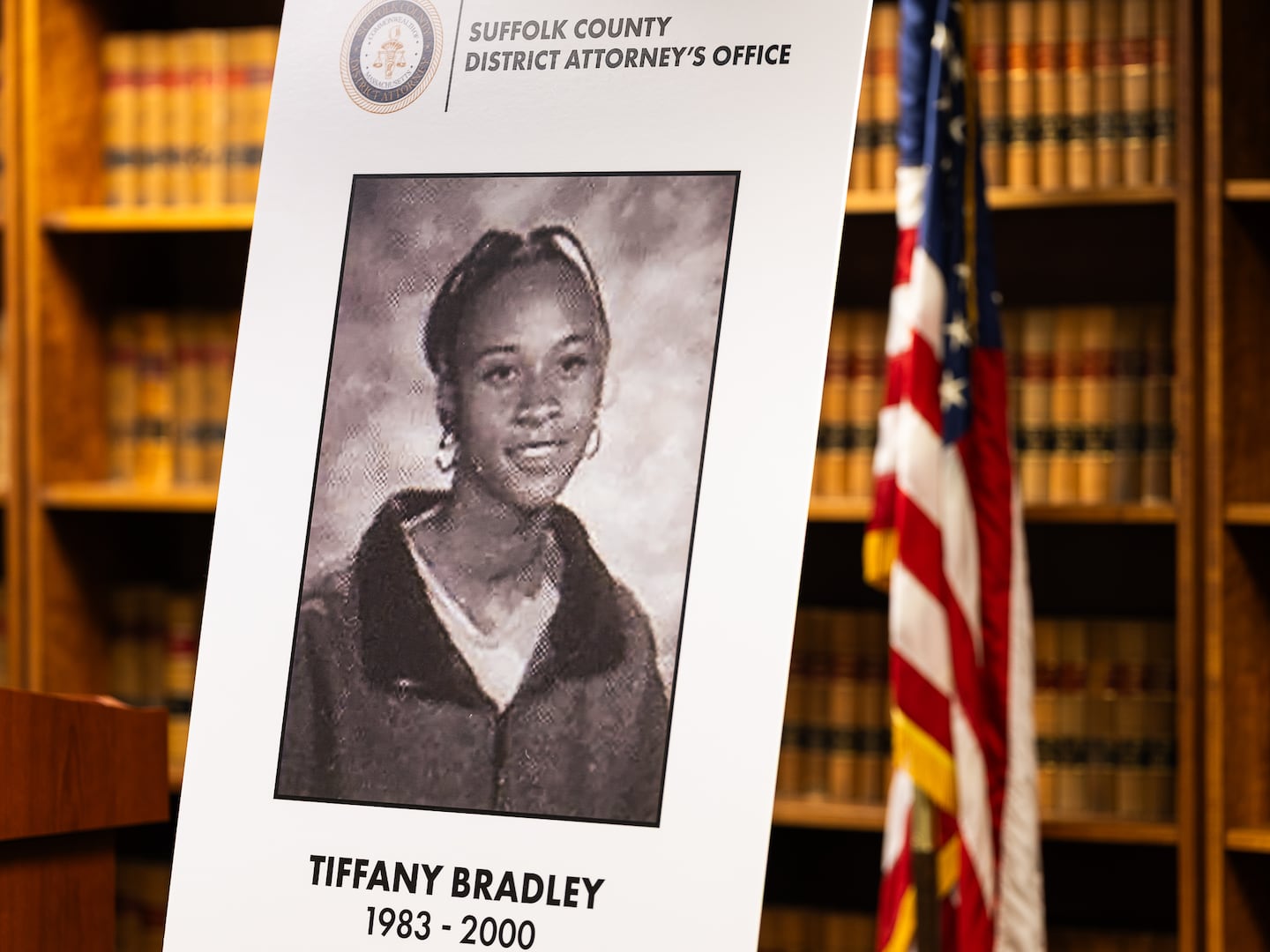 A poster with a photo of Tiffany Bradley was displayed before a press conference at the Suffolk County district attorney’s office in Boston on Wednesday.Finn Gomez for The Boston Globe
For 26 years, Bradley’s relatives did not know what happened to the teenager after she vanished. Family members said they searched for her in multiple states, monitored missing person databases, and held onto hope that she might still be alive.
“Today we can finally say her name, ‘Tiffany Bradley,’” said Ted Docks, special agent in charge of the FBI’s Boston office, at a press briefing Wednesday.
Several days after Bradley was reported missing, her mutilated remains were discovered in a parking lot at the Soldiers’ Home in Chelsea. Prosecutors said her body had been decapitated and dismembered.
“This is not a story about a case going unsolved for years and years,” Hayden said. “The story here is about an incredible 25-year effort by multiple law enforcement agencies to find the identity of a girl who had come to be known as Chelsea Jane Doe.”
Investigators identified the killer, Eugene McCollom of Lynn, within a year of Bradley’s murder. McCollom admitted to killing Bradley and dumping her body in Chelsea, Hayden said. He pleaded guilty and was sentenced in 2005 to life in prison. McCollom was already serving a 10- to 12-year prison sentence for manslaughter in the beheading and slaying of John Leyden of East Boston in 2001, the Globe reported at the time.
Hayden said authorities knew who killed the young woman but could not determine her identity. The effort to identify Bradley lasted decades and involved local, state, and federal authorities.
About a year after Bradley’s remains were found in Chelsea, Hayden said information from McCollom led investigators to Nahant Beach, where they recovered a bag buried in sand containing Bradley’s head and hands. Authorities were then able to create a composite sketch of what the girl may have looked like.
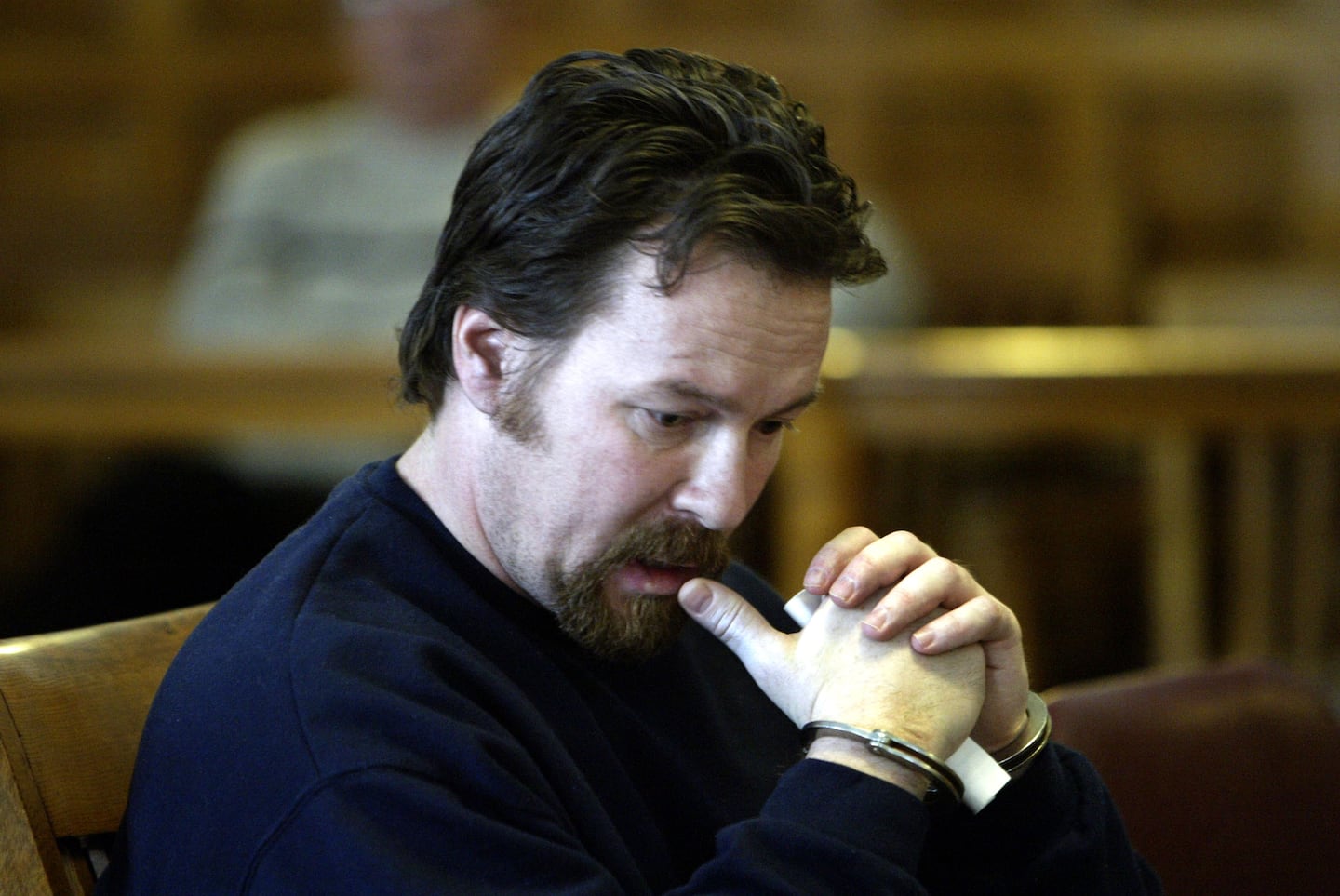 Eugene McCollom waited to take the stand in and plead guilty at Salem Superior Court in 2005.Landers, Tom Globe Staff/The Boston Globe – The Boston Gl
Over the years, investigators circulated the image nationally and pursued advances in DNA technology in the hopes of identifying her, officials said.
A breakthrough came in recent years when the FBI’s cold case team began using investigative genetic genealogy, a technique that combines DNA analysis with genealogical research.
“Technology alone does not solve cases, people do,” Docks said. “This result stems from the persistence of investigators, the collaboration between agencies, and extraordinary advances in technology.”
Earlier this year, the genealogical profile led investigators to James Bradley, a Texas resident. DNA testing confirmed he was Tiffany Bradley’s biological brother, Hayden said. The FBI formally confirmed her identity in April.
Authorities added that tips received by the National Center for Missing and Exploited Children shortly after Bradley was reported missing indicated she had been trafficked to the Boston area. Investigators determined those tips were accurate.
According to prosecutors, Bradley arrived in the Boston area after being trafficked and met McCollom within days. He allegedly took her to his room at the Lynn YMCA, where he killed her before leaving her remains in Chelsea and Nahant.
Docks said the case underscores why identifying victims remains important even when a killer has already been brought to justice.
“Justice is not delivered until the victim is known, until families have answers, and until communities understand the full truth of what happened,” he said.
He also called attention to the role trafficking may have played in Bradley’s death.
“This case also highlights the devastating reality of child sex trafficking across this country,” Docks said. “Trafficking victims are frequently isolated from support systems, moved from place to place, stripped of their identities, and are deliberately difficult to trace.”
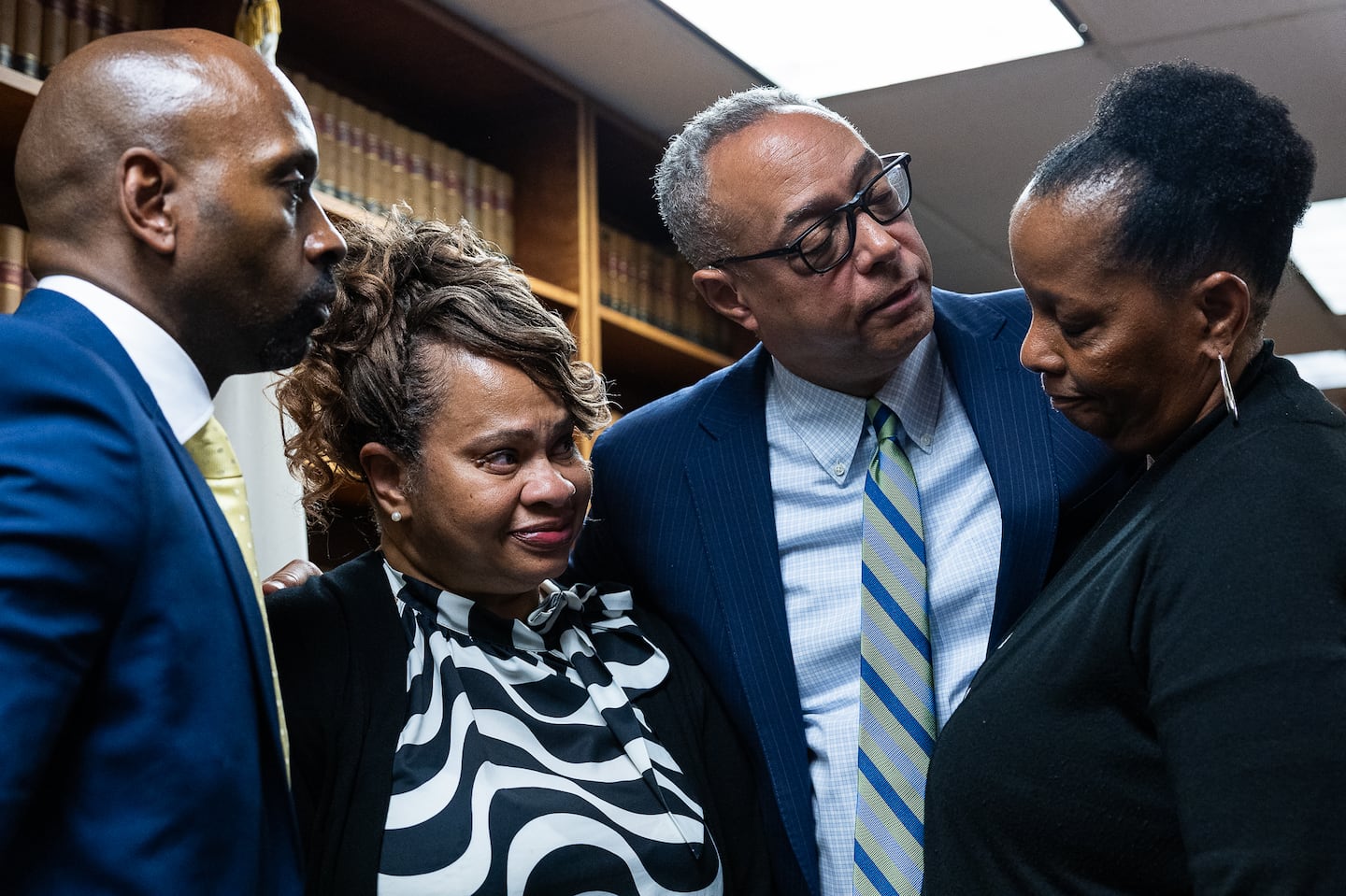 FBI Special Agent in Charge Ted Docks, Shakirah Wiggins, Janet Bradley-Knight, and Suffolk District Attorney Kevin R. Hayden spoke after the press conference. Finn Gomez for The Boston Globe
Massachusetts State Police Colonel Geoffrey Noble praised the investigators who continued working the case for more than two decades.
“We realize in cases like this that there is no finish line, there is no victory lap,” Noble said. “There simply is a fight for hard-fought answers to get to the truth and for justice.”
For Bradley’s family, the announcement brought a measure of peace after years of uncertainty.
Wiggins said her aunt loved drawing, cheerleading, dancing, and spending time with relatives. In high school, Bradley participated in ROTC and played basketball, she said.
Janet Bradley-Knight, Bradley’s aunt, remembered her as a “girly girl slash tomboy” who tried to keep up with her three older brothers.
“She enjoyed bossing them around,” Bradley-Knight said.
The family still does not know exactly what led Bradley into the circumstances that ended her life, but they expressed gratitude to investigators.
“I want to thank you all from the bottom of my heart [for] not letting my baby be a box on a shelf,” Bradley-Knight said. “I thank you all for your tireless effort … thank you so much for letting us take her safely home.”
After 26 years of waiting for answers, Wiggins said learning Bradley had finally been identified was bittersweet.
“It felt like her birthday today because we’re celebrating her,” she said.
Hannah Goeke can be reached at hannah.goeke@globe.com. Nick Stoico can be reached at nick.stoico@globe.com.