
PLAINS, LUZERNE CO. (WOLF) — Pennsylvania drivers are getting a break at the pump after gasoline prices dropped sharply from their spring highs, but several factors could determine whether that relief continues through the summer.
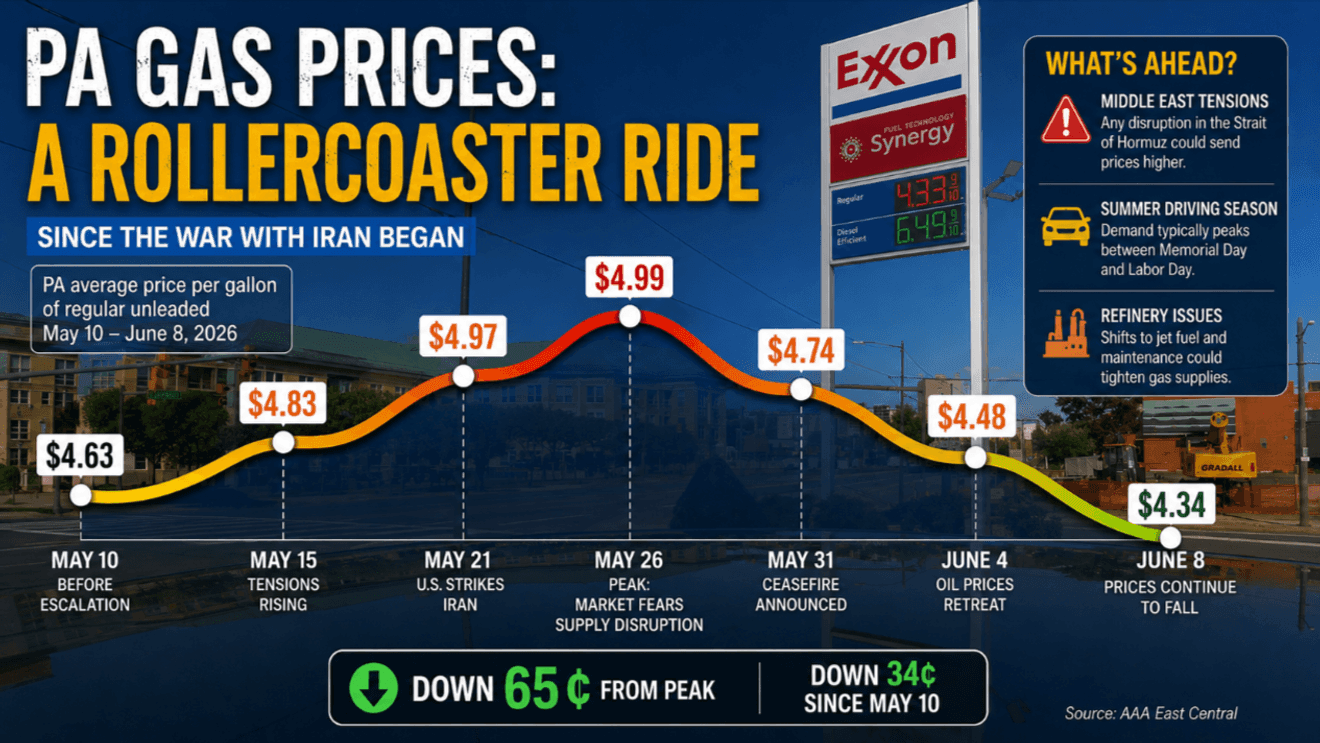
According to AAA, Pennsylvania’s average price for a gallon of regular gasoline has fallen to about $4.34, down about $0.65 from its peak in mid-May, when prices climbed into the $5-per-gallon range.
The decline comes as oil prices have retreated from recent highs and wholesale fuel costs have eased. Nationally, gas prices have fallen for two consecutive weeks as concerns about major supply disruptions in the Middle East have temporarily subsided.
Industry analysts say lower crude oil prices typically take several weeks to filter down to consumers, helping explain the recent drop in prices across Pennsylvania.
AAA East Central has also reported week-over-week declines throughout the state, a sign that retailers are continuing to pass along lower wholesale costs to drivers.
But while the recent trend has been encouraging for motorists, experts caution that several developments could quickly reverse the decline.
One of the biggest concerns remains the Middle East. Global oil markets continue to closely monitor tensions involving Iran and the Strait of Hormuz, a critical shipping route through which roughly one-fifth of the world’s oil supply passes. Any disruption in the region could send crude oil prices higher and quickly impact gasoline prices across the United States.
Summer travel could also put upward pressure on prices. Pennsylvania is entering its busiest driving season, with demand for gasoline traditionally peaking between Memorial Day and Labor Day as families take vacations and hit the road.
Analysts are also watching refinery operations. Some refiners have shifted production toward jet fuel, which has become increasingly profitable amid strong travel demand. If gasoline production tightens while summer demand remains elevated, prices could rise despite recent declines in crude oil costs.
For now, the trend is moving in the right direction for consumers. However, experts say the combination of summer demand, global uncertainty and refinery capacity issues means motorists should not assume prices will continue falling indefinitely.