

Batista_Sabbatical
“It extended well beyond four months.”
Aaron Batista, professor of bioengineering, waited 17 years before taking his first sabbatical, and when he did, he knew he would stay close to home.
“I have young children and a long-established lab, and leaving town was unrealistic,” said Batista, who researches neuroscience and neural engineering.
As for why he was ready for a sabbatical, Batista added, “I was starting to feel a little too narrowly focused on what I was doing in my own lab, and I wanted to get a sense for what else was happening around me.”
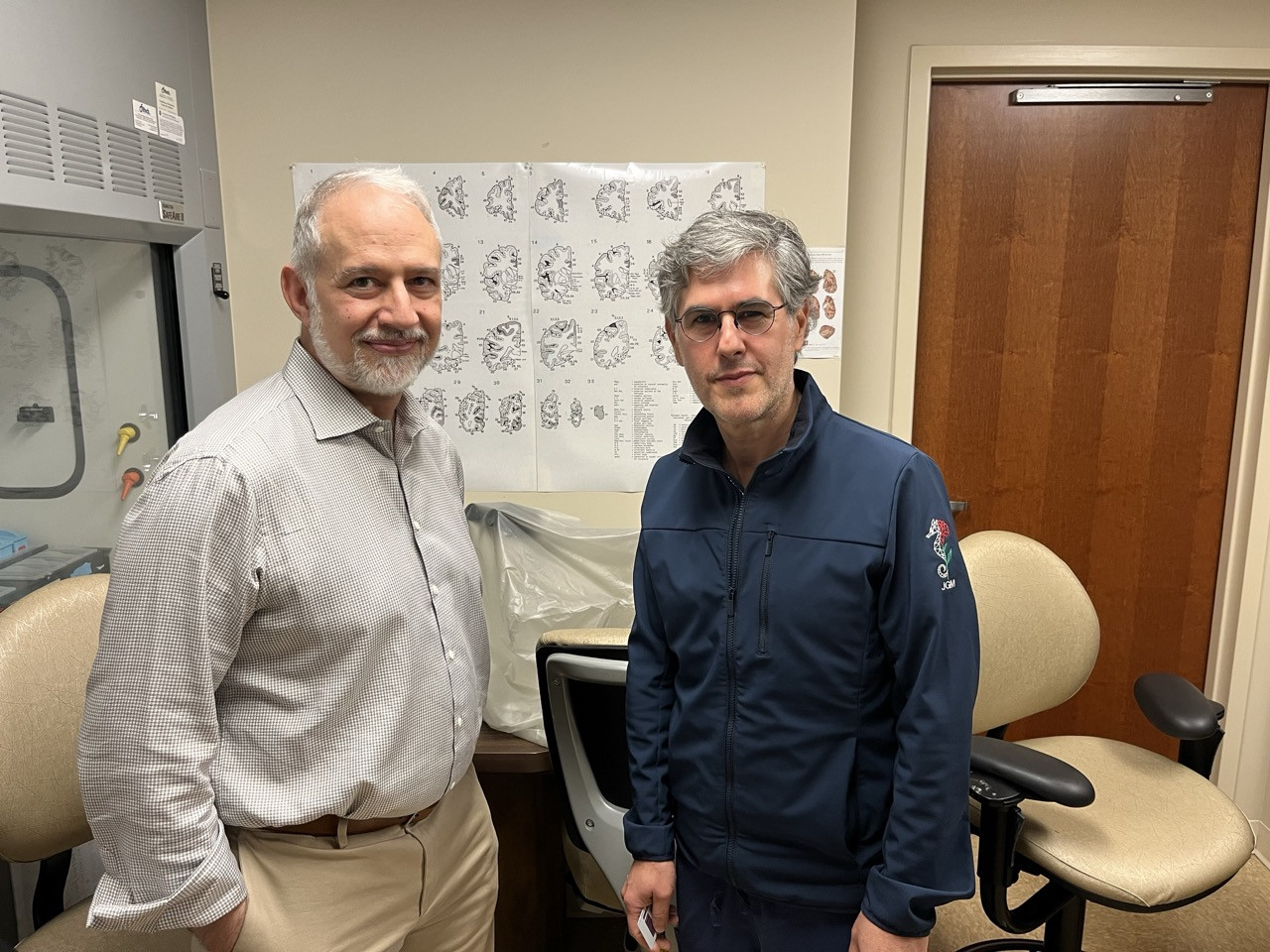
That changed last year after he observed a neurosurgical procedure conducted by his colleague Jorge Gonzalez-Martinez, in the School of Medicine Neurological Surgery.
“The first time I walked into an operating room, I was struck by how complex and coordinated everything was,” Batista said. “Neurosurgery is deeply collaborative.
“That first day clarified my sabbatical plan, and I began spending two days a week observing neurosurgeries. These experiences reshaped how I think about bioengineering and the role it can play in patient care.”
Batista began collaborating closely with Gonzalez-Martinez, exploring how engineering approaches could improve surgical procedures and expand treatments. “Our conversations went far beyond the operating room. We talked about better electrodes, faster procedures, and expanding the diseases a surgeon could treat.”
From the collaboration has come a National Institute of Health T32 grant that, if funded, will train engineers to work alongside clinicians during neurosurgical procedures and identify opportunities to expand treatment options and improve outcomes. The grant will expand the Department of Bioengineering’s scope with the new focus on neuroengineering and neuroscience.
“Sabbaticals don’t have to involve international travel or leaving campus entirely,” Batista said. “Mine was local, structured, and manageable, with minimal disruption to my lab and teaching responsibilities. The return on that investment was enormous: renewed energy, new collaborations, and a clearer sense of purpose.”
Like so many Pitt engineers who have taken sabbaticals, his experience reflects that it doesn’t matter how far one travels, but how significantly one is changed. Echoing many of his colleagues, Batista said, “Looking back now, this was one of the most meaningful periods of my career.”
‘;