
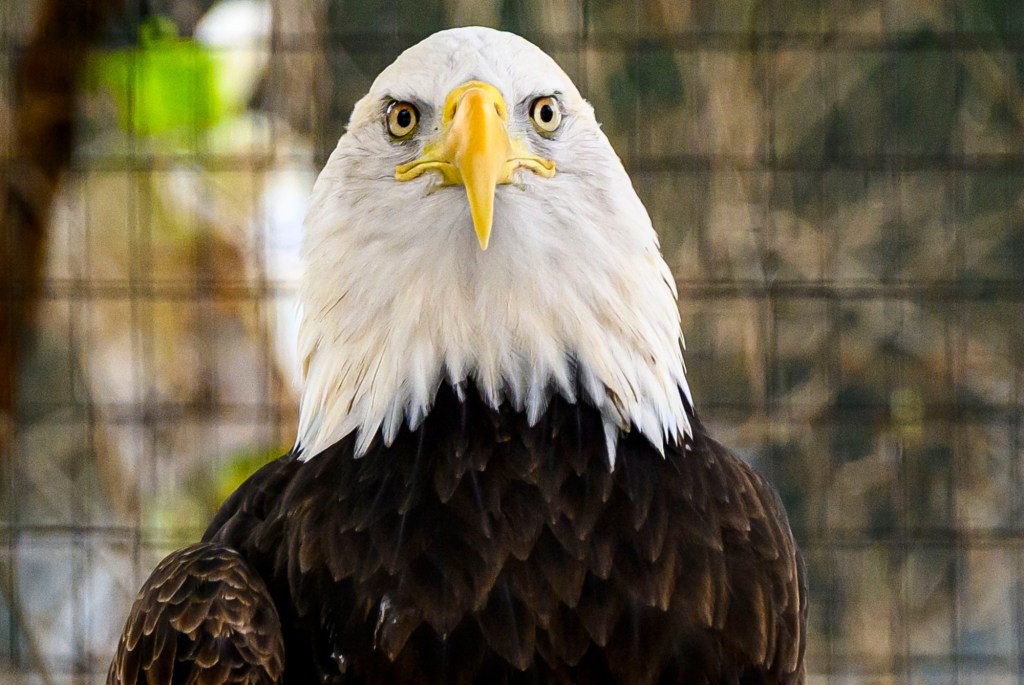
From the edge of her yard, Marianne Bobbin can see them swooping down, wings spread wide as they aim, feet first, for their favorite tree. The pair of bald eagles showed up in 2024, and visit a roost less than a half-mile from her Mechanicsville Road property so frequently that Bobbin keeps a log of their daily activities:
Hunting, eating and, per Bobbin’s notes, engaging in “hanky panky.”
When news of the proposed Project Atlas data center reached Bobbin and her neighbors this year, the 75-year-old widow’s first thought was for the wildlife around her South Whitehall Township home.
She hopes it might stop Project Atlas from being built on a 410-acre site that sits about a mile, as the crow (or eagle) flies, from her property.
“We have deer here, coyote, foxes. The wild turkeys just started coming back, and sometimes the snow geese cover this whole field,” she said, gesturing from her porch.

Signs opposing the Atlas Data Center line the roads Monday, June 8, 2026, in South Whitehall Township. (Monica Cabrera/The Morning Call)
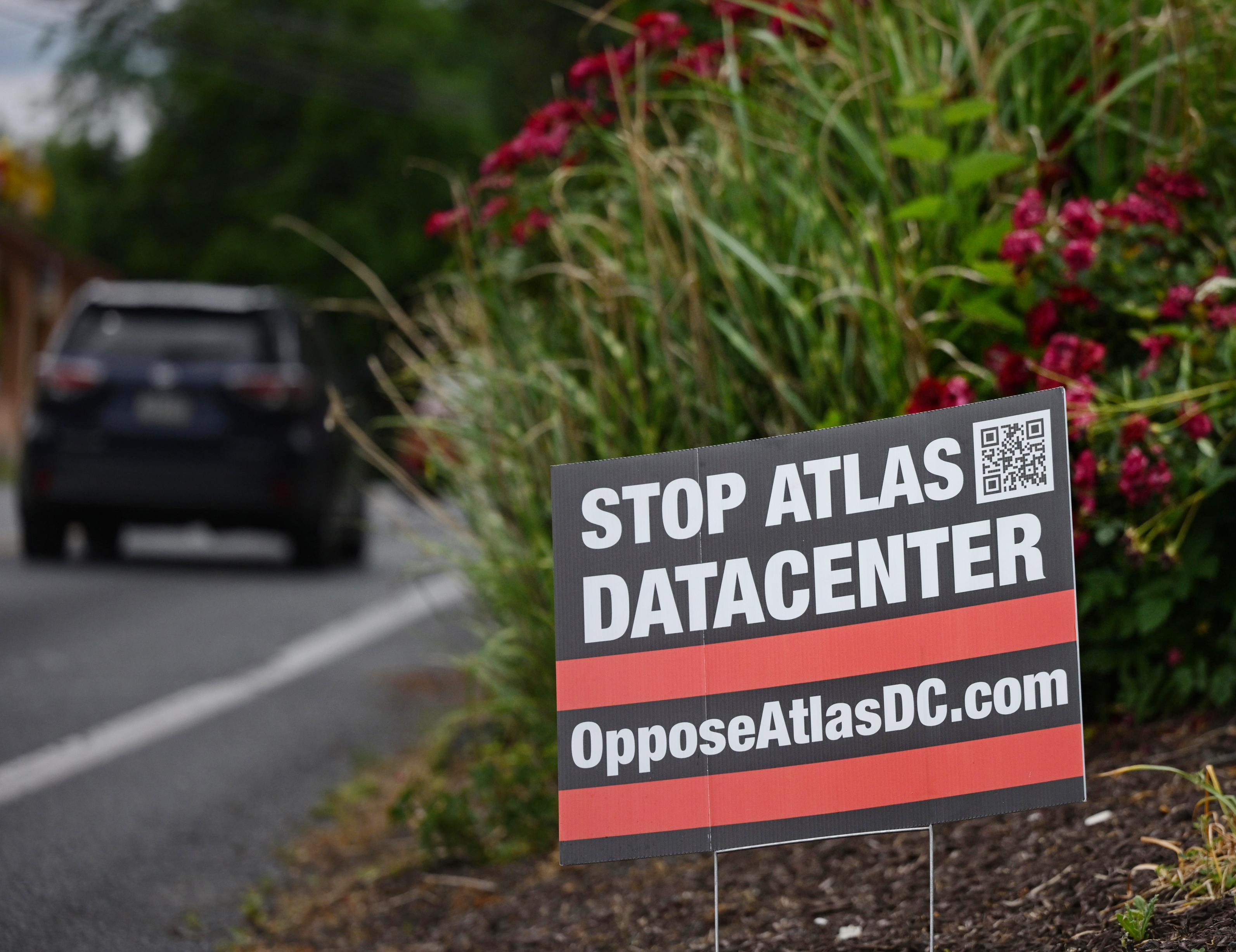
Signs opposing the Atlas Data Center line the roads Monday, June 8, 2026, in South Whitehall Township. (Monica Cabrera/The Morning Call)
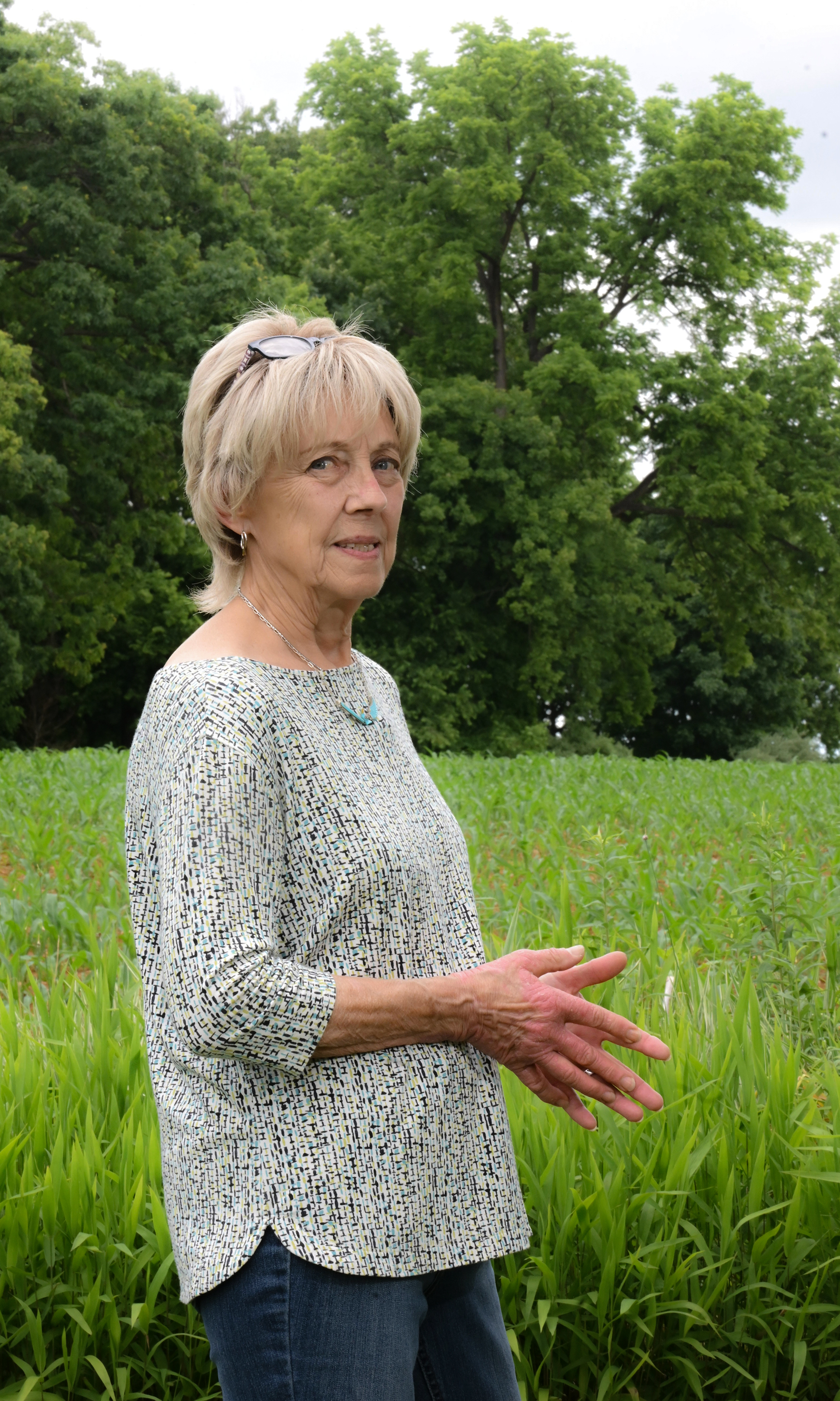
Marianne Bobbin stands Monday, June 8, 2026, in front of a line of trees behind her home where she has seen eagles perched on limbs in South Whitehall Township. She lives less than a mile from where the new Atlas Data Center is proposed, and worries about the effect the data center could have on wildlife. (Monica Cabrera/The Morning Call)
Show Caption
1 of 3
Signs opposing the Atlas Data Center line the roads Monday, June 8, 2026, in South Whitehall Township. (Monica Cabrera/The Morning Call)
The bald eagles, with their 5-foot wingspan and brilliant white heads, put on a show. Bobbin and her neighbors snap and share photos, and keep binoculars handy to watch them.
While no longer considered endangered, bald eagles are still a protected species and data center builders would need a permit from the U.S. Fish and Wildlife Service to disturb a nesting site. No confirmed nesting site has been identified near the Atlas project, officials said.
In Lower Mount Bethel Township, opponents of a proposed data center have also pointed to a pair of nesting bald eagles as a reason not to build there.
While the South Whitehall birds usually stay in the field and woods behind Bobbin’s house, she once spied an eagle drop down across from her driveway to feast on a deer that had been hit by a car.
“That close up, they look huge. Like a pterodactyl,” she said.
Bobbin is so concerned that the data center project adjacent to Parkland High School would harm the eagles that she spoke up at a township Board of Commissioners meeting last week, presenting the panel with the daily log she’s kept of the birds’ activities, as well as photos.
“The township looked into it and referred this matter to the appropriate state agency/authorities,” South Whitehall Manager Tom Petrucci confirmed.
Docs reveal South Whitehall experts’ concerns over data center proposed near school
Liz Brensinger, conservation chair of the Lehigh Valley Audubon Society, said Bobbin’s worries are valid. She said the organization is “very concerned” about the adverse effects of data centers on local birds.
“Many of the issues that concern residents — constant noise and vibration, potential depletion of water sources, light pollution, air pollution from backup generators, loss of farmland and open space — also harm birds,” she said.
Noise and vibration, for example, reduce birds’ reproduction rates and disrupt their navigational abilities, Brensinger said. Putting data centers on agricultural property, like the proposed site of Project Atlas, negatively affects birds and other native animal species.
“Loss of farmland and open space translate into loss of suitable habitat for birds and other wildlife and is a huge problem for birds globally, and a pervasive one here in the Lehigh Valley, where we continue to lose large amounts of farmland and open space to development,” Brensinger said.
Bird populations are already in steep decline. According to the Audubon Society, in the U.S. and Canada, the population of breeding birds declined by 2.9 billion between 1970 and 2019. In other words, more than 1 in every 4 birds are gone, Brensinger said.
“Every data center project takes a toll on these already-stressed bird populations,” she said.
The Audubon Society is not aware of the bald eagles that Bobbin is watching but said there is a great blue heron rookery a few thousand feet from the proposed data center site. Linda Kurrasch, another Mechanicsville Road resident, says she has observed herons flying over her property, as well as the bald eagles.
Kurrasch, 85, said the mating pair are a frequent sight in the fall and winter. One year, she said, she saw an eagle that she couldn’t identify, so she called the Lehigh Valley Zoo for information and learned that it was a juvenile bald eagle, which must molt a few times before growing the brilliant white head feathers that adults have.
“I love watching them, and all the animals we have here. When I heard about the data center, my first thought was for their habitats. I just don’t want to lose that,” Kurrasch said.
The data center boom is just starting, so what can be done to lessen the industry’s impact on birds and other wildlife? At the University of Michigan’s School for Environment and Sustainability, researchers are trying to answer that question by looking at the “sensory danger zones” caused by noise and light pollution around the facilities.
The researchers are studying how the sound emitted by the centers could affect reproduction in birds including the northern cardinal, oak titmouse and barn swallow, and recommend adopting sustainable strategies when building and operating data centers.
Concerns about data centers’ impact on wildlife are also circulating in Lower Mount Bethel Township in Northampton County, where a pair of bald eagles has a nest in a birch tree right on the edge of the project site, on farmland at Gravel Hill Road and Martin’s Creek Belvidere Highway.
Residents packed a town hall in April to sound off on the environmental impact a data center would have on the mostly rural township, among other concerns, and many were not persuaded by developers who insisted a proposed facility would bring increased tax revenue, job creation and the redevelopment of underutilized land.
Residents have created a website, No Data Center LMBT, to continue their campaign against a possible facility.
Bald eagles mate for life and can live up to 25 years. They are highly sensitive to the presence of, and interference by, humans during the breeding season, Brensinger said, and have been known to abandon nests as a result of human activity.
Although they were removed from the Endangered Species Act list in 2007 because populations had rebounded, bald eagles and their nests are still protected from harm and disturbance under the federal Migratory Bird Treaty Act and the Bald and Golden Eagle Protection Act. That law prohibits anyone without a permit from pursuing, shooting, poisoning, wounding, killing, capturing, trapping, collecting, molesting or disturbing bald or golden eagles or their nests and eggs.
Violators face up to a year in federal prison and up to $100,000 in fines.
Repeated sightings of two adult eagles together in an area during late winter, as Bobbin has described, could be a sign that the area is part of a nesting territory, according to the Pennsylvania Game Commission, which monitors the bald eagle population.
Along with presenting her findings about the bald eagle pair to township officials, Bobbin has posted signs and joined more than 8,000 others in a petition against the project.
She says she’ll continue to speak up on behalf of all the wildlife that have shared her land during the 46 years she’s lived in South Whitehall, even though she fears the data center project may be inevitable.
“Things have already changed so much, but it would be good if this area could stay a little bit wild. When the daytime traffic is gone it’s so quiet.”
The Project Atlas data center was scheduled to be discussed at a public hearing of the South Whitehall planning commission Thursday, but that meeting was canceled Wednesday morning. A new date has not yet been set.