
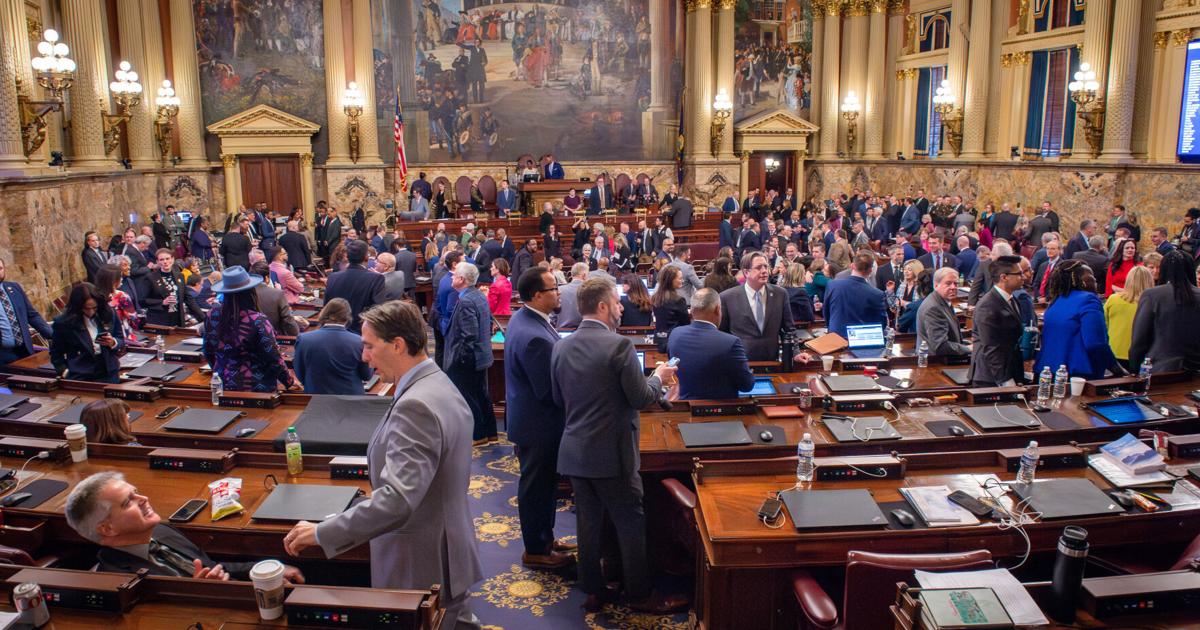
Major tech companies could soon be forced to pay taxes on digital advertising pop-ups and banners after the Pennsylvania House on Tuesday approved a bill to include the ads under the state’s gross receipts tax.
The money generated by the tax would fund a rebate program benefiting seniors who pay school property taxes. House Democrats have estimated the bill, approved by a 139-63 vote, could raise $500 million annually and would have the biggest impact on tech giants like Google, Meta, Amazon and Microsoft.
Rep. Elizabeth Fiedler, D-Philadelphia, said she introduced the bill to hold corporations accountable by contributing their “fair share.”

“This is budget month in Harrisburg, and I can think of no more important issue than finding ways to make our tax system more fair,” Fiedler said Tuesday.
The bill does not create a new tax but instead extends the state’s existing 5% gross receipts tax, which is based on the gross income a business generates in Pennsylvania, to include digital ads. Banner ads, search engine ads and full-screen pop-up ads would all be taxed through the legislation.
Thirty-nine Republicans crossed party lines to support the Democrat-sponsored bill, including three Lancaster County lawmakers, Reps. Mindy Fee, Tom Jones and Brett Miller. When asked about her vote, Fee, of Manheim, said her office hears daily from senior citizens who struggle to pay their property taxes.
“House Bill 1678 is far from perfect, but I believe it’s a step in the right direction of lessening the property tax burden,” Fee said in a statement.
Republican Rep. Wendy Fink, of York, on the House floor Tuesday called the bill “terribly written” because it does not offer specifics on how the funds would be distributed to seniors. Still, Fink said she voted in support because she wanted to help out her low-income constituents.
Fink has joined efforts to totally eliminate school property taxes, though a bill she is sponsoring has not progressed in the House. To cover the revenue lost without the tax, Fink has proposed increasing the state sales and personal income taxes.
Here’s how Lancaster County lawmakers voted on the digital ad tax bill:
Bryan Cutler, R-Peach Bottom, 100th District: No.Mindy Fee, R-Manheim, 37th District: Yes.Keith Greiner, R-Upper Leacock, 43rd District: No.Tom Jones, R-East Donegal, 98th District: Yes.Steve Mentzer, R-Manheim Township, 97th District: No.Brett Miller, R-East Hempfield, 41st District: Yes.Nikki Rivera, D-Manheim Township, 96th District: Yes.Izzy Smith-Wade-El, D-Lancaster, 49th District: Yes.Dave Zimmerman, R-East Earl, 99th District: No.Potential harm
Opponents of the bill argue it would have an adverse impact on the state’s economy by driving away business.
“This anti-business attitude has to stop here in Pennsylvania,” Greiner said in a House Finance Committee meeting last week. “We need to be promoting business, supporting big businesses and small businesses, and not working against them.”
Others said the legislation would hurt seniors more than it would help them. Rep. Robert Leadbeter, R-Columbia County, said seniors benefit from targeted digital ads, which help them find products and services they need without having to search for them on their own. The bill, he said, would result in seniors having to pay more for those products when businesses raise their prices in response to the tax.
“If a tax were to be levied on the digital advertising, these organizations, like any other business here in Pennsylvania, would face an increased cost of goods, which ultimately would be passed on to the customer — which is the very population group that we seek to support with this property tax relief,” Leadbeter said.
‘Billionaire tax’
The digital ad bill is a part of a larger package of legislation Democrats have introduced that they say will force billionaires in the state to contribute more in taxes.
Last year, the House passed a bill to adopt “combined reporting” requirements that Democrats say will require businesses that turn a profit in Pennsylvania to report that money to the state rather than other states that have low or no corporate net income taxes. Gov. Josh Shapiro has supported the measure but it has not moved in the Republican-controlled Senate.
House leaders haven’t acted on a third piece of legislation of the “tax billionaires” package that would impose a tax on passive income, which is typically generated from one-time investments including property that’s bought to rent out.
The bill is intended to act as a workaround to the state’s constitution, which does not permit a graduated income tax with rates that grow as a person’s income grows.
Success! An email has been sent to with a link to confirm list signup.
Error! There was an error processing your request.