
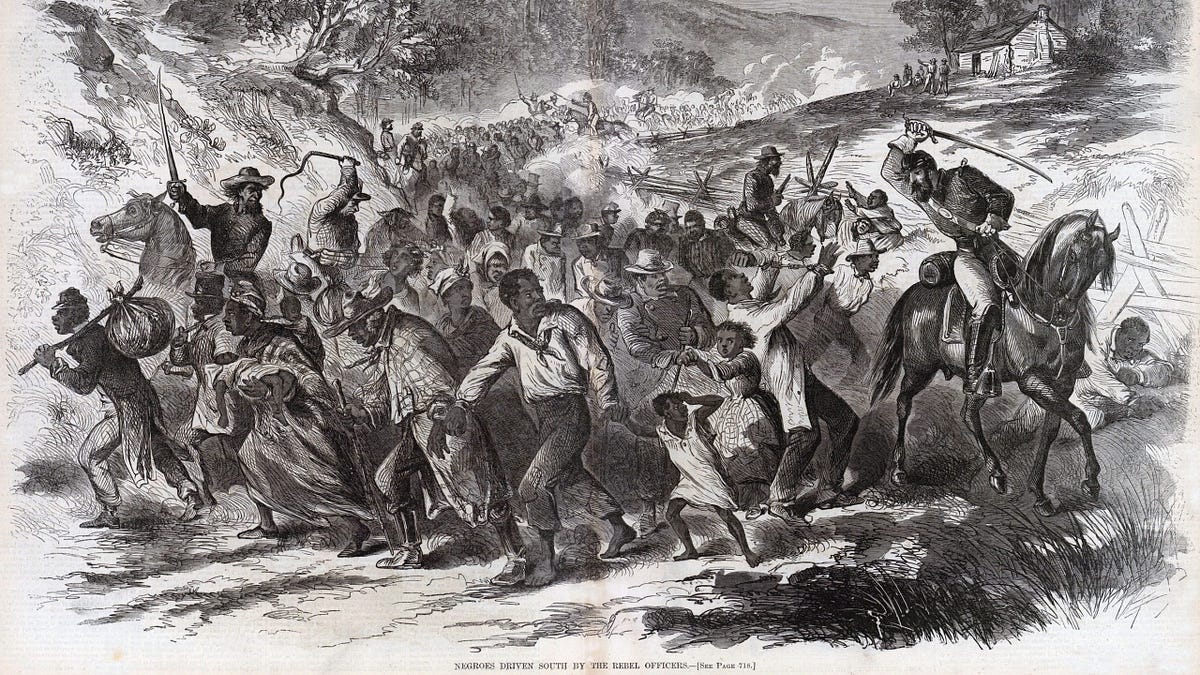
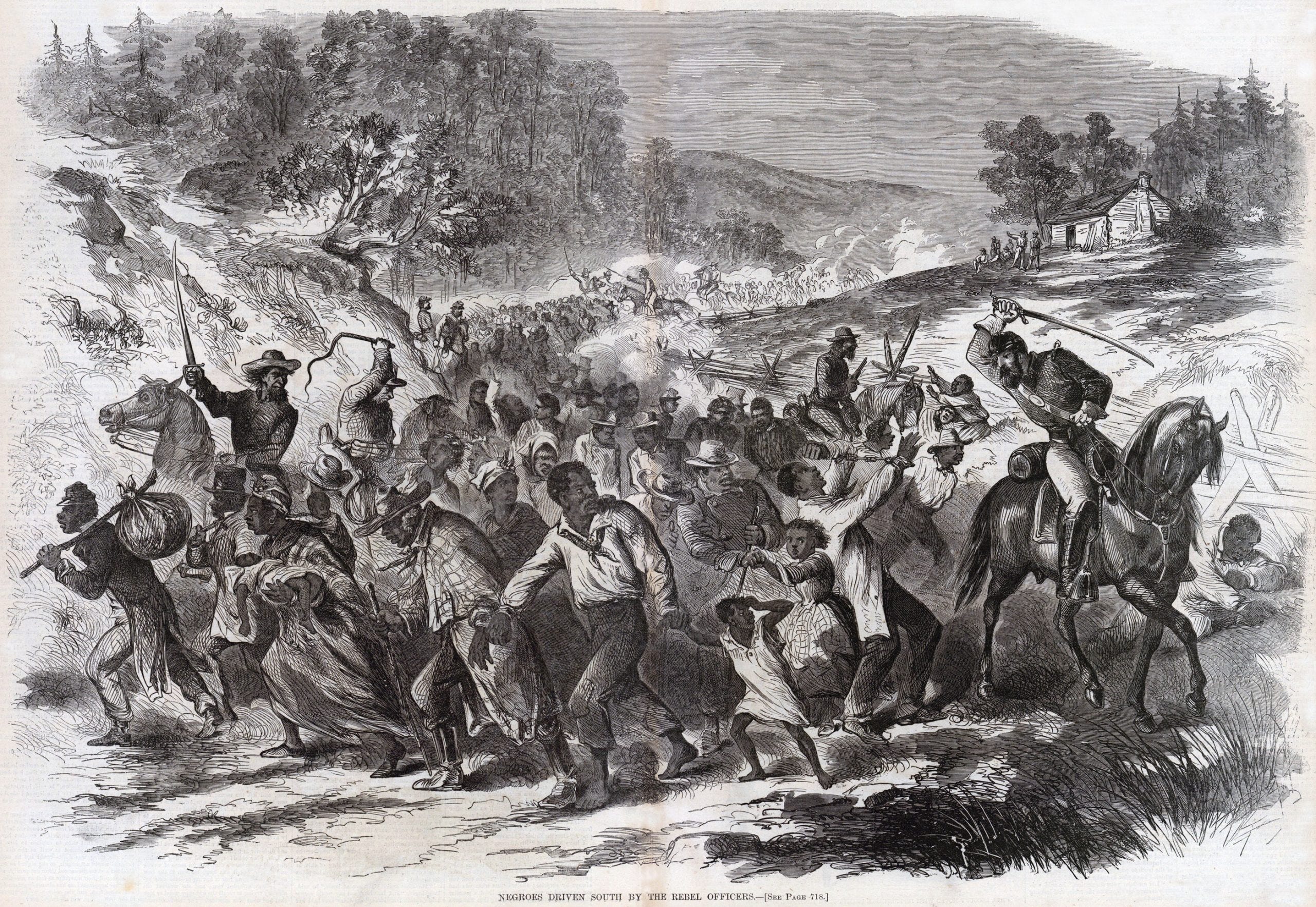
 The November 8, 1862 edition of Harper’s Weekly depicted a similar Confederate “slave hunt” during the Antietam Campaign. (Source: House Divided Project, Dickinson College)
Now that my Shaw biography is finally completed and in production, I can get back to work on my book about slavery and the battle of Gettysburg. One of the things that I am trying to do in this post is place Lee’s invasion in a broader historical context. Thanks to local historian Debra Sandoe Macauslin for sharing these runaway slave ads with me.
Sometime in the 1850s, a reader picking up a Gettysburg newspaper might have found, tucked among advertisements for dry goods and farm equipment, a notice placed by a slaveholder. It would have described a man or woman by name, by physical appearance, by trade or skill, and by the direction they were believed to be traveling. It would have offered a reward for their capture and return.
These notices appeared regularly in Pennsylvania newspapers throughout the antebellum period. Their presence in a free state was not considered remarkable enough to require explanation or apology. They were simply part of the reality of public life, occupying the same columns as auction announcements and legal notices.
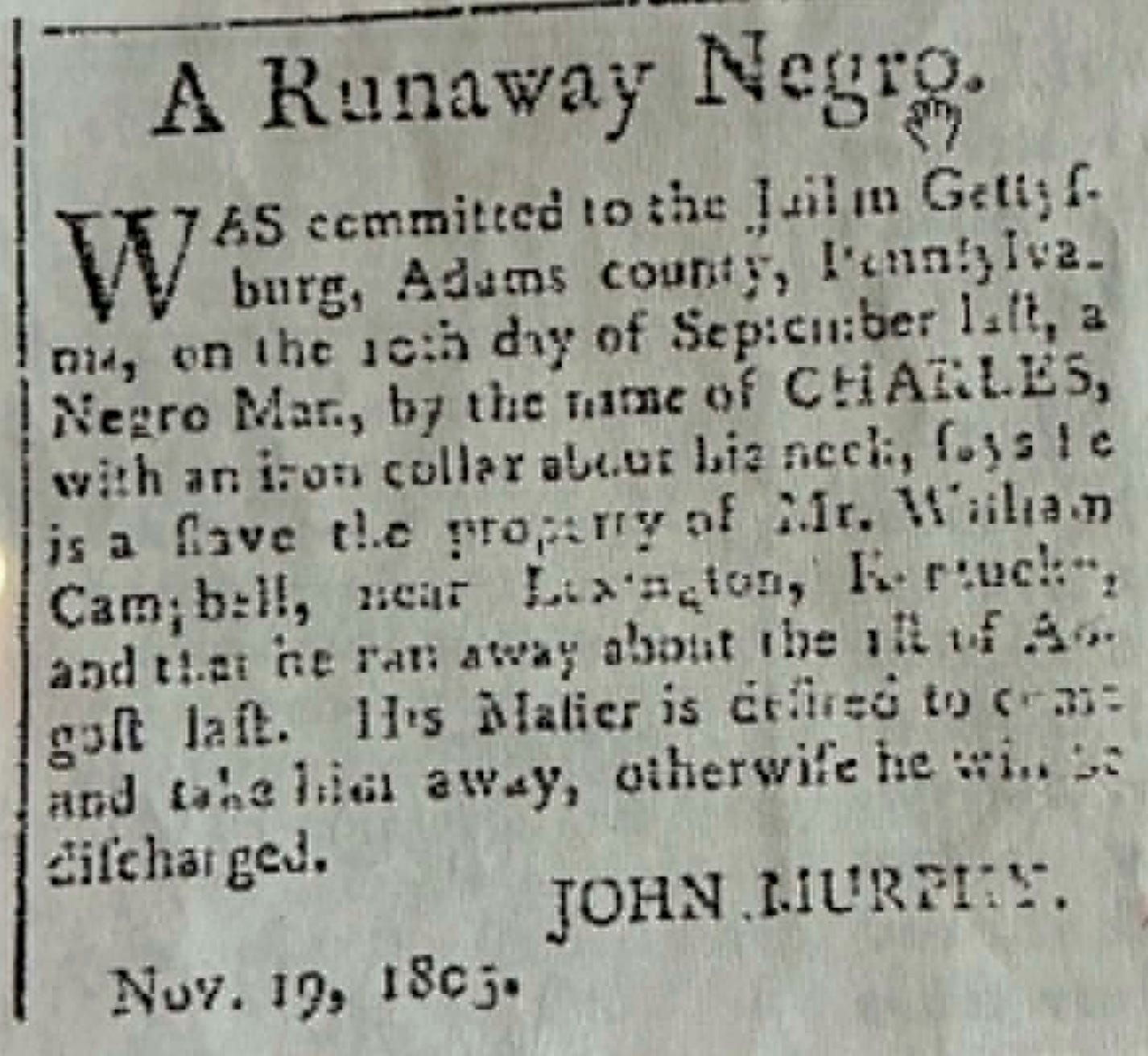
That ordinariness is itself a historical fact worth some reflection. In a state that had passed gradual abolition legislation in 1780, the institution of slavery printed itself into the local press as a routine matter of business.
For the free Black residents of Gettysburg and Adams County, however, these ads were something other than routine. They constituted a painful reminder about the nature of their freedom. Pennsylvania law said they were free. The ads in the paper said that the reach of slavery did not recognize that freedom as a barrier.
Enslaved people fleeing north passed through the same landscape that free Black Pennsylvanians farmed and worshipped and raised children in. The ads described roads and towns and physical descriptions that free Black readers would have recognized immediately. The geography of slavery and the geography of their own lives overlapped completely.
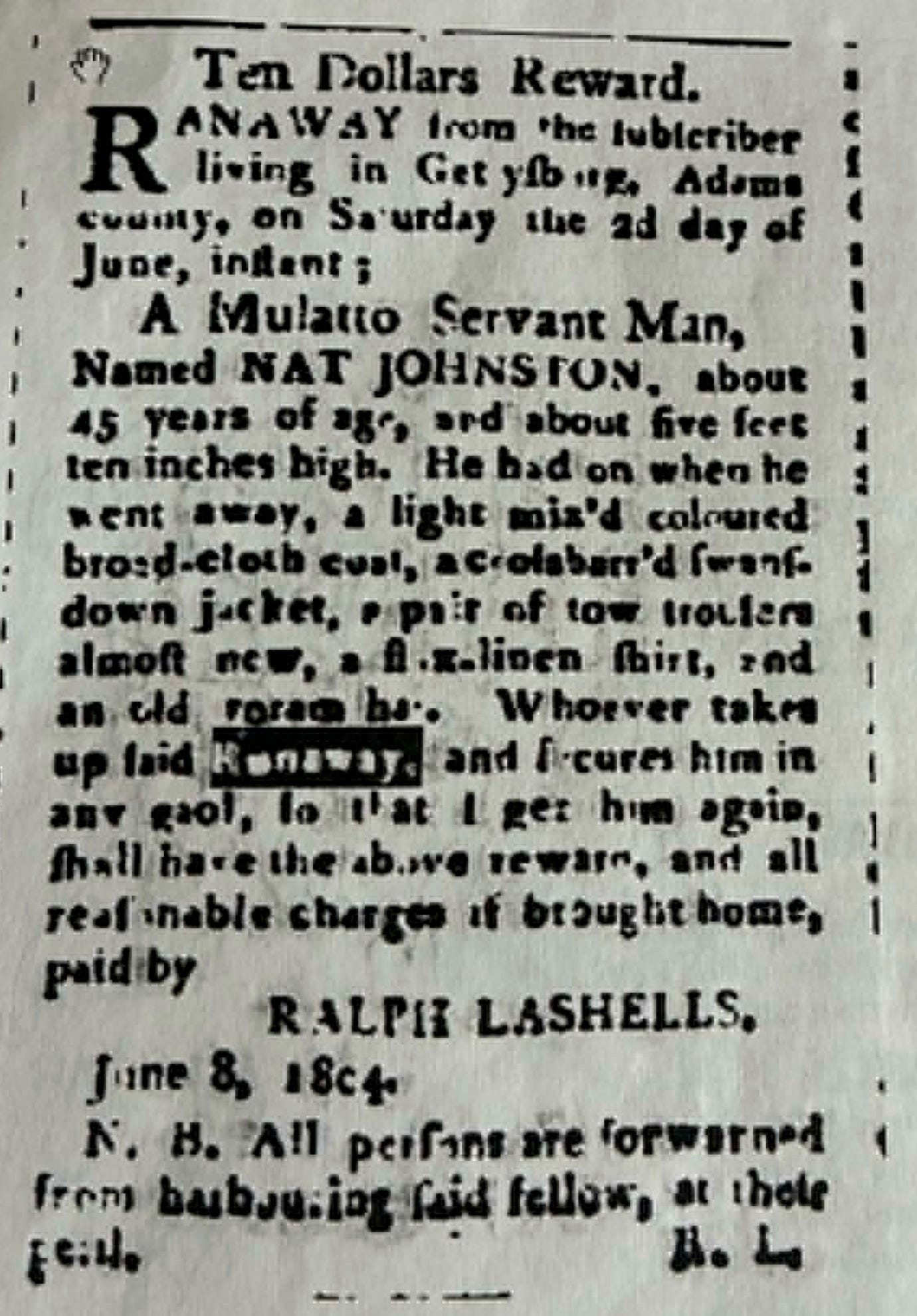
The Fugitive Slave Act of 1850 had made it federal law that enslaved people could be seized and returned from free states, that local officials were required to assist in their capture, and that any Black person accused of being an escaped slave had no right to a jury trial or to testify on their own behalf. The act transformed every free Black community in the North into a place where freedom was legally provisional.
But in Adams County, the ads in the paper had been making that point for years before Congress reinforced the Fugitive Slave Act of 1793 in 1850. The runaway notices were, in effect, a recurring announcement that the Mason-Dixon line was a political boundary and not a moral or practical one, that the slave system’s claim on human beings did not stop at the state border, and that Black freedom in Pennsylvania existed only as long as no one with legal authority chose to contest it.
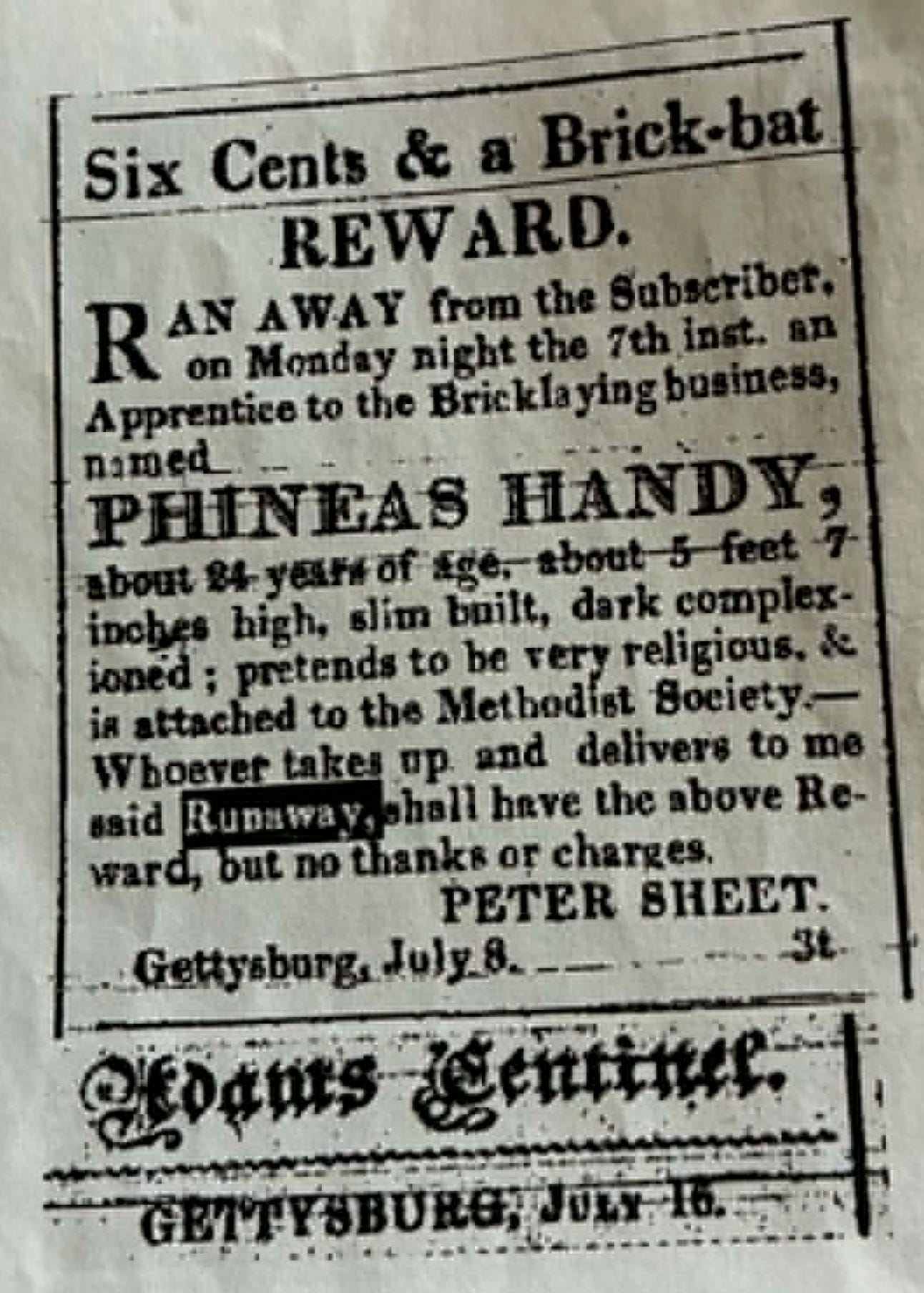
What the ads created, over years and decades of publication, was a community living with a specific and well-founded understanding of precariousness. Freedom in Adams County was real. The churches, the schools, the households and farms and community institutions that free Black Pennsylvanians built were real achievements, earned across generations and defended with determination. But that freedom existed in tension with a surrounding environment that did not fully recognize it.
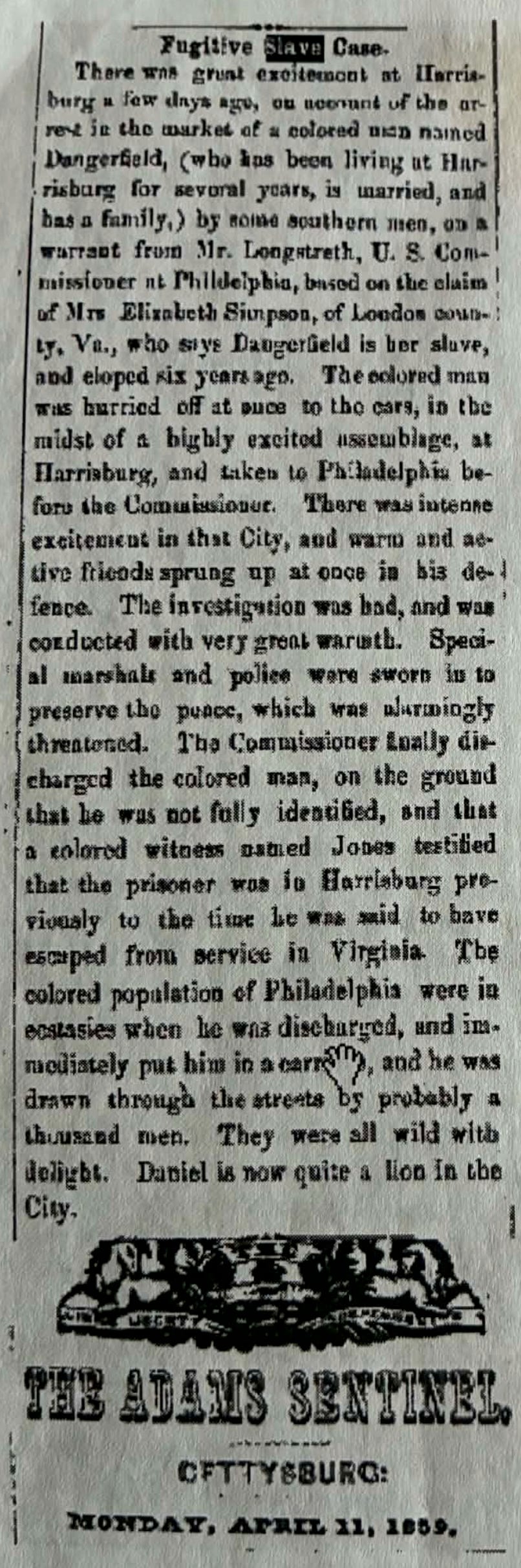
This is the historical context in which Robert E. Lee’s Army of Northern Virginia crossed into Pennsylvania in late June 1863.
For those of you who are already paid subscribers, I hope you enjoy the rest of this essay. For those of you who may be thinking of upgrading, now is the perfect time. Not only will you gain access to the rest of this essay, as well as the rest of this site’s premium content, you will also be helping me to continue to research what I hope will be an entirely new perspective on the battle of Gettysburg. Thank you.