
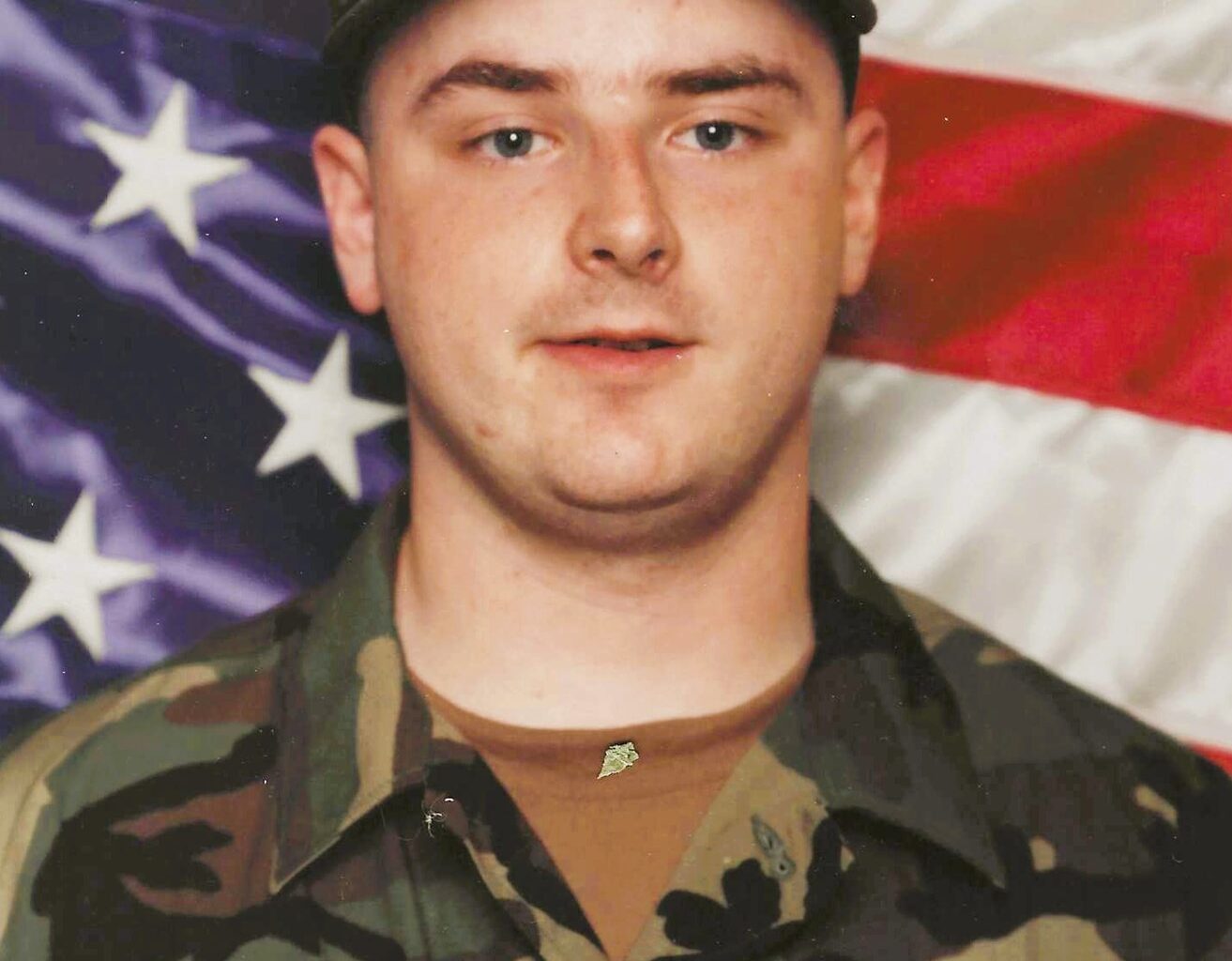
William Hager died of water intoxication at the Erie County Correctional Facility in Alden. A state report — and two fellow inmates who watched him die — say medical staff could have prevented his death.
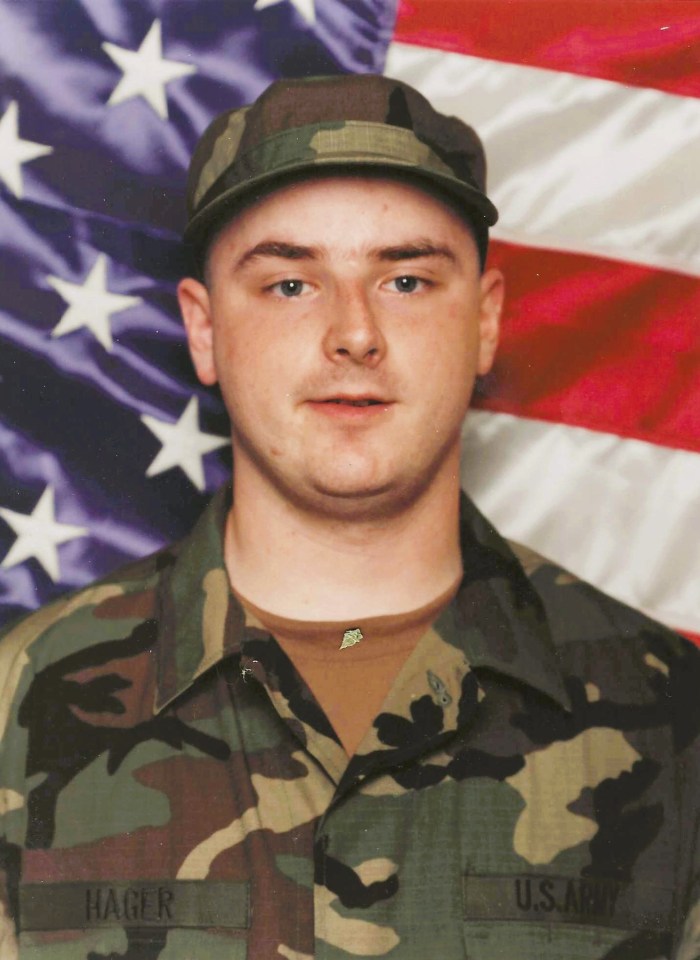
William Hager. Photo: The Hager family.
Nearly three years after a homeless veteran died in an Erie County jail by water intoxication, a state oversight body found that his death could have been prevented.
The New York State Commission of Correction concluded that psychiatric staff at the Erie County Correctional Facility in Alden “failed to adequately diagnose” William Hager’s psychosis and monitor side effects of a medication he took.
Two former inmates housed in the same unit as Hager said they saw the failings of the medical staff firsthand, and watched their neighbor deteriorate, then die, before their eyes.
“I believe it was the fault of the medical unit and not the sheriffs,” Nicholas Strachan, an inmate who lived in close proximity to Hager at Alden, told Investigative Post in an interview this spring.
Hager, 44, had a history of schizophrenia. And the antipsychotic medication he took is known to cause the side effect of extreme thirst.
But according to the state’s report, published last week, Alden’s psychiatrist “failed to follow up on Hager’s previous complaints of medication effects or to do any effective monitoring of him.”
Their inaction proved fatal.
“The Board opines that had proper medication monitoring of Hager been ordered and implemented, his excessive water intake could have been recognized, had intervention initiated, and his death prevented,” the report stated.
The state’s report also faulted a nurse for failing to alert doctors about Hager’s loss of nearly 13 pounds in the two weeks he was housed at the Erie County Holding Center in downtown, after being arrested for theft and property damage charges.
“Medical had just ignored the fact that he was starving to death,” Strachan said. “I kept telling the [corrections officers], ‘Why am I taking care of Bill this way? Why isn’t someone from medical doing this?’ ”
The unredacted portions of the state’s report do not include interviews with Strachan or any other inmates. The report has been shared with jail staff and several county officials, including Sheriff John Garcia and the chair of the county Legislature.
The report includes a response from the sheriff’s office and the jail’s physician rejecting the state’s assessment that staff could have better monitored Hager’s symptoms and prevented his death. Christopher Horvatits, spokesperson for the sheriff, did not respond to request for comment.
From the streets to county jail
Investigative Post reported on Hager’s death in 2024.
Hager’s family declined to comment on the state’s report due to a pending federal lawsuit against the sheriff’s office. Previously, they told Investigative Post that Hager’s criminal history was tied to a life of drug addiction, mental illness and fighting for survival on the streets.
“He wasn’t dangerous at all,” Jennifer Hager, his sister, said in 2024. “Any of the trouble he got himself into was just trying to live. He was homeless.”
Hager enlisted in the U.S. Army after high school and was honorably discharged after a few years of service. Because of a back injury and a diagnosis of schizophrenia in his 30s, Hager received disability benefits.
It took nearly three years for the state’s Commission of Correction to investigate Hager’s death, a practice it follows after any inmate dies in state or local jails. The investigation is done by a board of medical experts, who then share their findings with the commission and, in this case, with jail and county officials.
The commission’s report is based on interviews with Alden staff, including a psychiatrist, two corrections officers and at least one nurse. Much of it is redacted.
According to the report, William Hager’s final stay in county jail began August 3, 2023. He had been arrested on a warrant for a number of charges, including criminal mischief and petit larceny.
Hager awaited arraignment at the downtown holding center until August 17, when he was transferred to Alden. In that time, the report noted that Hager lost 12.6 pounds in 14 days. But nurses at the holding center failed to notify Alden doctors — the first misstep the commission attributed to medical staff.
The report also raised other questions about medical staff’s treatment of Hager:
Why no “clearly established diagnosis for Hager” had been done, considering his psychiatric history and evidence of psychosis.
Why medical staff failed to follow up on Hager’s side effects of extreme thirst.
Why psychiatrists failed to monitor Hager for metabolic syndrome, the state norm to adhere to for any inmate on an antipsychotic medication.
The report mandated a “quality assurance review” led by the county jail’s chief medical officer and report its findings to the commission. In January, the sheriff’s office completed the review but “did not identify any policy or procedure violations by health staff.”
The state attorney general’s office also investigates jail deaths. A spreadsheet of the results of such investigations indicates that the AG concluded: “Officer did not cause death.”
The view from inside Hager’s unit
From the middle of August 2023 until his death on Nov. 19 of that year, Hager stayed in a special wing at the Alden jail called Medical Unit 2, or M2. He often stayed in his room, pacing or sitting on his bed, though former inmates occasionally convinced Hager to watch TV or go outside to stretch and socialize.
One officer, referred to as D.G. in the report, told the commission that Hager “was a quiet man … probably the quietist [sic] incarcerated individual that he ever had.”
According to the report, M2 is designed to support inmates with mental health conditions. Indeed, its cells share walls with doctors and nurses, the premise being that inmates will get close, around-the-clock attention, if need be.
That did not happen, Strachan told Investigative Post.
“They just didn’t care. They were just there, like, ‘Oh, you don’t want to take your pills? No problem.’ And they would just walk away,” he said.
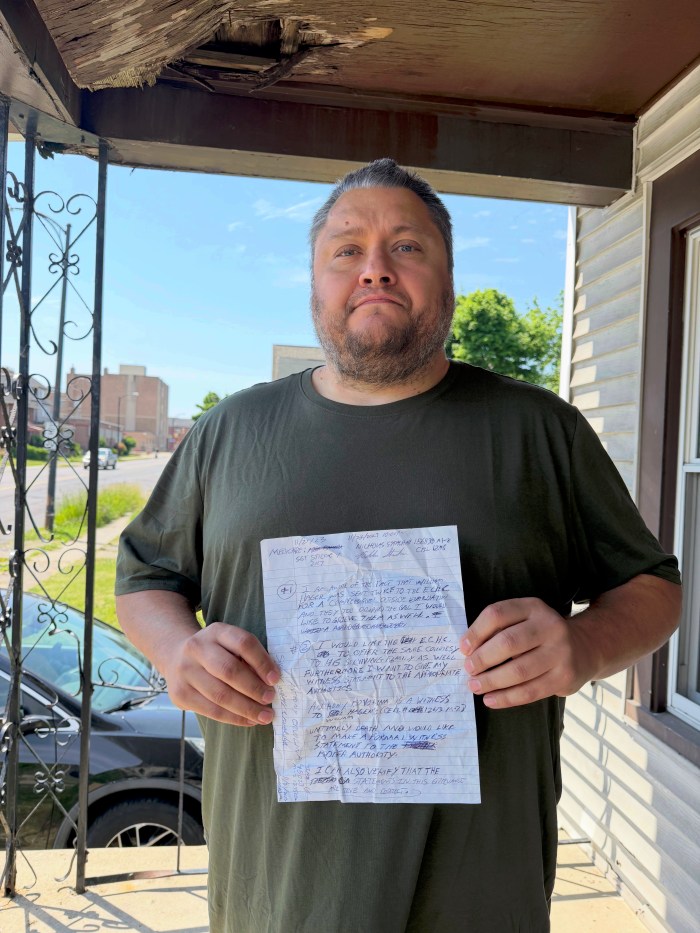
Nicholas Strachan holds a grievance letter he and fellow inmate Anthony Ervolina submitted to jail officials two days after William Hager’s death, taking issue with Hager’s treatment in custody. Photo: Adam Smith-Perez.
Strachan wondered how it was possible that medical staff could be on the other side of the wall “chatting and laughing” while Hager’s health deteriorated.
“We’re over here. Bill’s struggling,” Strachan said. “He should be under 24-hour care with somebody who’s really there for him. To convince him that he’s not living in literal hell.”
Hager became convinced that Lake Erie had dried up, according to a corrections officer interviewed in the state’s report. Strachan said the same thing, as did Anthony Ervolina, another inmate who lived a few cells down from Hager.
As a result, Hager stopped flushing the toilet and showering.
“He was talking about how everything was getting smaller. How the world was shrinking and everything,” said Ervolina.
The report concluded that Hager’s psychosis had not been addressed by Alden’s staff. Furthermore, it was his medication Zyprexa, which had caused Hager extreme thirst.
“Hager’s complaints of increased thirst were indicative of these side effects occurring but were not addressed by the attending psychiatrist,” the report stated, adding that the psychiatrist had also failed to order lab work to assess the medication’s other side effects.
Ervolina and Strachan often spoke to corrections officers about Hager. They said they told guards that Hager had stopped eating — at one point, he was convinced the chicken inmates were fed was human meat — and abandoned personal hygiene. They said Hager frequently defecated in his clothes, which the inmates would wash for him.
They said their pleas for help fell on deaf ears.
“I told the [corrections officers] he’s trying to kill himself. He’s drinking tons of water. He’s throwing up violently every day,” said Ervolina.
“You could tell he was just dying.”
Final moments
According to officer D.G., on the day that Hager died, he’d observed Hager drinking “a lot of water” — “several cups in a row” — but told commission staff that it did not strike him as odd enough to notify medical staff.
Two medical entries were made for Hager on that day — one in the morning, which noted that Hager “refused to go to mental health” and another, around 1 p.m., when Hager spoke with a mental health counselor.
Guards had done their rounds throughout the day, but no one had heard from Hager. When a corrections officer went to check on him, at 7:09 p.m., Hager “began to shake, and he was looking up towards the cell light and then he fell down,” according to the report.
That officer called a medical emergency.
Subscribe to our free weekly newsletters
The following moments were not detailed in the commission’s report, but according to Strachan and Ervolina, the emergency response team lacked “the proper life saving device,” causing a 30-minute delay in treatment.
“I think that directly contributed to Bill not being able to live,” Strachan said.
Jail officials conducted internal reviews of Hager’s death and denied any wrongdoing.
“The facility indicated that they disagreed with the Medical Review Board findings regarding Hager’s diagnosis and side effects to prescribed medication,” the report stated.
Adam Smith-Perez, who covers urban affairs for Investigative Post, is a Report For America corps member.
posted 1 hour ago – June 11, 2026