
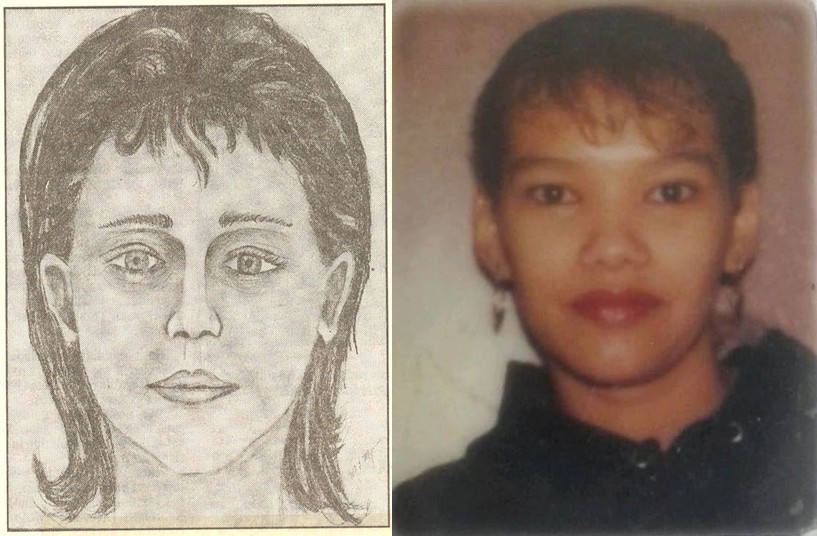
Berks County authorities have identified skeletal remains that were found in a Windsor Township farm field 34 years ago, closing a case that had long haunted investigators and a family who never stopped searching.
Coroner Matthew J. Stitzel announced Thursday night that the woman known for decades as “Christman Jane Doe” has been identified as Nuria C. Rodriguez, a 25‑year‑old mother from Bronx, N.Y., who vanished in the early 1990s.
Rodriguez’s remains were discovered June 3, 1992, when a farmer spotted a human skull atop freshly turned soil in a field along Christman Road between Balthaser and Dreibelbis roads. A search uncovered a shallow grave containing partial remains.
Investigators determined the remains belonged to a white woman between 25 and 40 years old, about 5‑foot‑3, who had likely been buried for at least a year. Because of the condition of the remains, the cause and manner of death could not be determined.
Despite a forensic sketch, early DNA testing, media outreach and entry into national databases including the National Missing and Unidentified Persons System, of NamUS, the woman remained unidentified for more than three decades.
Since 2009, when NamUS was launched, multiple administrations of the Berks coroner’s office have been painstakingly working to put names to sets of humans remains in their custody. Some were buried in the county’s potter’s field in Cumru Township, while other remains are kept in a storage area in the coroner’s office.
In 2014, the remains of two young women who were murdered in 1968 were positively identified through DNA testing. Sandy Stiver, 14, ran away with her 17-year-old sister-in-law, Martha Stiver, Their bodies were discovered in separate, rural locations in southeastern Berks several months apart and were buried as Jane Does until the coroner’s office obtained an order to have the bodies exhumed for DNA extraction. The family had since settled in the Cleveland, Ohio, area.
A decade later, the 47-year old “Pinnacle Man” mystery was solved. The well-preserved body of a man was found Jan. 16, 1977, by two young hikers near The Pinnacle, a high point on the Appalachian Trail in Albany Township.
An autopsy concluded he died of a drug overdose, but the body was buried as “John Doe 1977” in the potter’s field. DNA analysis of the exhumed remains failed to find a match, but a state police cold case detective, while going through the old case file in 2024, discovered a card that contained the victim’s fingerprints, which were matched to a long-missing missing Fort Washington, Montgomery County, man.
Stitzel said the bones of “Christman Jane Doe” were among several sets of remains kept at the coroner’s office with the hope they would be eventually identified with advances in DNA investigative methodology.
“She was never buried,” the coroner said. “We’ve had her in our office the entire time.”
Stizel said it’s fortunate that the bones weren’t cremated, as was the case with some unidentified remains decades ago.
“Once cremated, you can’t do identification after that,” he said.
In 2024, the coroner’s office partnered with Parabon NanoLabs to begin a forensic genetic genealogy analysis, using advanced DNA technology to trace potential relatives through ancestral DNA. Over the next two years, investigators from the coroner’s office and Pennsylvania State Police worked with Parabon and forensic specialists to develop leads that eventually pointed to a family in the Bronx.
That family had been searching for Rodriguez since she disappeared in the early 1990s. They told investigators that they knew something was wrong when she failed to show up for her child’s birthday — a day they said she would never have missed.
On April 14, investigators confirmed the match.
Stitzel credited decades of persistence by investigators and the collaboration of multiple agencies, including Pennsylvania State Police Troop L in Hamburg, Parabon NanoLabs, Mercyhurst University’s Department of Applied Forensic Science, the University of South Florida’s Institute for Forensic Anthropology and Applied Science, and NamUs.
Stitzel said the coroner’s office has a regular budget line item providing limited funding for DNA testing. There’s also a grant available to coroner offices in Pennsylvania to alleviate the considerable expenses of sending bone samples to forensic labs.
“We’re very, very fortunate in this county that we can get funding from the commissioners,” he said. “That funding and part of the grant money led us to get enough money for the testing.”
Rodriguez’s remains were recently turned over to her family, which had them cremated, he said.
Stitzel, a funeral director who was elected coroner in November, said it’s exciting to bring closure to a family — news he hopes to share again and again in the near future.
“Hopefully, it snowballs,” he said. “To get them where they need to go, home with their families. That’s the ultimate goal.”
While Rodriguez’s identity has been restored, the circumstances surrounding her death remain under investigation.
Anyone with information about Rodriguez or her disappearance is asked to contact Pennsylvania State Police Troop L, Hamburg, at 610‑562‑6885.