
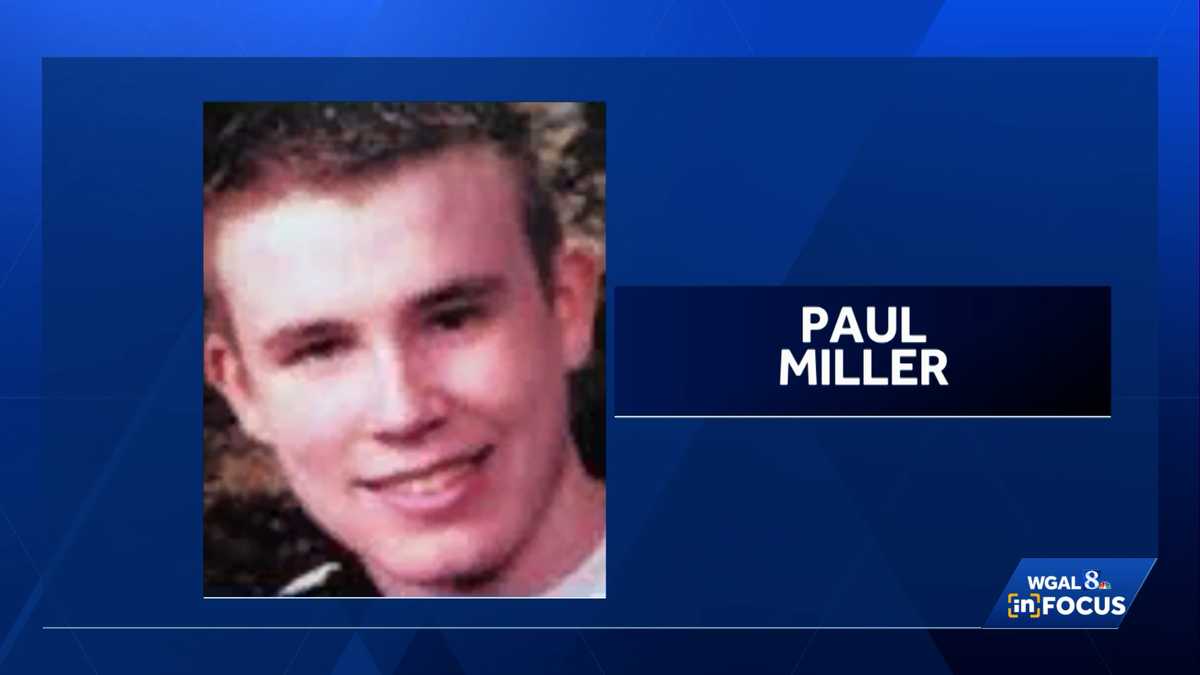
He gave me *** big kiss and hug like he always did, said, I love you, and I thought that that was that. And then what happened is, the next morning, um, I was getting ready for our party and I just had this gut feeling something was wrong in my stomach. And I was sitting on the front porch and out of *** movie scene, two state troopers pulled up back to back. I then knew at that moment it was my because I could see pictures of him running through my brain. So they just pulled up, came to our house, asked if that was the address, and we said yes, and they said, let’s go in and talk. So they were asking like, what was his car doing down on Route 33? And I was like, I don’t know where Route 33 is. And they said, at by ESU. I said, well, they went to *** party. But I guess he didn’t come home. They pulled up my husband’s registration of the car and then they saw *** younger kid and then they were just asking for markings on his body and I said, yes, he has *** big Irish tattoo. He has tattoos, the words trust and faith, because he’s *** trustworthy, faithful person. Going back and forth, it was just kind of, you know, um, like what was he wearing, all of that kind of stuff. And then finally, you know, those words come out, you know, we’re sorry to inform you, but your son was tragically killed this morning. Um, it was not his fault, but it was *** semi truck driver that was crossed 3 lanes, *** grassy medium, hit him head-on, pushed him into an embankment, and then behind him was *** van with 12 people in it, and they then hit the tractor trailer. The other 3 were taken by Lifeline, rest all to the hospital. My son was the only one dead at the scene.
Pennsylvania State Police issue 694 citations in three-day distracted driving crackdown

Updated: 1:16 PM EDT Jun 12, 2026
Pennsylvania drivers are now facing citations, not just warnings, under Paul Miller’s Law, as the Pennsylvania State Police (PSP) moves into full enforcement of the state’s handheld-device driving ban.The law, which took effect on June 5, 2025, was created to reduce distracted driving and improve roadway safety. During its first year, enforcement focused on education, with officers issuing written warnings to drivers caught using handheld phones behind the wheel. That grace period has now ended. As of June 6, 2026, PSP and other law enforcement agencies can issue citations to violators.To reinforce the change, between June 8 and June 10, the Pennsylvania State Police carried out Operation Hands Off, a three-day crackdown focused on distracted driving and cellphone use while driving. This led to 694 traffic citations and 308 warnings.What is Miller’s LawPaul Miller’s Law makes it illegal for a driver to hold or use a handheld cellphone or other interactive mobile device while operating a vehicle. The restriction applies not only when a vehicle is moving, but also when a driver is temporarily stopped in traffic, at a red light, or at a stop sign. In other words, a driver cannot legally pick up a phone to text, scroll, dial, or otherwise interact with it while behind the wheel.The law still allows certain limited uses. Drivers may use hands-free technology for calls, navigation, or music, and they may use a phone to contact emergency responders when necessary. The key distinction is whether the device is being physically handled.Who is Paul Miller Jr. The law is named in memory of Paul Miller Jr., who was killed in a distracted-driving crash. Find more about his story in the link below. Supporters say the measure is intended to prevent similar tragedies by making expectations for drivers clearer and enforcement stronger. Opponents of this law, such as the American Civil Liberties Union of Pennsylvania, have concerns about possible pretextual traffic stops, expanded police discretion, impacts on low-income drivers without hands-free technology, and concerns about how fairly it will be enforced. For example, it made national headlines when 36-year-old Kathleen (Katie) Thomas was stopped by police for allegedly having a phone in her right hand when she did not have a right hand.Either way, for Pennsylvania motorists, the message from PSP is straightforward: the warning period is over, and active enforcement is here. Drivers who still reach for a phone at a stoplight or in traffic may now find themselves facing a citation instead of a reminder.
LANCASTER, Pa. —
Pennsylvania drivers are now facing citations, not just warnings, under Paul Miller’s Law, as the Pennsylvania State Police (PSP) moves into full enforcement of the state’s handheld-device driving ban.
The law, which took effect on June 5, 2025, was created to reduce distracted driving and improve roadway safety. During its first year, enforcement focused on education, with officers issuing written warnings to drivers caught using handheld phones behind the wheel.
That grace period has now ended. As of June 6, 2026, PSP and other law enforcement agencies can issue citations to violators.
To reinforce the change, between June 8 and June 10, the Pennsylvania State Police carried out Operation Hands Off, a three-day crackdown focused on distracted driving and cellphone use while driving. This led to 694 traffic citations and 308 warnings.
What is Miller’s Law
Paul Miller’s Law makes it illegal for a driver to hold or use a handheld cellphone or other interactive mobile device while operating a vehicle. The restriction applies not only when a vehicle is moving, but also when a driver is temporarily stopped in traffic, at a red light, or at a stop sign. In other words, a driver cannot legally pick up a phone to text, scroll, dial, or otherwise interact with it while behind the wheel.
The law still allows certain limited uses. Drivers may use hands-free technology for calls, navigation, or music, and they may use a phone to contact emergency responders when necessary. The key distinction is whether the device is being physically handled.
Who is Paul Miller Jr.
The law is named in memory of Paul Miller Jr., who was killed in a distracted-driving crash. Find more about his story in the link below.
Supporters say the measure is intended to prevent similar tragedies by making expectations for drivers clearer and enforcement stronger.
Opponents of this law, such as the American Civil Liberties Union of Pennsylvania, have concerns about possible pretextual traffic stops, expanded police discretion, impacts on low-income drivers without hands-free technology, and concerns about how fairly it will be enforced. For example, it made national headlines when 36-year-old Kathleen (Katie) Thomas was stopped by police for allegedly having a phone in her right hand when she did not have a right hand.
Either way, for Pennsylvania motorists, the message from PSP is straightforward: the warning period is over, and active enforcement is here. Drivers who still reach for a phone at a stoplight or in traffic may now find themselves facing a citation instead of a reminder.