
From Philly and the Pa. suburbs to South Jersey and Delaware, what would you like WHYY News to cover? Let us know!
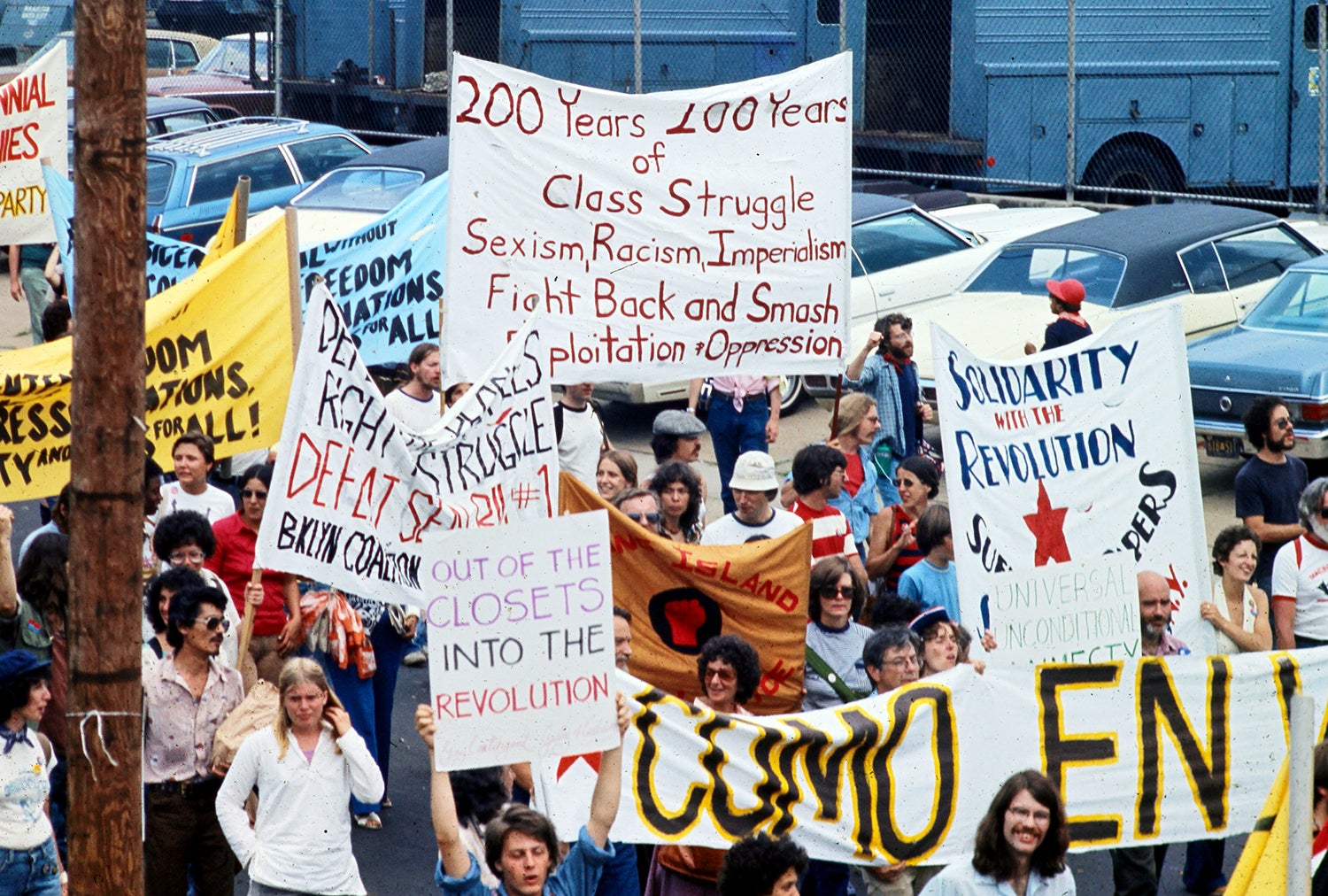
A group of Philadelphia organizers is using the nation’s 250th anniversary as an opportunity to revisit July Fourth, 1976: the day tens of thousands of people marched through the streets of North Philadelphia, demanding a bicentennial “sin colonias,” without colonies.
The march, which was organized by the July 4th Coalition, came to be known as the Sin Colonias protest. Members of the Puerto Rican Socialist Party, women’s rights advocates, Black liberation groups, Vietnam War veterans and student groups marched down Lehigh Avenue to Fairmount Park, calling for Puerto Rican self-determination, economic justice and equality.
“The protest really highlighted the colonial status of Puerto Rico, and, more broadly, the history of our country, going back to its founding,” said Paul Socolar, one of the volunteer coordinators of the July 4th Sin Colonias Coalition, which formed this year to commemorate the 1976 march. “Even though it was an anti-colonial revolution that created the United States, from the beginning, the U.S. was doing its own colonizing.”
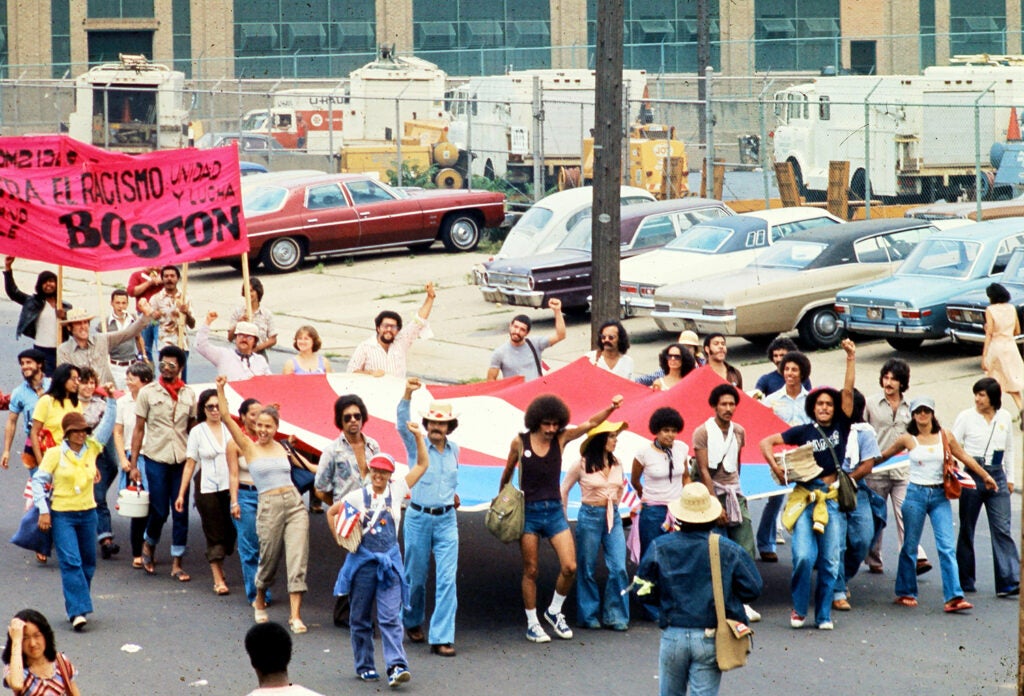 Tony Heriza, “Puerto Rican independence flag carried,” from the “Sin Colonias” march on July 4, 1976. (Photo credit: Tony Heriza, Courtesy of July 4 Sin Colonias Coalition)
Socolar participated in the march 50 years ago as a college student, and said that in addition to it being a “huge and joyous protest,” the event was also personally meaningful because it marked his “first significant activism in Philadelphia.”
Preserving the legacy of ‘Sin Colonias’
The July 4th Sin Colonias Coalition has gathered photographs, historical documents and other materials related to the march on its website, and plans to tour college campuses in the fall to educate a younger generation about the historic event.
On Saturday, the July 4th Sin Colonias Coalition and Taller Puertorriqueño hosted the second of a two-part forum series commemorating the march. The event was part of Taller’s “We Will Not Hide” initiative to mark the nation’s 250th anniversary.
The initiative’s goal is to highlight history that often goes unrecognized, such as the Sin Colonias march, or, in the case of the exhibit on slavery at the President’s House Site, aspects of history that are being removed from public memory and excised from the national narrative, said Rafael Damast, curator and exhibitions program director at Taller.
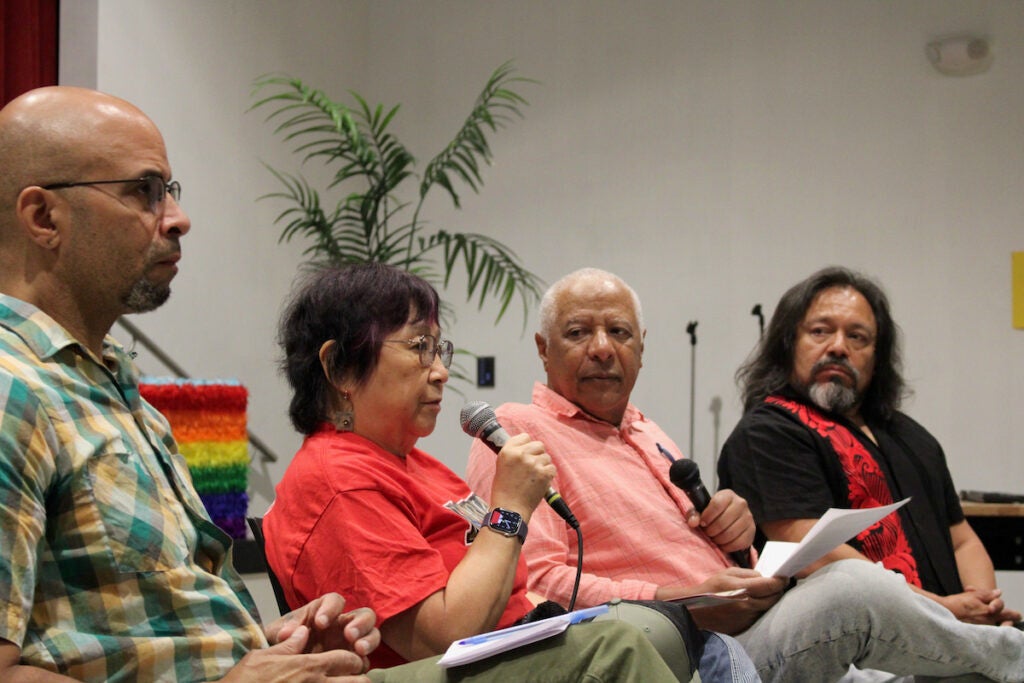 From left to right, Bill McKinney, executive director of New Kensington Development Corporation, Debbie Wei, co-founder of Asian Americans United, Pedro Rodriguez, a community organizer and member of the July 4th Sin Colonias Coalition, and artist Cesar Viveros participate in a panel discussion on coalition building at Taller Puertorriqueño on June 13, 2026. (Emily Neil/WHYY)
“A lot of people’s histories are being [relegated] to the back of the bus,” he said. “Thinking about ‘We will not hide’ is a way just to talk about different perspectives, and how Taller is thinking about this moment … is of critical thinking, where each exhibition, each program, is a way just to highlight a people, a perspective, that is otherwise being ignored.”
Hosting events and exhibitions at Taller that commemorate the Sin Colonias march is especially significant, Damast said, since the march itself originated in the Fairhill neighborhood, where the organization is now located.