
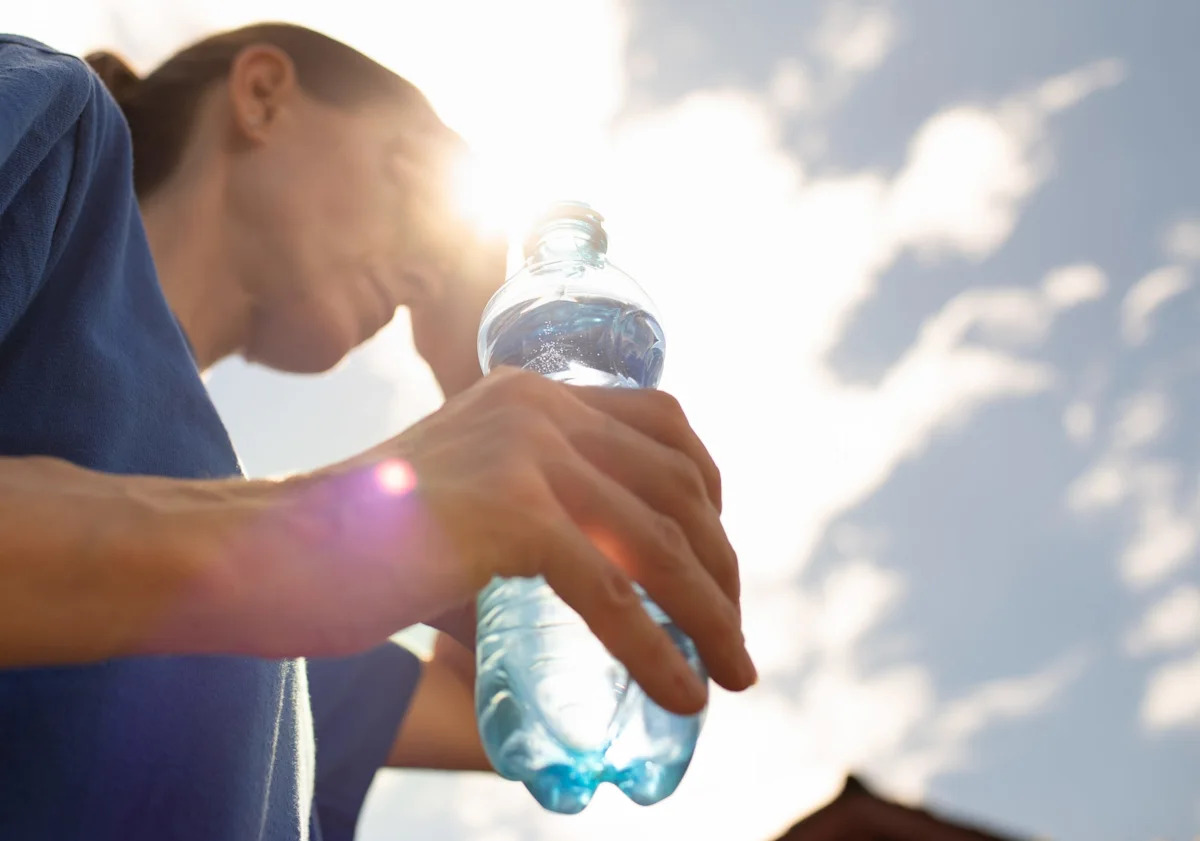
It’s getting hotter in Pittsburgh as summer approaches, and if you’re in a historically redlined neighborhood, you’re probably feeling the heat more than the rest of the city.
A study from researchers at Carnegie Mellon University, published earlier this year, found that areas with a large concentration of dark surfaces like dark roofs, roads and parking lots have higher-than-average temperatures in the summer. These areas also tend to be in neighborhoods with marginalized populations who have suffered from redlining, a discriminatory practice of denying financial services to residents.
Here’s what researchers found.

Pittsburgh is the city of bridges as can be seen from this shot from Mount Washington on April 10, 2026.
What parts of Pittsburgh have the hottest temperatures?
Researchers found that areas along the three rivers recorded the highest temperatures, as well as the land around Garfield.
The map of the hottest areas looks similar to maps showing redlined neighborhoods like parts of Garfield, communities on the North Side like Allegheny West and spots on the South Side.
Pittsburgh’s redlined neighborhoods, on average, are 4.7 degrees Fahrenheit hotter than non-redlined neighborhoods, according to the study, though that difference can hit 7.7 degrees in extreme weather.
What contributes to hot temperatures in Pittsburgh?
The areas with higher temperatures all had something in common: They all had a high concentration of dark surfaces.
Historically redlined neighborhoods have 12.6% more dark surfaces compared to the rest of the city.
Overall, about 69.2% of the city’s roofs are dark, while 30.8% are light.
As for Pittsburgh’s roads, about 40.3% are dark, 44.4% are light and 15.3% have a green canopy. In terms of parking area, 45.3% of the city’s parking lots are dark, 53.6% are light and 1.1% have a green canopy.
How did researchers determine Pittsburgh’s hottest areas?
Researchers used satellite data and artificial intelligence to locate and categorize dark surfaces in Pittsburgh. Additionally, they looked at annual temperatures over a 10-year period across the city, as well as historical redlining maps and data from the Centers for Disease Control to determine how social equity played into the equation.
The findings “emphasize the importance of evidence-based decision-making in the selection of city surface materials and the implementation of green infrastructure strategies,” researchers said in their conclusion, adding that measures like reflective surfaces and the use of trees should be considered to combat the heat.
“Integrating this approach into city planning processes can help cities design more equitable, resilient, and sustainable urban built environments for the future,” researchers said.
How hot does it get in Pittsburgh during the summer?
It can hit the 90s in the summer in Pittsburgh, with data from the National Weather Service showing that in June and July from 2020 through 2025, the Steel City saw maximum temperatures in the low to mid 90s every year. During the same five-year span, August also saw temperatures in the 90s several times, though the heat topped out in the upper 80s during that month in both 2022 and 2023.
The average temperatures during the summer weren’t quite as scorching. Between 2020 and 2025, June’s average daily high in Pittsburgh stayed between 78 and 84, according to the National Weather Service. In July, those ranges jumped to 80.5 and 83, with the range widening a little in August at 77.5 and 83.
Finch Walker is the Pittsburgh Connect Reporter for the USA TODAY Network. Contact Walker at FWalker@usatodayco.com. Instagram: @finchwalker_. X: @_finchwalker.
This article originally appeared on USA TODAY: These Pittsburgh’s neighborhoods see highest summer temperatures