
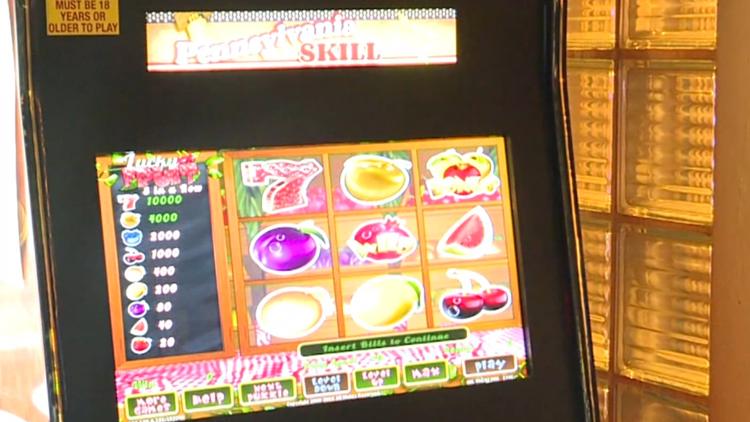
Are skill game machines slot machines?
The Pennsylvania Supreme Court has settled one of the state’s most contentious gambling debates Monday, ruling that the devices fall under the definition of slot machines — and are subject to state gaming and criminal laws.
In a 66-page opinion written by Justice David Wecht, the court reversed two Commonwealth Court rulings that had formed the legal foundation for the rapidly growing skill game industry. The justices concluded that the lower court incorrectly interpreted state law when it found the machines were exempt from regulation under the Gaming Act and not prohibited by criminal gambling statutes.
The ruling may affect thousands of devices that have appeared in bars, restaurants, social clubs, convenience stores, gas stations, laundromats and other businesses throughout Pennsylvania. The court said the machines have proliferated based on legal interpretations that were “deeply flawed.”
Recognizing that many businesses and operators have relied on prior court decisions, the court stayed its ruling for 120 days. During that period, law enforcement agencies are prohibited from taking adverse action against owners or operators of skill game devices based on the court’s decision.
Chief among the cases before the court were challenges involving devices distributed through Pace-O-Matic and affiliated businesses. Operators have long argued that the machines are legal because a player’s skill can influence outcomes.
The Supreme Court rejected the legal reasoning that had protected the devices, saying that Pennsylvania lawmakers had already addressed the issue through amendments to the Gaming Act enacted in 2017. Those amendments added the terms “skill slot machine” and “hybrid slot machine” to the statute’s definition of a slot machine.
The court said those provisions make clear that a device can qualify as a slot machine regardless of whether skill, chance or a combination of both affects the outcome.
“As it concerns their unregulated operation in unlicensed facilities throughout Pennsylvania, it is not this Court that declares ‘skill games’ to be unlawful,” Wecht wrote. “Rather, it is the General Assembly that did so nearly a decade ago.”
The decision leaves open the possibility of legislative action. The court emphasized that questions about whether skill games should be permitted, restricted or regulated are matters for lawmakers, not judges.
“Determining and manifesting the public policy of Pennsylvania is the prerogative of the legislative branch of our government,” the opinion said.
Legislators, officials respond to ruling
With the issue now placed squarely in their lap, lawmakers in Harrisburg say the decision provides long-awaited clarity and could accelerate efforts to regulate the industry as part of ongoing budget negotiations.
Senate President Pro Tempore Kim Ward (R-Westmoreland) and Senate Majority Leader Joe Pittman (R-Indiana) released a joint statement on Monday commending the ruling.
“The proliferation of skill games is a matter of public safety which must be addressed,” the lawmakers said, adding that gaming reform should be considered as part of the state’s 2026-27 budget discussions.
Ward and Pittman also said any new revenue generated through gaming reform should be directed to the state’s general fund, echoing a proposal included in Gov. Josh Shapiro’s budget plan. The senators noted that Senate Republican leaders introduced gaming reform legislation last year and said they expect lawmakers to move quickly on the issue following the court’s ruling.
House Republican Leader Jesse Topper (R-Bedford) also called for legislative action, describing the decision as an opportunity to address what he characterized as an unregulated segment of Pennsylvania’s gaming industry.
Attorney General Dave Sunday praised the ruling as a victory for consumers, taxpayers and enforcement of state law. Sunday’s office argued before the Pa. Supreme Court that the machines operate as unlicensed slot machines and that the inclusion of skill-based features does not exempt them from Pennsylvania gambling laws.
“The Supreme Court recognized what our office has argued from the beginning — these machines operate as gambling devices and cannot legally exist without the same oversight, regulation and accountability as other forms of legalized gaming in the Commonwealth,” Sunday said.
The Office of the Attorney General said an estimated 70,000 skill game machines are operating across Pennsylvania, a figure that exceeds the number of regulated casino slot machines in the Commonwealth.
Senate Democratic Leader Jay Costa said in a statement that the Supreme Court’s ruling “confirmed what we have long believed — skill games are illegal machines under Pennsylvania law. We must now review the opinions and determine the best path forward that is collectively agreeable to all parties.”