
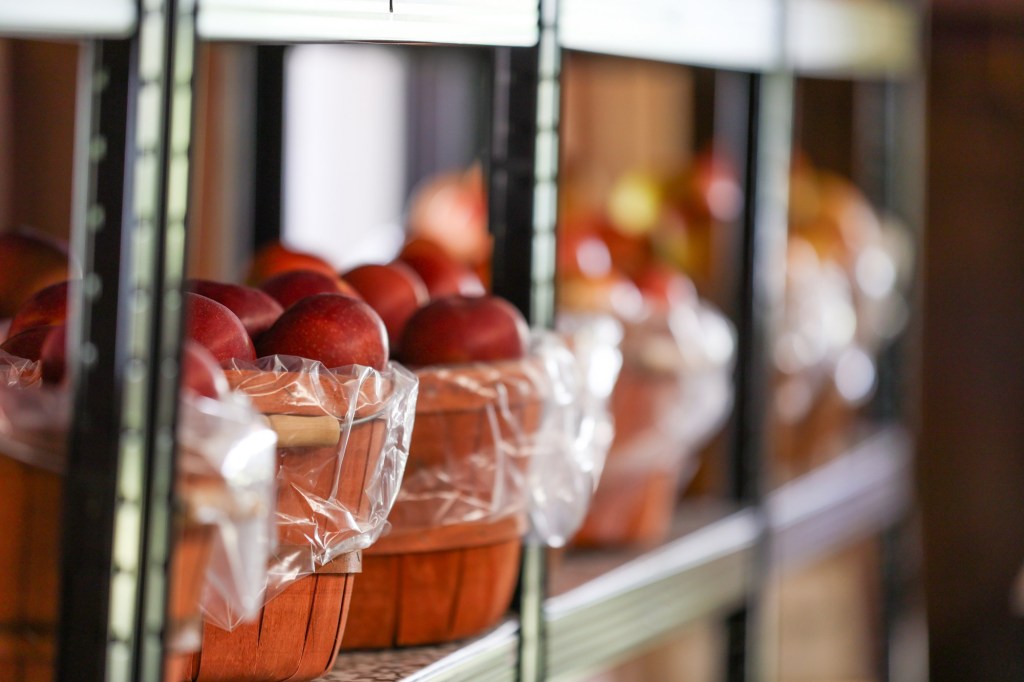
A late April freeze following unseasonably warm days proved problematic for some local farms readying for the farmers market season.
The Wilkes-Barre City Farmers Market opens Thursday on Public Square and Scranton Co-Op Farmers Market on Barring Avenue typically opens in mid-July, but a date has not yet been set.
The chaotic April weather proved disastrous for one Luzerne County farm.
Frost destroyed cherries, plums, nectarines, apricots and peaches at Heller Orchards in Conyngham Twp., according to posts from the farm on social media. However, they still have an apple crop, farm officials said.
Heller Orchards cited 90-degree days in April that pushed crops into full bloom followed by temperatures around 23 degrees as the reason for the devastating damage.
In late May, U.S. Secretary of Agriculture Brooke Rollins signed a disaster designation for 17 counties in Pennsylvania due to the damage and losses caused by the below-freezing temperatures between April 19 and 21.
Producers in Adams, Columbia, Cumberland, Dauphin, Franklin, Lackawanna, Lancaster, Luzerne, Lycoming, Monroe, Montour, Northumberland, Perry, Susquehanna, Wayne, Wyoming and York counties have until Jan. 26 to apply for the emergency loans, according to the USDA.
In a letter to Rollins requesting the declaration, Gov. Josh Shapiro said farms “experiencing extended periods of widespread low temperatures as a result of this freeze are suffering substantial losses in many fruit varieties,” including peaches, cherries, apricots, pears, strawberries, grapes and many varieties of apples.
Some farms used a helicopter and wind machines to minimize crop loss; others delayed planting to avoid the frigid temperatures.
Logan Brace, co-owner of Brace’s Orchard in Franklin Twp., Luzerne County, feels fortunate the farm was able to salvage much of its fruit crops as he prepares to sell goods at farmers markets this summer.
“I fared a lot better than most,” he said. “We’re going to try to do business as usual. Our peaches seem to be fine, my stone fruits are all fine, and my apples are pretty good. There are not going to be many changes. We’re going to try to keep everything the same. As far as other growers in the area, I know they were a lot different.”
Brace used a process called “frost flying,” where a low-flying helicopter pushes warmer air from an inversion layer down to the trees and ground below to help mitigate losses.
“It was a long night, but it seemed to pretty much save me,” he said.
While the freeze won’t impact Brace’s prices this summer, several other factors may lead to small increases, Brace said.
“If I raise my prices at all, it will be 50 cents here or a quarter there, but that’s just because of the way of the world anymore,” he said. “My electric bill for the farm — I just looked at it the other day — went up $1,400 from last year, the same month, with the same amount of electricity being used. Things like that would be the reason I’d raise stuff a little bit just because of how the economy is. It’s not going to be drastic if we do raise anything. Everything’s gone up. … Fertilizer, the bottles of cider jugs, the plastic is through the roof right now. There is stuff like that where I don’t have a choice. Other than that, we’re going to do business as usual.”
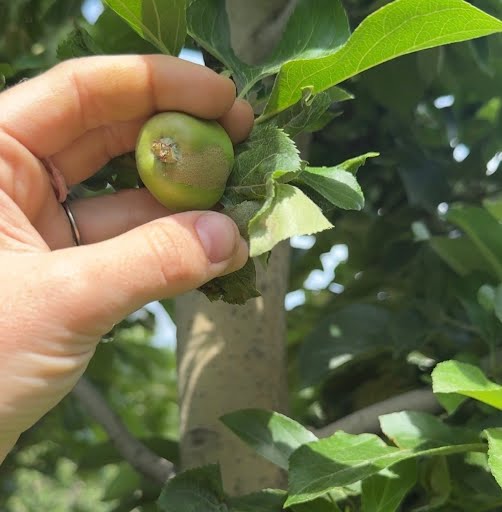
A frost ring is visible on some apples growing at Lakeland Orchard and Cidery in Scott Twp. (Courtesy Julianne Roba)
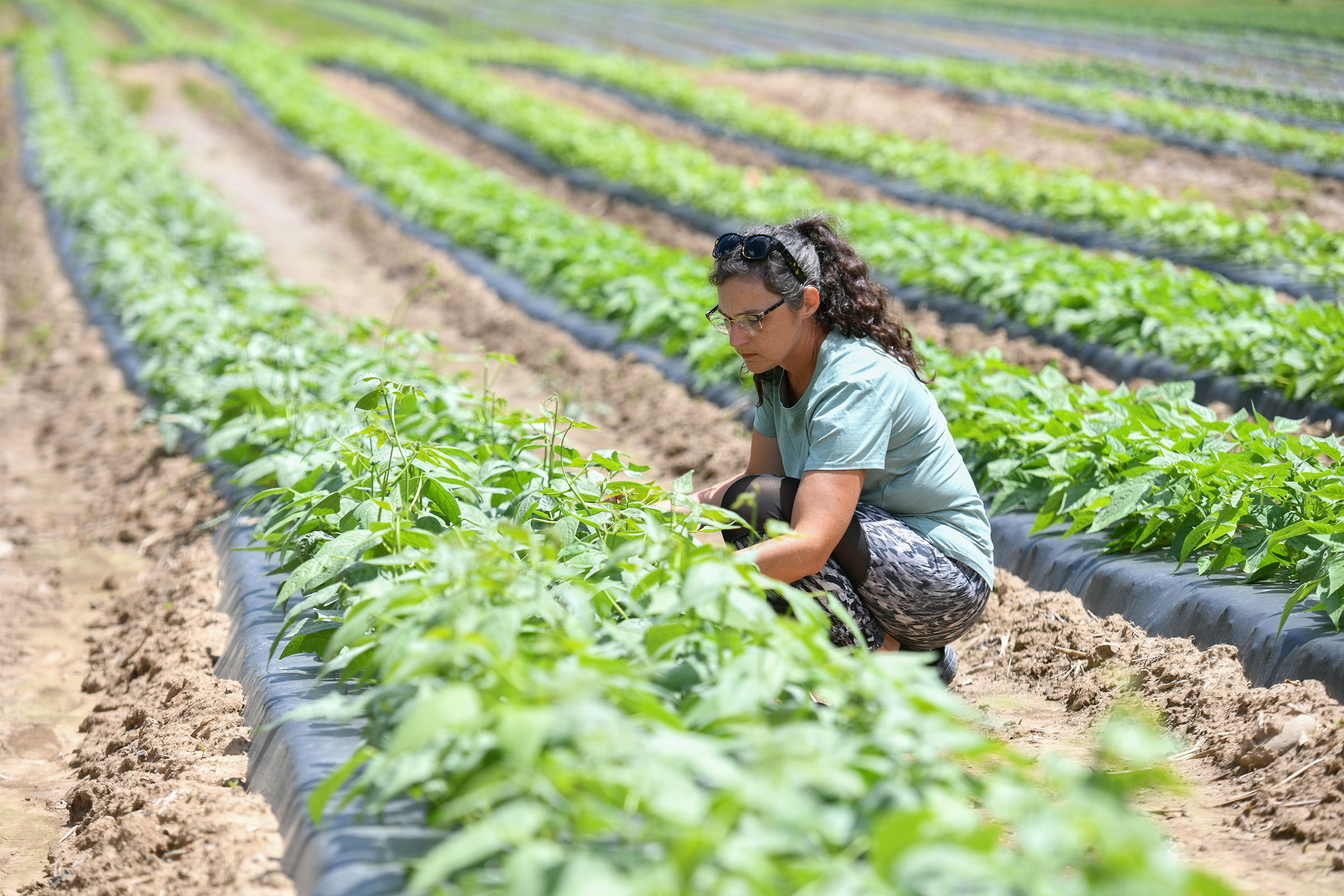
Farmer Jennifer Hopkins inspects the bean plants grown on land in Exeter Twp. by Hopkins Farm Tuesday, June 16, 2026. (SEAN MCKEAG / STAFF PHOTOGRAPHER)
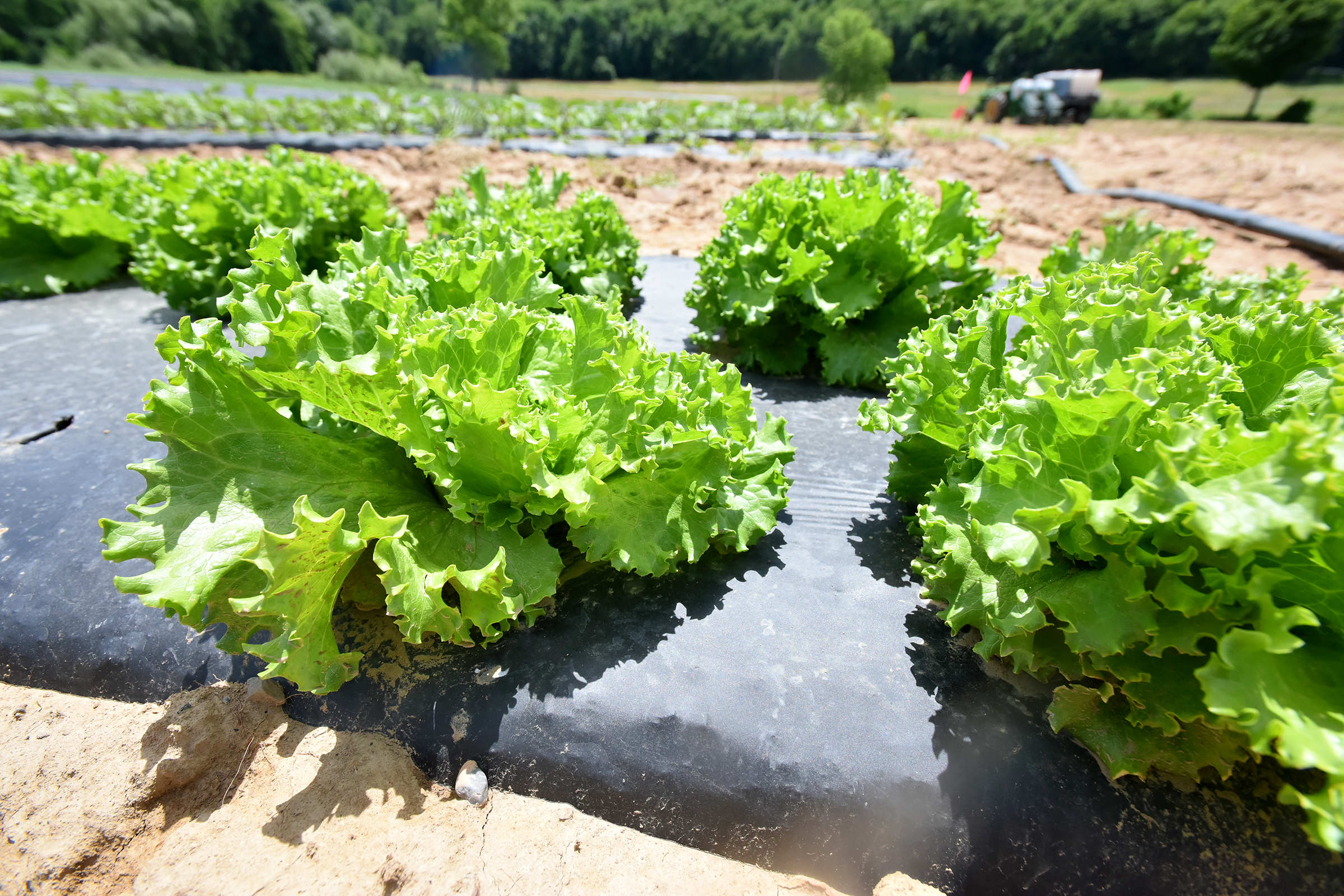
Green leaf lettuce grows on farmland in Exeter Twp. by Hopkins Farm Tuesday, June 16, 2026. (SEAN MCKEAG / STAFF PHOTOGRAPHER)

Heller Orchards in Wapwallopen on Wednesday, June 17, 2026. (JASON ARDAN / STAFF PHOTOGRAPHER)
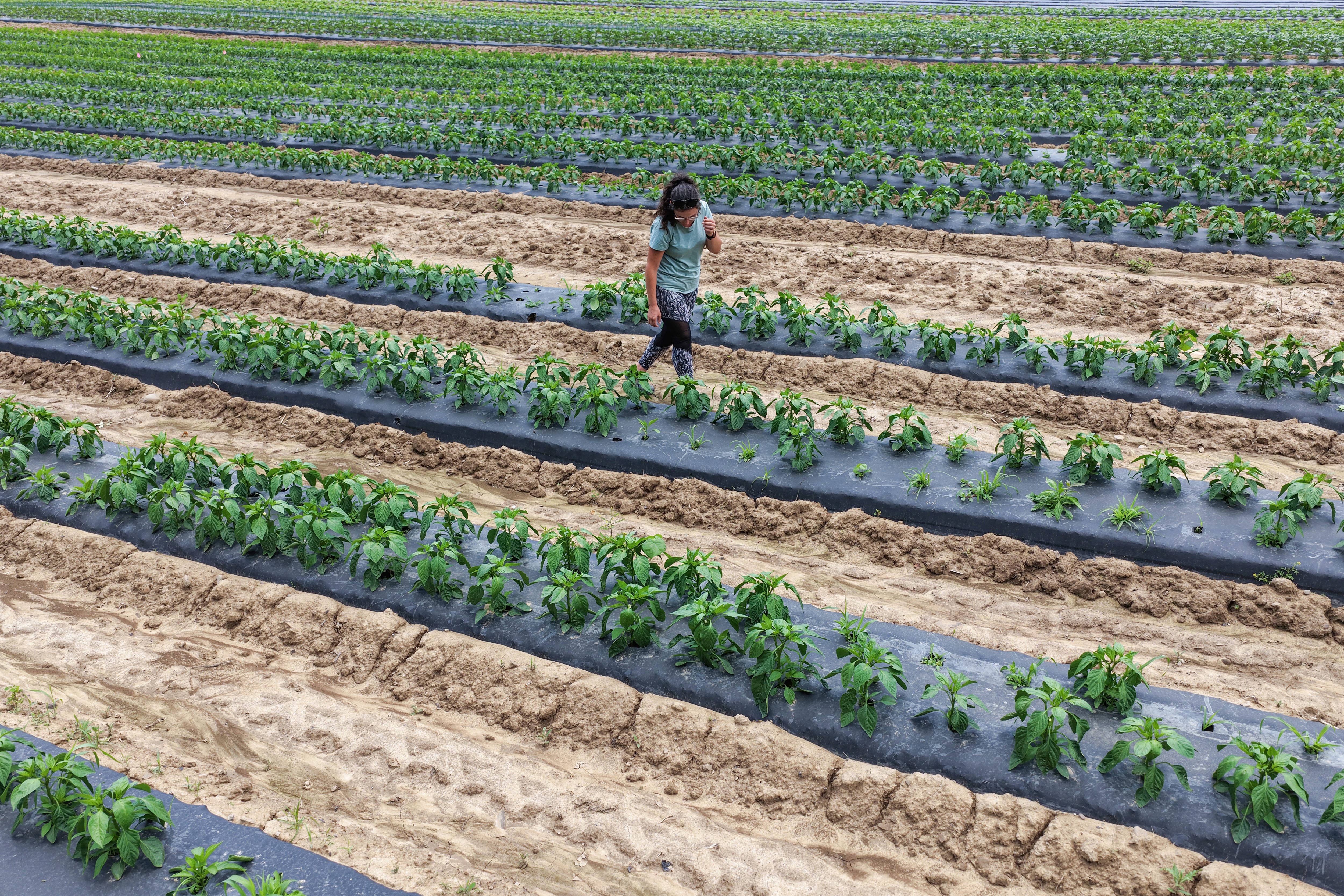
Farmer Jennifer Hopkins walks through pepper plants grown on land in Exeter Twp. by Hopkins Farm Tuesday, June 16, 2026. (SEAN MCKEAG / STAFF PHOTOGRAPHER)

Farmer Jennifer Hopkins walks through pepper plants grown on land in Exeter Twp. by Hopkins Farm Tuesday, June 16, 2026. (SEAN MCKEAG / STAFF PHOTOGRAPHER)

Farmer Jennifer Hopkins inspects pepper plants grown on land in Exeter Twp. by Hopkins Farm Tuesday, June 16, 2026. (SEAN MCKEAG / STAFF PHOTOGRAPHER)
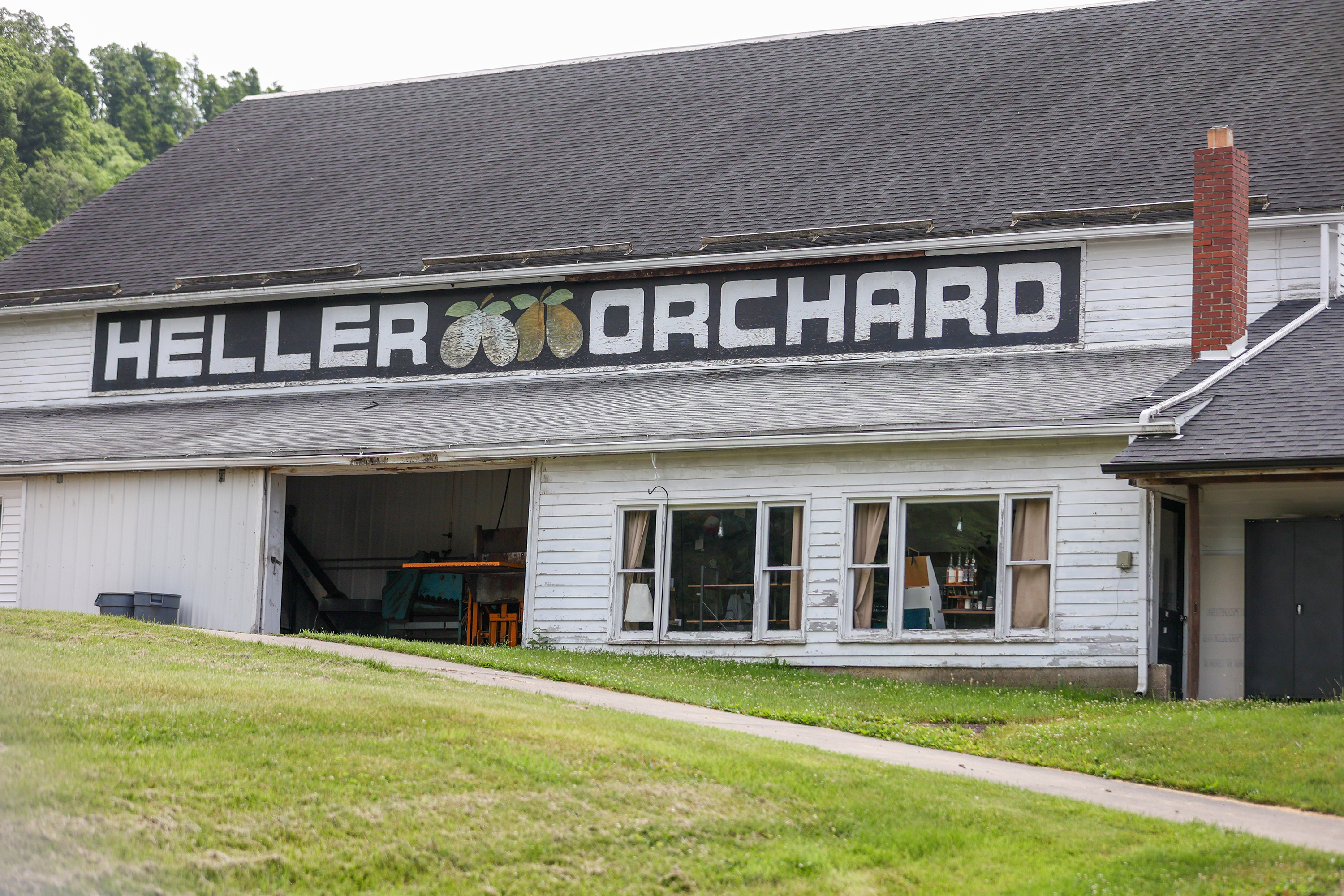
Heller Orchards in Wapwallopen on Wednesday, June 17, 2026. (JASON ARDAN / STAFF PHOTOGRAPHER)
Show Caption
1 of 8
A frost ring is visible on some apples growing at Lakeland Orchard and Cidery in Scott Twp. (Courtesy Julianne Roba)
Brace noted the farm should have an ample supply of fruits like apples, peaches, pears and plums for the summer should the weather cooperate.
“It seems we have a pretty decent crop out there,” he said. “Fingers crossed that we don’t get any more crazy weather. As long as we can keep what’s out there, as of now, Brace’s Orchard will be fine. Our crop isn’t what it should be, I still have loss, but it’s not anything like some of these other growers. It’s a disaster throughout the whole state.”
Bill Hopkins, owner of Hopkins Farm in Exeter Twp., Wyoming County, pushed back planting a variety of vegetables, including tomatoes, peppers, sweet corn and beans, in anticipation of the below-freezing temperatures.
“Usually, we’re planting in mid-April, but this year I held off until (early) May because of that late freeze,” he said. “We’re behind schedule a little bit. Instead of picking the first week of July, it will be the second week or whatever.”
However, Hopkins feels confident the farm will be fully stocked with veggies in time for the farmers market in Scranton.
“We will have 100% of our crops when that farmers market opens up,” he said.
Hopkins, who serves on the board of directors for the Co-Op Market, noted an opening date has yet to be determined, but last year the market opened July 22.
Despite the frost wreaking havoc on many farms throughout Pennsylvania, Hopkins expressed an optimistic outlook for others in the region.
“Most are going to be fine,” he said. “Most everybody protected their crops who could protect them. I’ve looked at some local orchards, and I’ve visited some other local farms, and everything is looking fantastic. We’re ready for another good season.”
Farmers need to keep an eye on the upcoming forecasts and pivot if needed, said Michele Brown, co-owner of Brown Hill Farms in Lemon Twp., outside Tunkhannock.
“We constantly watch the weather,” she said. “It’s just how we operate now. We plant enough crops that if one crop doesn’t do well, usually another crop will pick that up in a different season. That’s just how it works out. We’re going to have an amazing sunflower season this year (starting Aug. 1), so that will pick up the slack the tulips missed. The rain hit and then we had those 90-degree days. The sunflowers love that and the sweet corn loves that. It’s been a pretty good start to the spring.”
Brown added that the late frost killed some peonies but didn’t really affect the business much overall.
“We’ve actually had a really nice growing spring,” she said. “We don’t grow stone crops, or anything like that here, we do mostly row crops and flower fields.”
Although the cold blast didn’t do much damage, wet weather put a bit of a damper on the farm’s tulips — one of its feature attractions, Brown said.
“I lost a portion of our tulip field (about 20% of the 500,000 planted), but people still came out and picked them, and we still had a pretty good season,” she said. “We always grow more than we actually need so if we lose some, we’re OK. That was more from all the rain in March, though, not necessarily that late frost. We try not to focus too much on one crop. You just move on and start looking toward the future. That’s the only thing you can do.”
Julianne Roba, farm manager for Lakeland Orchard & Cidery in Scott Twp., feels thankful the Lackawanna County farm wasn’t impacted by the frost as much as other growers in different parts of the region.
“We have a lot of friends down south that lost everything, but because we’re so far north, our apples and strawberries weren’t really as far ahead to get the same damage that everybody else did,” she said. “Blackberries and lavender took a little bit more of a hit than we were expecting, but they’re going to come through all right.”
While Lakeland Orchard boasts a variety of fruit, the business depends on agricultural entertainment, or “agri-tainment” attractions like a new carousel and train to attract visitors even if crops falter.
“When you’re in agri-tainment, it gives you a little bit of a buffer if we did have huge damage and lost everything,” she said. “One cold night like that in agriculture has downstream effects for dozens of industries for about a year out.”
Although it didn’t kill the apple crop, the impact of the April freeze will be visible on the fruit, Roba noted.
“We have a lot of cosmetic damage called frost ring on the apples,” she said. “We’re just going to have to educate a lot of guests this year that it looks a little different, but that’s just because of what happened on one cold night in April and the apples taste just as good.”
Roba credits wind machines for helping the farm save its apple crop.
“If we didn’t have those, it could have been a 100% loss for sure,” she said. “Down in Lancaster, there are a couple farms that lost everything. We have friends out near Elysburg that lost 80% of their apples. The tricky thing about late spring freezes is that everything is already waking up.”