
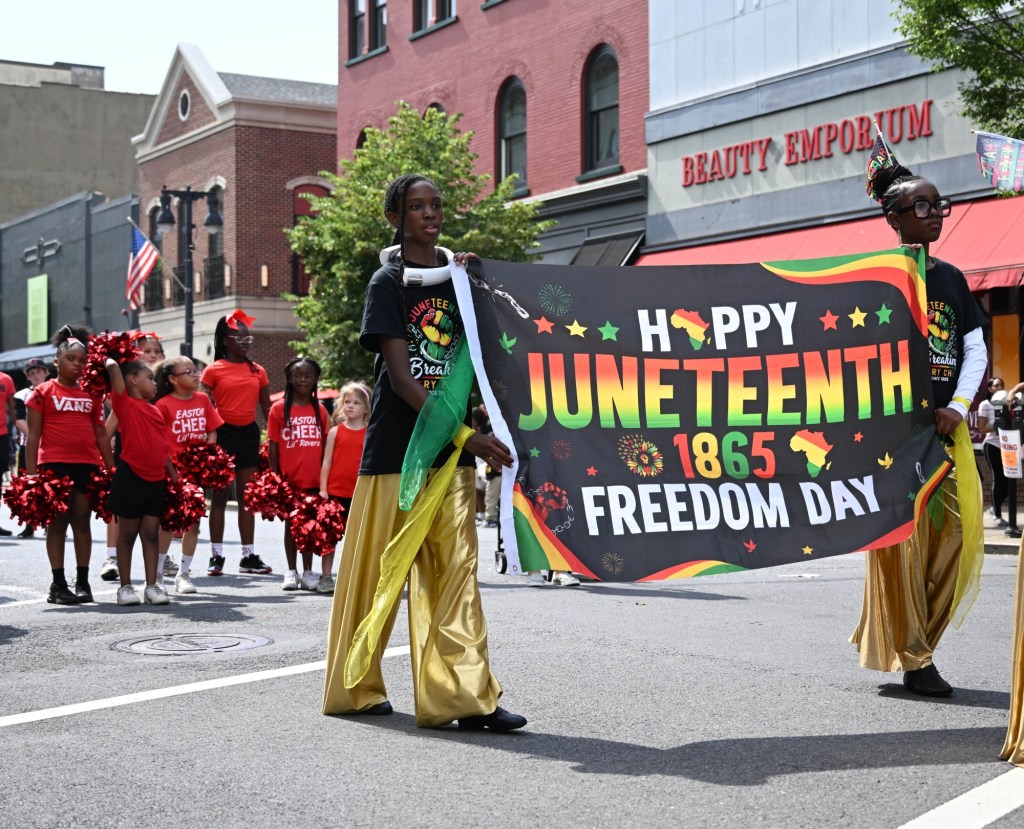
Every year, Juneteenth reminds America of a painful but important truth: freedom delayed is freedom denied.
On June 19, 1865 — more than two years after President Abraham Lincoln signed the Emancipation Proclamation — enslaved African Americans in Texas finally learned they were free. For those who had suffered generations of bondage, that announcement was the restoration of human dignity. Today, Juneteenth stands as both a celebration and a reflection. It asks us to honestly examine whether freedom, equality, and justice are fully experienced by everyone in our society.
Some worry that discussing difficult parts of history creates division. I believe the opposite is true. A nation becomes stronger when it faces its past honestly. True patriotism means believing our communities are capable of learning, improving, and living up to their highest ideals.
Juneteenth should never become just another long weekend or a commercial holiday stripped of meaning. History teaches us that injustice often survives when good people become comfortable, silent, or disconnected from the suffering of others.
The lessons of Juneteenth still matter immensely today, right here in our own backyard. Legal freedom alone does not automatically guarantee equal opportunity, economic stability, or social dignity. Walk through our neighborhoods in Bethlehem, Allentown, or Easton, and you will see that many families from different backgrounds continue to struggle with poverty, food insecurity, loneliness, and hopelessness. While the Lehigh Valley has made undeniable progress, there is still vital work to do in building stronger communities rooted in daily fairness and compassion.
This is not only a civic principle — it is a deeply moral and spiritual one.
As a Muslim, I find powerful parallels between the spirit of Juneteenth and the teachings of Islam. More than 1,400 years ago, Islam challenged systems of tribal superiority and racial division. The Quran teaches that all human beings are created from a single source, and that the most honored people in the sight of God are those with the best character and righteousness — not those of a particular race, wealth, or status.
The Prophet Muhammad, peace be upon him, gave one of history’s strongest messages against racism in his final sermon when he declared that no white person is superior to a Black person, nor a Black person over a white person, except through righteousness and good conduct. Furthermore, one of the most beloved companions in Islamic history was Bilal ibn Rabah, an African man who endured brutal slavery before gaining his freedom. Bilal became a timeless symbol of dignity, faith, and equality, reminding us that true liberation is physical, spiritual, and moral.
That message resonates deeply today as our local population grows and shifts. Across the Lehigh Valley, our neighborhoods are becoming beautifully diverse. People of different races, religions, and cultures now work together, study together, and raise families side by side. That diversity can either become a source of fear or a source of strength. The difference depends entirely on whether we choose ignorance or understanding.
Teaching the history of Juneteenth is not about making younger generations feel guilty for the past. It is about helping them appreciate the value of human dignity. When we understand the sacrifices others endured, we become more empathetic and responsible neighbors.
Progress is rarely immediate. The abolition of slavery did not instantly erase injustice. Likewise, solving today’s local social challenges will require patience, honesty, and a collective effort. But history shows that meaningful change is possible when ordinary people refuse to accept cruelty and inequality as normal.
In many ways, Juneteenth represents the ongoing American journey itself — imperfect and unfinished, but always striving toward something better. As we see Juneteenth flags raised in our public squares and neighbors gathering for local celebrations this month, perhaps the most meaningful thing we can do is ask ourselves a simple question: How do we treat the dignity and humanity of others in our daily lives?
Because freedom is not only about laws written on paper. True freedom is reflected in how people are valued, respected, and fed within society. Juneteenth is ultimately more than a Black American story. It is an American story, a Lehigh Valley story, and a human story — one that reminds all of us that justice delayed should never become justice denied.
This is a contributed opinion column. Farid Ahmad is a resident of Bethlehem and has served as a letter carrier for the United States Postal Service for over 25 years. He serves as the general secretary for the Ahmadiyya Muslim Community, Lehigh Valley chapter and is a longtime organizer of local food and homeless drives, as well as the annual “Muslims for Life” blood drives held to honor the victims of 9/11. The views expressed in this piece are those of its individual author, and should not be interpreted as reflecting the views of this publication. Do you have a perspective to share? Learn more about how we handle guest opinion submissions at themorningcall.com/opinions.