
From Philly and the Pa. suburbs to South Jersey and Delaware, what would you like WHYY News to cover? Let us know!
Despite advances in treatment and prevention, sexually transmitted infections remain a stubborn public health challenge in Pennsylvania, according to health experts who say stigma, misinformation and uneven access to care continue to fuel infections.
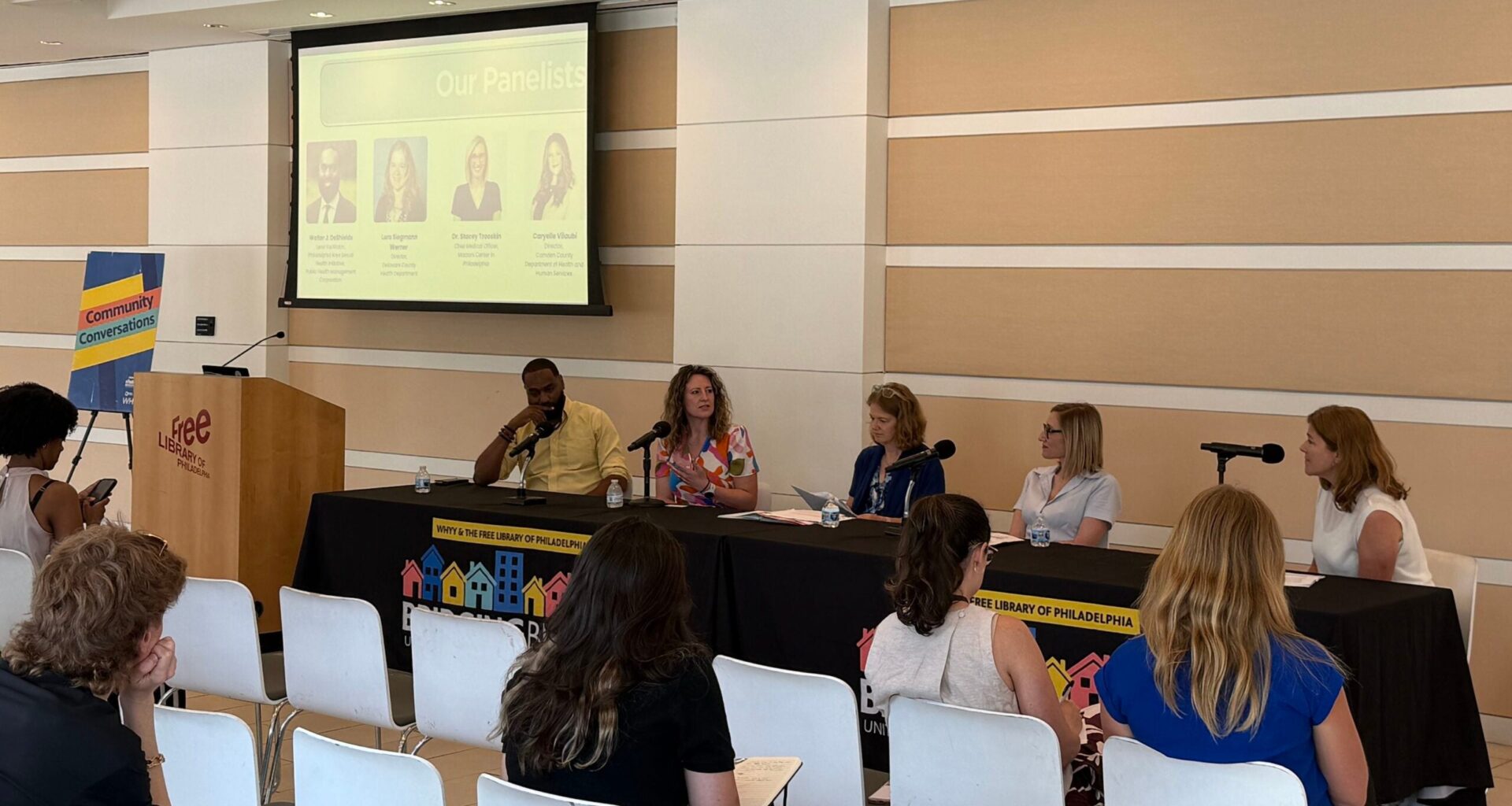
Those issues were the focus of a panel discussion Wednesday titled “Facing the Facts: HIV, STIs, and Health Equity in the Philadelphia Region,” where public health leaders discussed the barriers they encounter in reaching underserved populations. The event was hosted by the Parkway Central Library in Philadelphia, presented by WHYY’S Bridging Blocks and moderated by Maiken Scott, host of WHYY’s weekly health and science show, “The Pulse.”
In her opening remarks, City Councilmember-at-large Nina Ahmad spoke about the public health barriers that young people face in Philadelphia, citing “the lack of comprehensive education in schools and the state of Pennsylvania itself.”
“We are in a purple state,” Ahmad said, referring to an electorate divided between voters who support sex education in primary schools and those who don’t. “As a nation, we have become a country that does not value science. We live in a disturbing time, and we have to bridge spaces in our communities to remedy these issues.”
Ahmad said that, for her, Philadelphia has always been a place of refuge, and the city should be ready to offer the same feeling of support to anyone who is looking.
The focus of the conversation was the persistence of STI rates. The number of cases of chlamydia, gonorrhea and syphilis nationwide declined by 9% since 2023, according to the CDC’s 2024 Sexually Transmitted Infections Surveillance report. However, the rate of cases is still 13% higher now than it was 10 years ago.
Panelists had some good news about the communities they serve, pointing to their ability to specialize the care they provide, and to diversify the partner organizations that support their work.
However, they said some of their main challenges include fleeting financial resources for initiatives such as testing sites and education programs in schools and communities, and lack of representation in underrepresented communities.
One problem common to every panelist was what they characterized as a lack of interest among everyday people in having the open conversations about sexual health that can normalize the topic.
“If there were not as much stigma around it, let’s say you go to the hairdresser and they say, ‘I have tests here,’ or you’re going to your dentist. Sometimes it’s about putting the test in a space and going ‘By the way, when was the last time you were tested?’” Scott said.
Panelist Walter DeShields, the lead facilitator of Philadelphia Area Sexual Health Initiative, said that, through his work, he has seen that teens and adults share a number of misconceptions about how STIs and HIV are spread.
While plenty of information is available online, DeShields said, there are significant gaps in what his clients understand about their risk of sexually transmitted infection.
“I think there is ignorance, and some of the folks I work with know [transmission] is possible. Some of them even know it’s probable. They understand when they are being risky,” DeShields said.