
Ken Francis often considered priesthood while growing up as an active Catholic parishioner. A spiritual experience on a camping trip made up his mind.
While camping at the Basilica of St. Michael the Archangel in Cambria County last fall, the Moosic native prayed to the Rev. Demetrius Gallitzin, the basilica’s founder. He had his answer a few days later.
“I just woke up … and had this sense of clarity on the subject and decided that yes, this is what I’m called to do,” said Francis, 24. “It was a year in the making of discerning and praying and going to Mass and Eucharistic Adoration. It culminated in that moment with the visit out to that basilica being the final piece of the puzzle.”
His journey reflects an increasing interest in religious life among men, even as the number of active priests in the Diocese of Scranton continues to decline. The dwindling body of priests is a factor in the 11-county diocese’s Vision 2030 restructuring plan, which calls for more parish linkages and consolidations.
The Diocese of Scranton has 17 seminarians this year, the highest number in several years. One of them, Jan Carlo Pérez, will be ordained later this month. The diocese will open a new seminary in downtown Scranton this summer for candidates in their first year.
Creating opportunities for vocations
The uptick in seminarians is not enough to offset the declining number of priests. There were just under 81 priests serving the diocese last year, said spokesman Eric Deabill, compared to 226 in 2003. Officials project the numbers will decline to 62 priests by 2030, with 17 retirements expected in the next five years.
Vision 2030 calls for a focus on increasing vocations through prayer, encouraging young men to serve God and recruiting seminarians at the parish level.
The diocese’s vocations office has come up with new ways to reach men who are discerning — the prayerful process of discovering God’s will. Outreach includes weekly dinners, a summer camp for high school-age boys, vocation committees at parishes, and Masses and retreats.
The diocese’s vocations director, the Rev. Ryan Glenn, also serves as pastor of Christ the King Parish in Archbald. He sees a connection between parish life and vocations.
“Like any vocation, any call to serve the church, it’s got to be rooted in parish life, in prayer, and the ministry is a service that happens in a parish,” he said. “So a lot of our programming, a lot of our outreach to guys, it’s fundamentally going to be at that parish level. Being a pastor in a parish just flows right into that work of the vocations office.”
Francis will be one of four seminarians in their first year at the new seminary, St. Pius X. It takes its name from the diocese’s former seminary in Dalton, which closed in 2004 due to the decline in seminarians. It had operated since 1969.
Its location in the 300 block of Wyoming Avenue is ideal for seminarians to perform community service, said the Rev. Alex Roche, the seminary’s rector. It’s close to St. Anthony’s Haven shelter and St. Francis of Assisi Kitchen.
It also lets seminarians get to know the people and parishes in the diocese, particularly if they aren’t from the region, Roche said.
Francis is excited to devote a year to spirituality, drawing closer to God and becoming more involved in the diocese.
“I believe it is what I’m called to do, but I think it’s good that they devote a year to looking at it more in depth,” he said. “Not having to worry about as many outside things as before, you can just focus in on what you need to.”
Francis attended SS. Peter and Paul Church in Avoca and Nativity of Our Lord Parish and Holy Rosary School in Duryea growing up. He was an altar server, sang in the choir and volunteered at picnics and dinners. He also taught religious education and was a groundskeeper for the parish cemetery. He graduated from Holy Cross High School in 2020, studied heating and air-conditioning technology at Johnson College and worked for five years at T.E. Spall & Son in Carbondale before he joined the seminary in January.
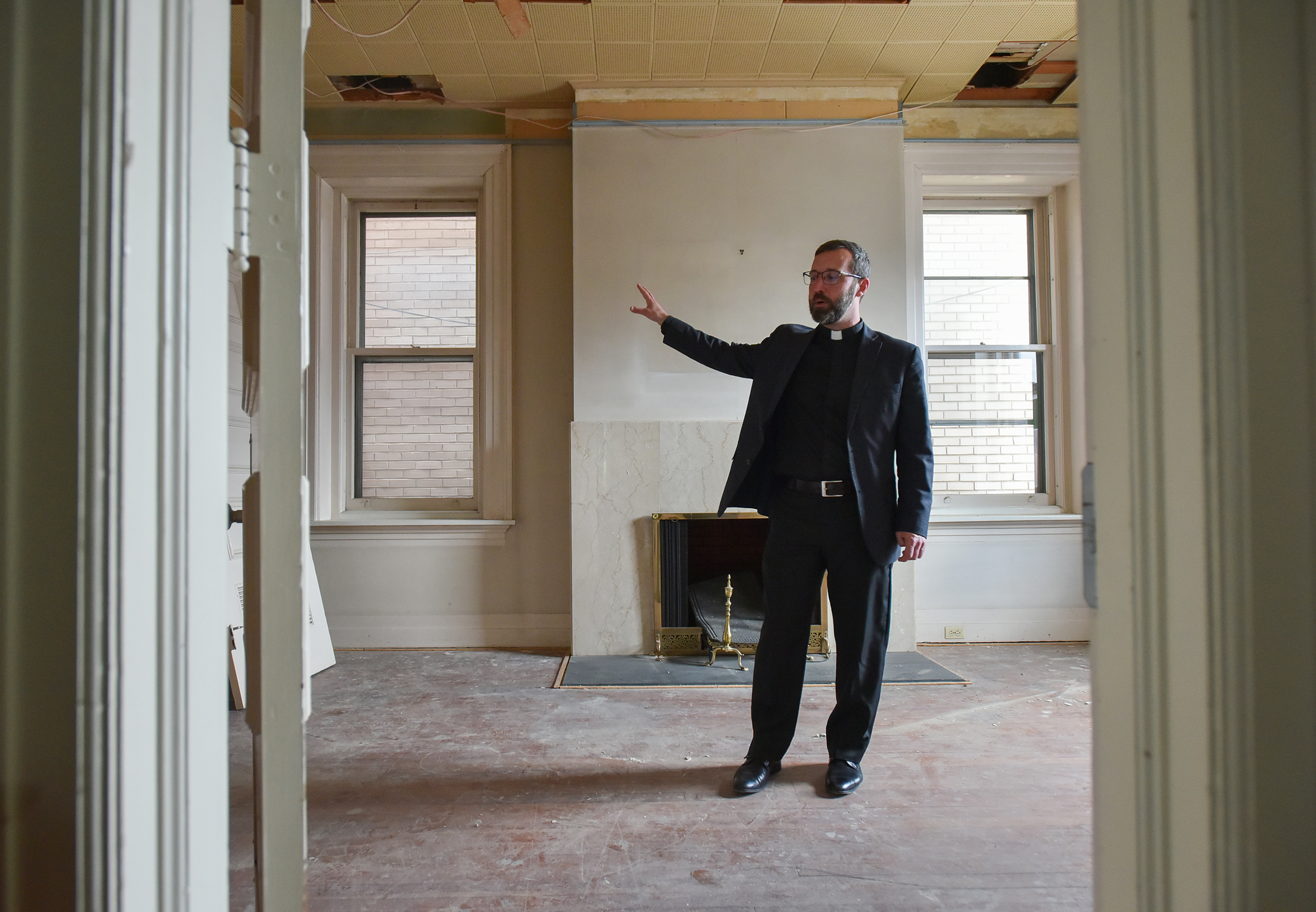
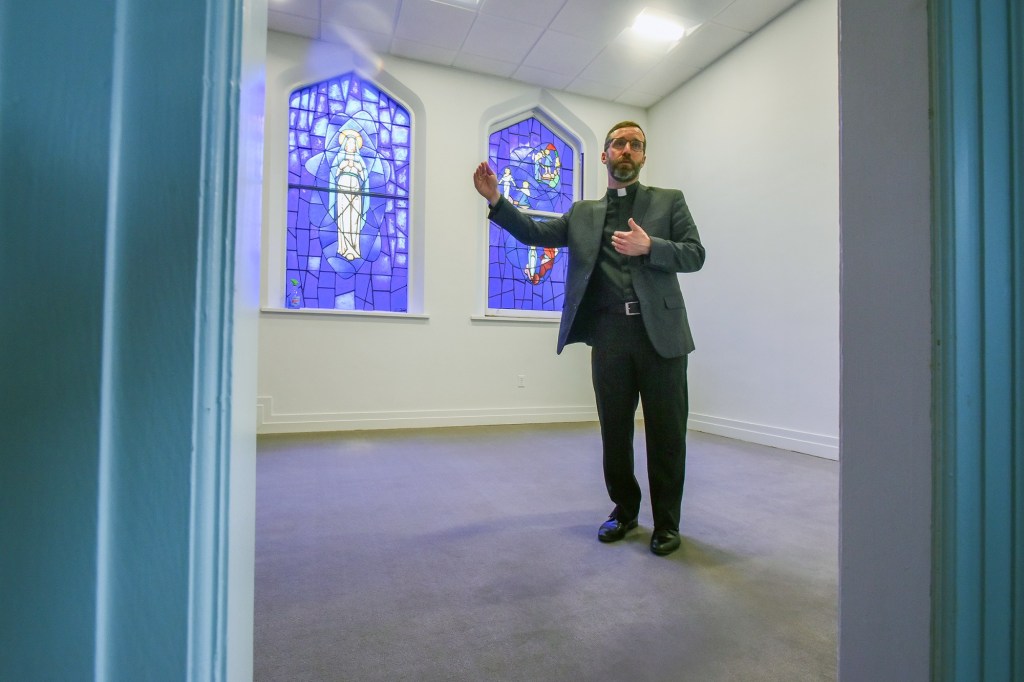
Rev. Alex Roche talks about the library inside of the new St. Pius X Seminary, currently undergoing a transformation from the former IHM convent on Wyoming Ave. in downtown Scranton Monday, June 8, 2026. (SEAN MCKEAG / STAFF PHOTOGRAPHER)
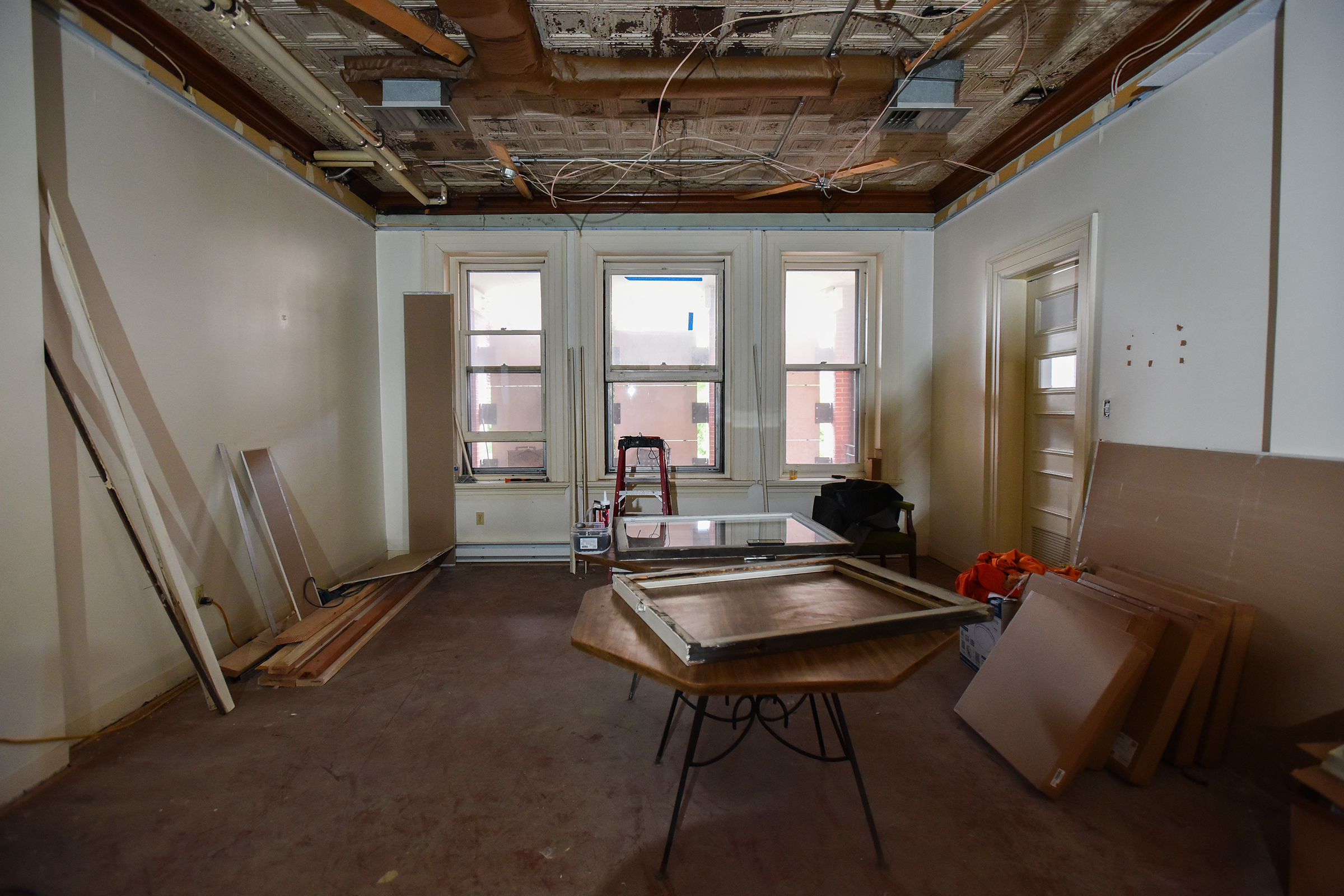
The dining area is currently under renovations in the new St. Pius X Seminary on Wyoming Ave. in downtown Scranton Monday, June 8, 2026. (SEAN MCKEAG / STAFF PHOTOGRAPHER)
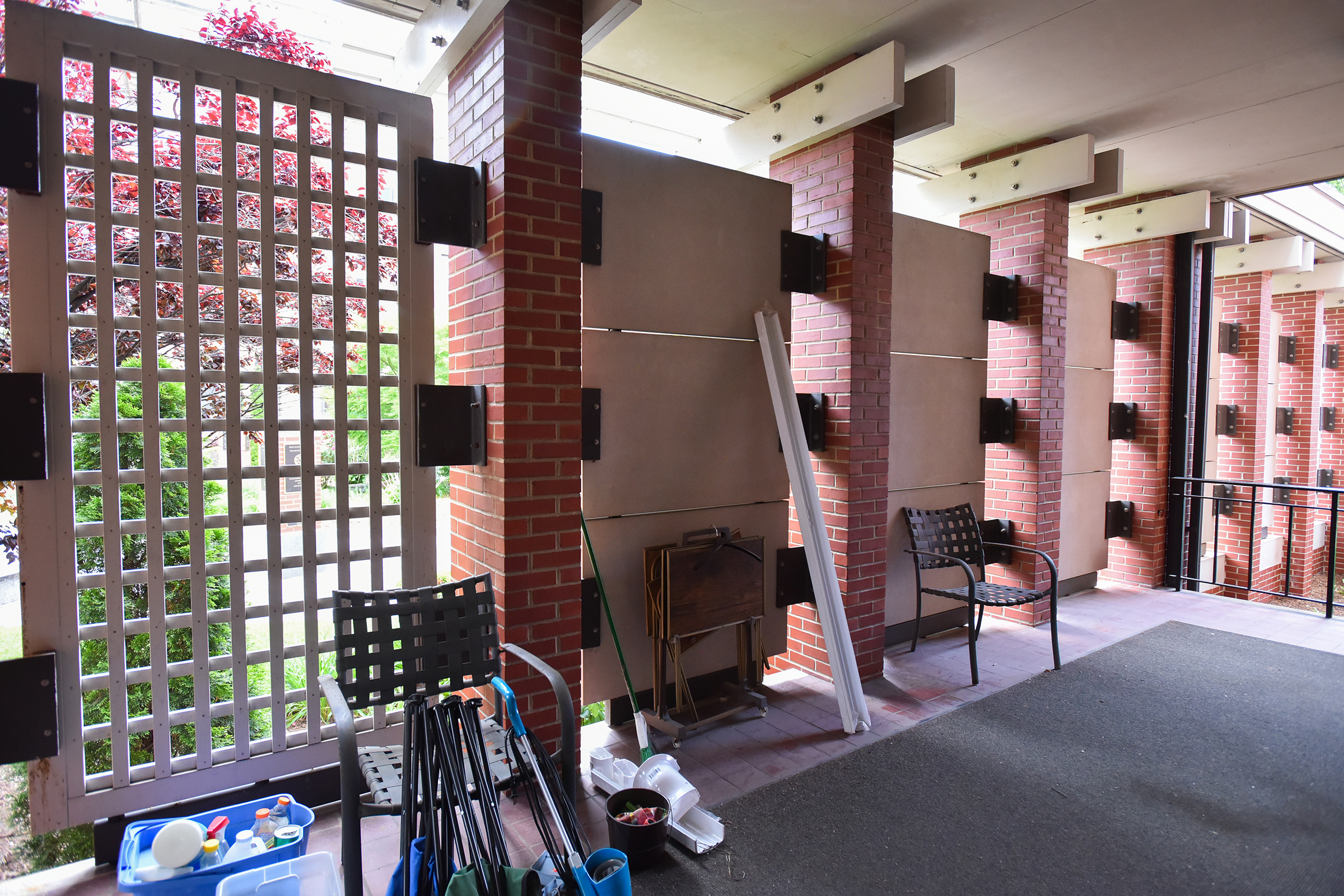
The back porch is seen at the St. Pius X Seminary, currently undergoing a transformation from the former IHM convent on Wyoming Ave. in downtown Scranton Monday, June 8, 2026. (SEAN MCKEAG / STAFF PHOTOGRAPHER)

The bedroom that will be occupied by the part-time priest is currently under renovations inside of the new St. Pius X Seminary on Wyoming Ave. in downtown Scranton Monday, June 8, 2026. (SEAN MCKEAG / STAFF PHOTOGRAPHER)
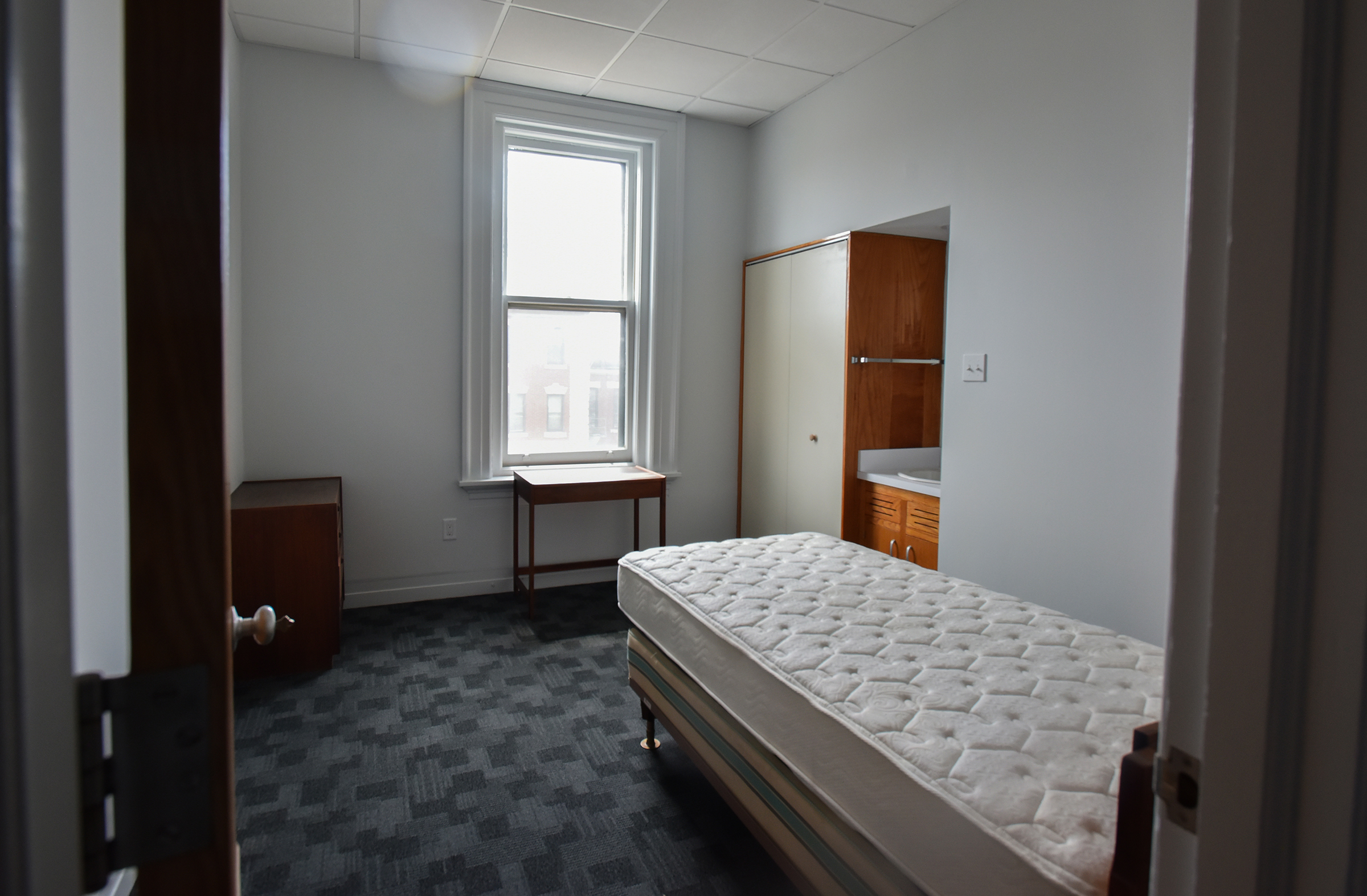
A bedroom is renovated to be used by the seminarians in the new St. Pius X Seminary on Wyoming Ave. in downtown Scranton Monday, June 8, 2026. (SEAN MCKEAG / STAFF PHOTOGRAPHER)
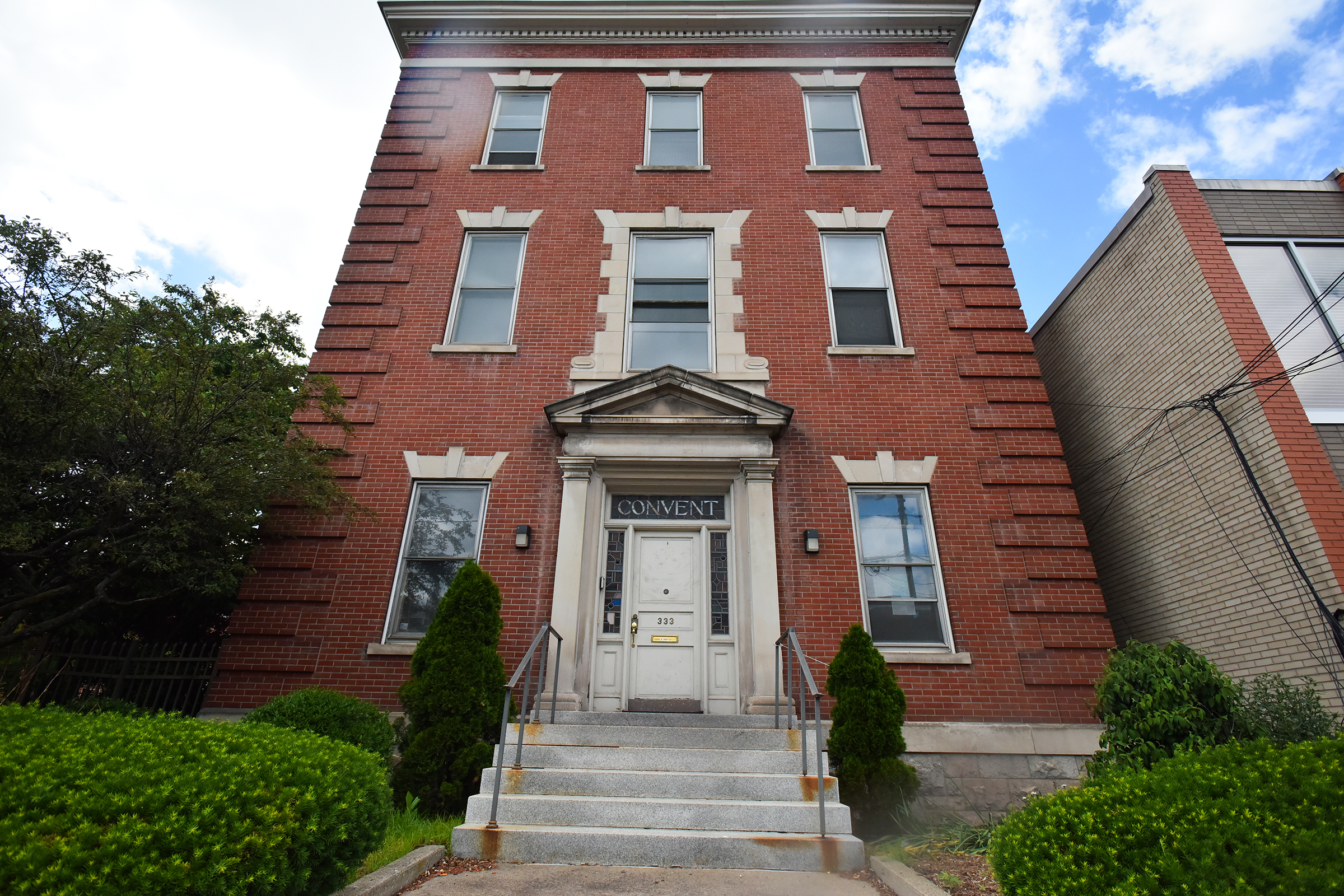
The outside of the new St. Pius X Seminary, currently undergoing a transformation from the former IHM convent on Wyoming Ave. in downtown Scranton Monday, June 8, 2026. (SEAN MCKEAG / STAFF PHOTOGRAPHER)
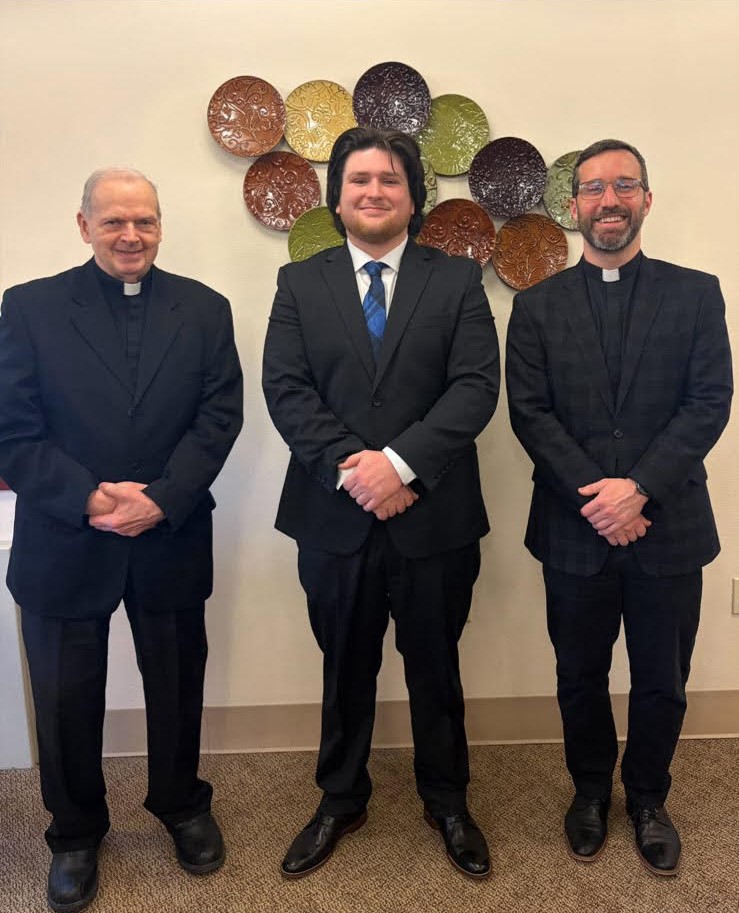
Ken Francis, a seminarian in the Diocese of Scranton, poses for a photo upon entering the seminary with Monsignor David Bohr, former rector of St. Pius X Seminary, left, and Rev. Alex Roche, S.T.L., rector of St. Pius X Propaedeutic House of Formation, right. (Courtesy of Ken Francis)
Show Caption
1 of 7
Rev. Alex Roche talks about the library inside of the new St. Pius X Seminary, currently undergoing a transformation from the former IHM convent on Wyoming Ave. in downtown Scranton Monday, June 8, 2026. (SEAN MCKEAG / STAFF PHOTOGRAPHER)
Expand
Increasing diversity in vocations
Many men considering the priesthood are in their 20s and, like Francis, worked in trades-based careers.
Three of the 17 current seminarians come from outside the United States from Panama, the Dominican Republic and Nigeria.
The number of men open to discernment has gone up, with the diocese in conversation with 20. The number of Hispanic discerners has risen too, Roche said.
Vocations in Catholic dioceses nationwide have remained level over the past 10 years, with around 450 seminarians ordained, according to research from the Center for Applied Research in the Apostolate at Georgetown University.
The Rev. Thomas P. Gaunt, S.J., Ph.D., the center’s executive director, said positive efforts in encouraging vocations have played a role in the increasing number of vocations. He said about one-quarter of the Catholic population in the United States is foreign-born, while 35% of seminarians last year were not born in the United States, and 25% of vocations in the past 10 years were immigrants.
While there is greater interest and engagement in the church among young adults, Gaunt and his colleagues aren’t sure if the trend will continue. But the more Catholic education a man receives in high school and college, the more likely he is to join the seminary.
“If they’re in a context where faith is a part of their education, faith is part of their day-to-day engagement, well, then it’s kind of positively reinforcing and supportive,” Gaunt said.
The Most Rev. Joseph C. Bambera, bishop of Scranton, thinks the increased number of seminarians reflects not only Glenn’s work as vocations director but the work of parishes recognizing individuals who may be called to the priesthood. Having seminarians who speak Spanish is also an opportunity to minister to the diocese’s growing Hispanic community.
“It says to me that the prayers, the engagement with people is starting to bear some fruit,” Bambera said.
He also attributes this growth to young people searching for more meaning in their lives. The number of men interested in the priesthood lines up with the increase in people who have joined the church, Bambera said.
Roche said the more men are called to the priesthood, the healthier the diocese becomes, but he acknowledged it takes time.
It takes between 6½ and nine years to complete the seminary education. Seminarians who start in Scranton will complete their remaining years elsewhere. The diocese has partnerships with the College Seminary of the Immaculate Conception at Seton Hall University in New Jersey, St. Mary’s Seminary and University in Baltimore, St. Vincent’s Seminary in Latrobe, Pope St. John XXIII National Seminary in Weston, Massachusetts, and the Pontifical North American College in Rome.
Glenn said the men who are called to serve are heroic and courageous for doing so. He hopes the number of men entering the seminary will continue to grow in order to support the diocese.
“Even though there are these closures and linkages … they feel called to priesthood, they feel called to serve, and regardless of the circumstances, they’re really responding, which is a pretty cool thing,” Glenn said.
Despite fluctuations in the numbers of vocations, Francis sees becoming a priest as the best way to do what he wants — help others.
“I’ve always enjoyed helping people and I think this will give me the opportunity to help them in a very unique way,” he said.
Features of St. Pius X Seminary
The three-floor building includes a communal space, rooms for 13 seminarians and two priests, a bathroom, a chapel, a library, kitchen and a porch. The Rev. Alex Roche serves as the seminary’s rector, the Rev. Mark DeCelles is academic dean and the Rev. Brian Van Fossen is head spiritual director.
The seminary will open in August with four seminarians. Roche expects construction will wrap up in late July.
The building, which dates to the 1900s, had been used by different religious orders, most recently the Sisters, Servants of the Immaculate Heart of Mary, who moved out in March. The sisters used the building as a springboard for ministries in the city, such as outreach and teaching.