
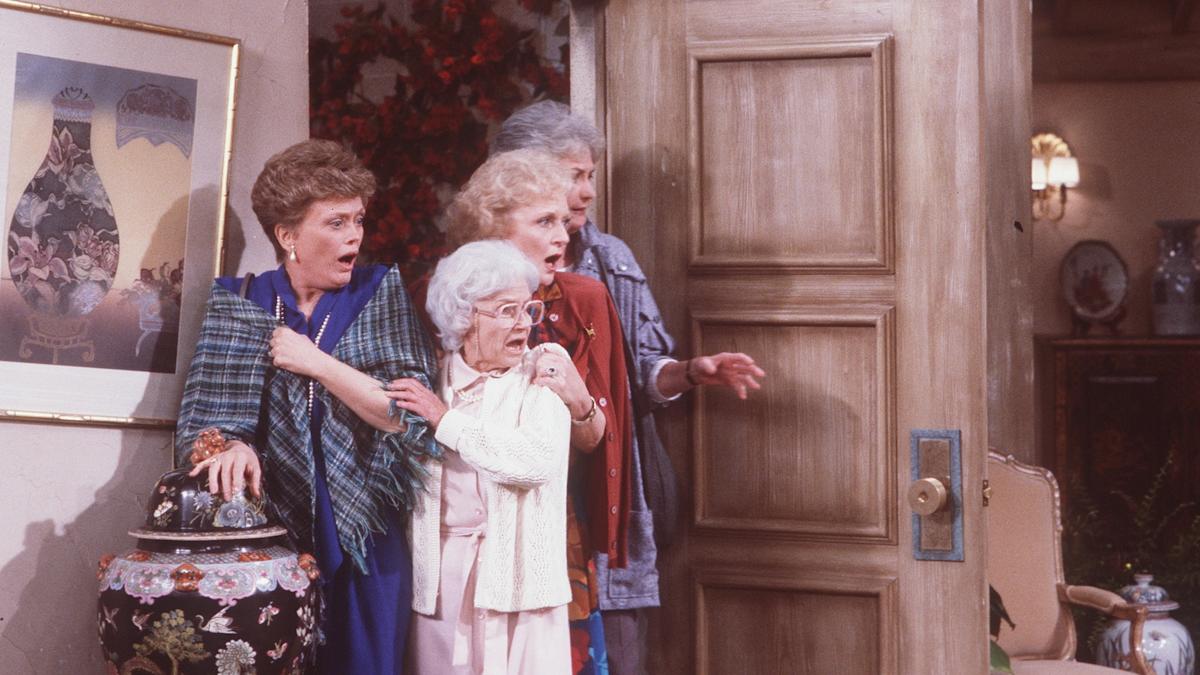
In Pennsylvania, lawmakers just got one step closer to making it easier for adults who aren’t related to form shared living arrangements, with its cheekily named Golden Girls Law.
The Pennsylvania House of Representatives passed the bill that seeks to do away with occupancy limits that restrict how many unrelated adults can live together.
Must Read
With the rising cost of living, it’s easy to see why retirees on fixed incomes would be keen to share expenses — utilities and home insurance have spiked across the country, and property taxes and HOA fees have climbed for many Americans as well.
Pennsylvania’s Golden bill
While the characters in The Golden Girls — four mature women, three of whom aren’t related — famously lived together in one house, Rep. Tarik Khan wrote in the bill’s co-sponsorship memo that the same scenario wouldn’t be legal in Pennsylvania (1).
The characters “chose to share a home to save money and support one another like family,“ Khan wrote. “With housing costs rising so quickly today, sharing space like that is more important than ever.”
According to Khan, the state is short 265,000 affordable housing units. The bill seeks to eliminate “arbitrary limits on unrelated roommates,” and Khan writes that occupancy limits “drive up housing demand and prevent friends, workers, older adults and families from saving money by sharing a place.”
The House passed the bill on June 8, and will now head to the state Senate for consideration (2).
But while Pennsylvania may be moving toward allowing this kind of living arrangement, other states are pushing back.
Connecticut house speaker says residents would be ‘unhappy’ with students renting
Connecticut was on its way to passing a similar bill of its own, also referred to as the “Golden Girls bill,” which would have meant that homeowners could rent individual rooms to long-term tenants (3).
But, according to the CT Mirror, although the bill passed through the Senate, the House of Representatives never heard the bill, reportedly due to opposition from House Speaker Matt Ritter, the report said.
Story Continues
Ritter had concerns about college students renting out rooms in a wealthy neighborhood in Hartford, the report says, referencing emails from a lobbyist to Ritter’s chief of staff.
“What if a neighbor is unhappy about four unrelated people who are 19 years old or 22 years old living in the house? The owner says it’s occupied, but nine months out of the year they’re in another state. I mean, the question really comes down — to me — about who enforces it, and how would you deal with a situation like that?” Ritter said in an interview with CT Mirror.
Pennsylvania’s Golden Girls bill, however, circumvented this issue. Before it passed, it was amended to give local governments the ability to limit occupancy if unrelated people are students at a college or university (4).
Other states that have passed their own “Golden Girls” laws include Iowa, Colorado and Oregon (5).
The social benefits of communal living
An op-ed in Governing argues that homelessness skyrocketed after regulation of single-room occupancy (SRO) units from the 1950s to the 1970s “decimated” the country’s stock of small, affordable, dorm-like apartments with shared amenities.
It added that allowing for living arrangements, Golden Girls-style, with friends could also let older adults reduce their expenses (6). And there’s an added bonus: It could also provide health benefits.
A 2023 Surgeon General’s report on the health impacts of social isolation found that “the effects of social connection, isolation, and loneliness on mortality are comparable, and in some cases greater than those of many other risk factors” such as smoking, physical inactivity and high blood pressure (7).
The report also notes a massive economic cost due to social isolation in older adults: “An estimated $6.7 billion in excess Medicare spending annually, largely due to increased hospital and nursing facility spending.”
Co-living for older adults can mean a built-in community that provides not only social connection, but the possibility of care as well. With the high cost of long-term care, and the fact that Medicare doesn’t cover it, co-living could help bridge the gap for those who don’t have family that can provide in-home caregiving.
And while living with roommates in your golden years might have been something you’d only see in a TV comedy in decades past, now it’s a growing trend.
According to a Realtor.com report, data from roommate-searching platform SpareRoom show that the fastest-growing demographic for roommates is adults 65 and older (8). Their share of the overall market “has more than tripled over the past decade,” the report says.
You May Also Like
Join 250,000+ readers and get Moneywise’s best stories and exclusive interviews first — clear insights curated and delivered weekly. Subscribe now.
Article Sources
We rely only on vetted sources and credible third-party reporting. For details, see our ethics and guidelines.
PaleGIS (1), (4); WTAJ (2); CT Mirror (3); Pew Research Center (5); Governing (6); U.S. Department of Health and Human Services (7); Realtor.com (8)
This article originally appeared on Moneywise.com under the title: Pennsylvania’s Golden Girls law lets unrelated adults share a home — but Connecticut’s version was stymied
This article provides information only and should not be construed as advice. It is provided without warranty of any kind.