
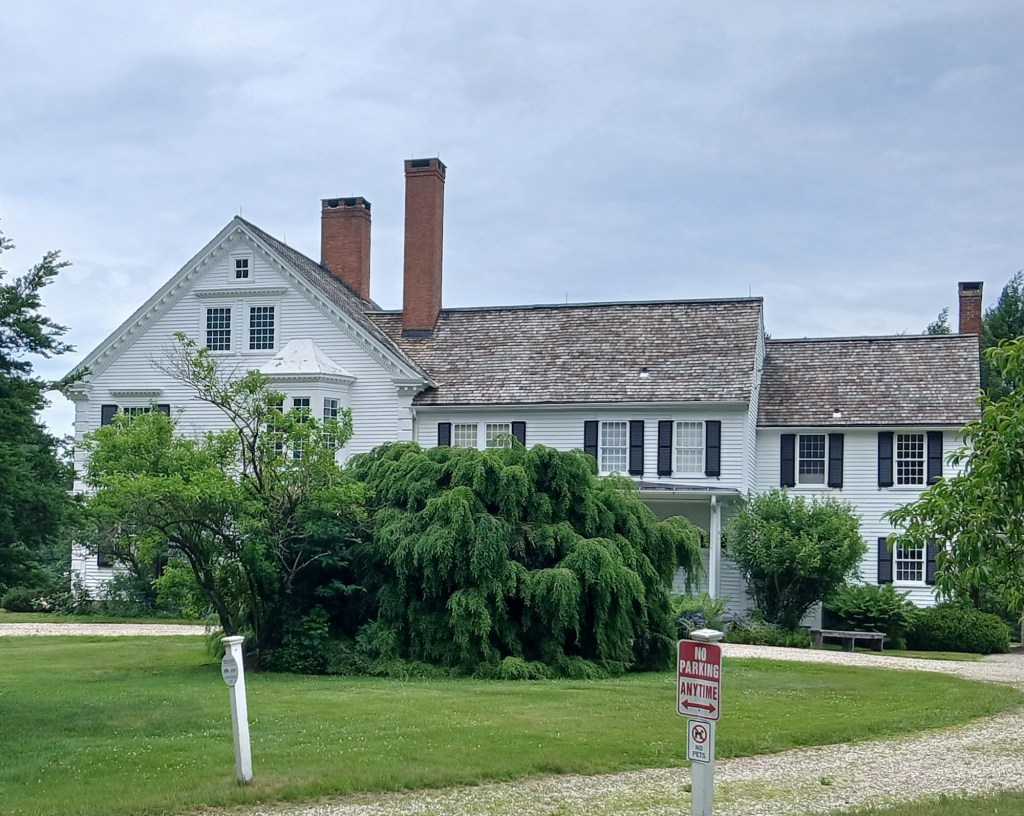
By the time summer kicks in, the Bellamy-Ferriday House & Garden is in a state of lush and colorful glory.
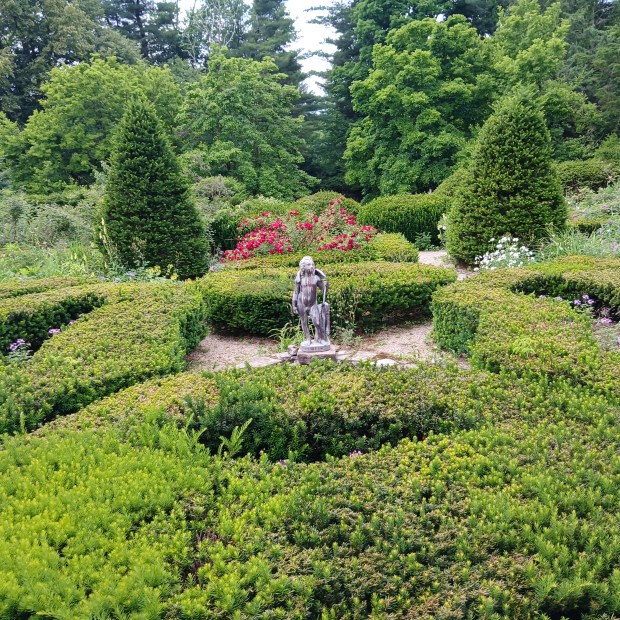
Visitors wander the grounds, tour the 18th-century house and visit the gift shop, where books, toys and gifts are sold. Rosebushes, lilies and ferns, manicured hedges in the formal garden and pots of geraniums make splashes of color on the green lawns, dotted by white-painted barns. The residence, also painted white, is open for tours and a snapshot of how the former homeowners lived.
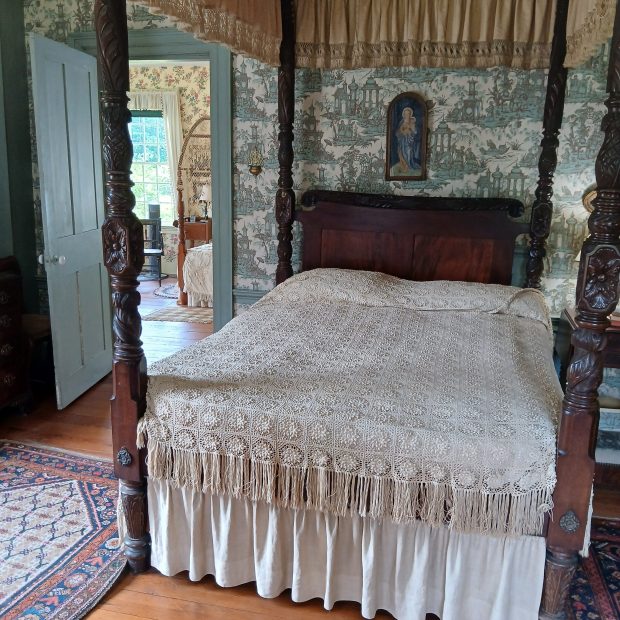
Tour guide Nick McCarthy, who spends the tour season from May to October leading guests through the house, details the lives of the house’s former residents, including the Bellamys and the Ferridays.
McCarthy, a Stratford resident, has worked at the Bellamy-Ferriday house for two years.
“It’s a beautiful place,” he acknowledged, leading visitors up the main staircase to the bedrooms above.
 The Bellamy-Ferriday House & Garden in Bethlehem, where the Bellamy family resided in the 1700s, and the Ferridays resided in the early 1900s. The ten-acre property at 9 North Main St. includes the house museum, along with gardens, barns and other structures. Caroline Ferriday, philanthropist and activist, made her home there. Since 2016, Ferriday has received worldwide recognition for rescuing Polish refugees used for Nazi experiments, detailed in Martha Hall Kelly’s book, “Lilac Girls.” (Emily M. Olson)
McCarthy’s extensive, conversational knowledge of the Bellamy and Ferriday families’ history includes anecdotes and charming stories regarding the many artifacts included in the collections on display.
A photograph of Caroline Ferriday at a young age, dressed in white with her pet pony by her side, caught his attention.
“This was taken after the death of her father,” he said, explaining that young people wore white when in mourning, while adults dressed in black.
 The Bellamy-Ferriday House & Garden in Bethlehem, where the Bellamy family resided in the 1700s, and the Ferridays resided in the early 1900s. The ten-acre property at 9 North Main St. includes the house museum, along with gardens, barns and other structures. Caroline Ferriday, philanthropist and activist, made her home there. Since 2016, Ferriday has received worldwide recognition for rescuing Polish refugees used for Nazi experiments, detailed in Martha Hall Kelly’s book, “Lilac Girls.” (Emily M. Olson)
“Back then in Victorian times, children were very innocent and treated as such, so they wore white instead of black,” he said, placing the photo in a stand atop a small table. “it’s likely that’s why Caroline was dressed this way.”
But it is memorable, humanitarian work of Ferriday that draws more visitors every year.
Since the publication of “Lilac Girls” by Martha Hall Kelly in 2016, the number of guests to the property has included many interested in that story, and the life of Ferriday, a philanthropist, former actress and writer. Her work included rescuing Polish women who were used for Nazi experiments at Ravensbrook, a notorious WWII Nazi prison camp and hospital in northern Germany.
Peg Shimer, the site administrator at Bellamy-Ferriday, said the book has made a huge difference in the activity at the house and garden.
“I would say that 80 percent of our visitors have read ‘Lilac Girls’ and they want to know more about the person behind the story,” Shimer said, during an interview outside the visitor’s center. “The rest are curious, or they know about Caroline Ferriday and are inspired by her life.
“The book put the Bellamy-Ferriday house on the map,” she said. “It changed our destiny and made an impact on our fortunes, and the future. It’s such a great story. So many people know about it now.”

The Bellamy-Ferriday House & Garden in Bethlehem, where the Bellamy family resided in the 1700s, and the Ferridays resided in the early 1900s. The ten-acre property at 9 North Main St. includes the house museum, along with gardens, barns and other structures. Caroline Ferriday, philanthropist and activist, made her home there. Since 2016, Ferriday has received worldwide recognition for rescuing Polish refugees used for Nazi experiments, detailed in Martha Hall Kelly’s book, “Lilac Girls.” (Emily M. Olson)

The Bellamy-Ferriday House & Garden in Bethlehem, where the Bellamy family resided in the 1700s, and the Ferridays resided in the early 1900s. The ten-acre property at 9 North Main St. includes the house museum, along with gardens, barns and other structures. Caroline Ferriday, philanthropist and activist, made her home there. Since 2016, Ferriday has received worldwide recognition for rescuing Polish refugees used for Nazi experiments, detailed in Martha Hall Kelly’s book, “Lilac Girls.” (Emily M. Olson)

The Bellamy-Ferriday House & Garden in Bethlehem, where the Bellamy family resided in the 1700s, and the Ferridays resided in the early 1900s. The ten-acre property at 9 North Main St. includes the house museum, along with gardens, barns and other structures. Caroline Ferriday, philanthropist and activist, made her home there. Since 2016, Ferriday has received worldwide recognition for rescuing Polish refugees used for Nazi experiments, detailed in Martha Hall Kelly’s book, “Lilac Girls.” (Emily M. Olson)

The Bellamy-Ferriday House & Garden in Bethlehem, where the Bellamy family resided in the 1700s, and the Ferridays resided in the early 1900s. The ten-acre property at 9 North Main St. includes the house museum, along with gardens, barns and other structures. Caroline Ferriday, philanthropist and activist, made her home there. Since 2016, Ferriday has received worldwide recognition for rescuing Polish refugees used for Nazi experiments, detailed in Martha Hall Kelly’s book, “Lilac Girls.” (Emily M. Olson)

The Bellamy-Ferriday House & Garden in Bethlehem, where the Bellamy family resided in the 1700s, and the Ferridays resided in the early 1900s. The ten-acre property at 9 North Main St. includes the house museum, along with gardens, barns and other structures. Caroline Ferriday, philanthropist and activist, made her home there. Since 2016, Ferriday has received worldwide recognition for rescuing Polish refugees used for Nazi experiments, detailed in Martha Hall Kelly’s book, “Lilac Girls.” (Emily M. Olson)

The Bellamy-Ferriday House & Garden in Bethlehem, where the Bellamy family resided in the 1700s, and the Ferridays resided in the early 1900s. The ten-acre property at 9 North Main St. includes the house museum, along with gardens, barns and other structures. Caroline Ferriday, philanthropist and activist, made her home there. Since 2016, Ferriday has received worldwide recognition for rescuing Polish refugees used for Nazi experiments, detailed in Martha Hall Kelly’s book, “Lilac Girls.” (Emily M. Olson)

The Bellamy-Ferriday House & Garden in Bethlehem, where the Bellamy family resided in the 1700s, and the Ferridays resided in the early 1900s. The ten-acre property at 9 North Main St. includes the house museum, along with gardens, barns and other structures. Caroline Ferriday, philanthropist and activist, made her home there. Since 2016, Ferriday has received worldwide recognition for rescuing Polish refugees used for Nazi experiments, detailed in Martha Hall Kelly’s book, “Lilac Girls.” (Emily M. Olson)

The Bellamy-Ferriday House & Garden in Bethlehem, where the Bellamy family resided in the 1700s, and the Ferridays resided in the early 1900s. The ten-acre property at 9 North Main St. includes the house museum, along with gardens, barns and other structures. Caroline Ferriday, philanthropist and activist, made her home there. Since 2016, Ferriday has received worldwide recognition for rescuing Polish refugees used for Nazi experiments, detailed in Martha Hall Kelly’s book, “Lilac Girls.” (Emily M. Olson)

The Bellamy-Ferriday House & Garden in Bethlehem, where the Bellamy family resided in the 1700s, and the Ferridays resided in the early 1900s. The ten-acre property at 9 North Main St. includes the house museum, along with gardens, barns and other structures. Caroline Ferriday, philanthropist and activist, made her home there. Since 2016, Ferriday has received worldwide recognition for rescuing Polish refugees used for Nazi experiments, detailed in Martha Hall Kelly’s book, “Lilac Girls.” (Emily M. Olson)

The Bellamy-Ferriday House & Garden in Bethlehem, where the Bellamy family resided in the 1700s, and the Ferridays resided in the early 1900s. The ten-acre property at 9 North Main St. includes the house museum, along with gardens, barns and other structures. Caroline Ferriday, philanthropist and activist, made her home there. Since 2016, Ferriday has received worldwide recognition for rescuing Polish refugees used for Nazi experiments, detailed in Martha Hall Kelly’s book, “Lilac Girls.” (Emily M. Olson)

The Bellamy-Ferriday House & Garden in Bethlehem, where the Bellamy family resided in the 1700s, and the Ferridays resided in the early 1900s. The ten-acre property at 9 North Main St. includes the house museum, along with gardens, barns and other structures. Caroline Ferriday, philanthropist and activist, made her home there. Since 2016, Ferriday has received worldwide recognition for rescuing Polish refugees used for Nazi experiments, detailed in Martha Hall Kelly’s book, “Lilac Girls.” (Emily M. Olson)

The Bellamy-Ferriday House & Garden in Bethlehem, where the Bellamy family resided in the 1700s, and the Ferridays resided in the early 1900s. The ten-acre property at 9 North Main St. includes the house museum, along with gardens, barns and other structures. Caroline Ferriday, philanthropist and activist, made her home there. Since 2016, Ferriday has received worldwide recognition for rescuing Polish refugees used for Nazi experiments, detailed in Martha Hall Kelly’s book, “Lilac Girls.” (Emily M. Olson)

The Bellamy-Ferriday House & Garden in Bethlehem, where the Bellamy family resided in the 1700s, and the Ferridays resided in the early 1900s. The ten-acre property at 9 North Main St. includes the house museum, along with gardens, barns and other structures. Caroline Ferriday, philanthropist and activist, made her home there. Since 2016, Ferriday has received worldwide recognition for rescuing Polish refugees used for Nazi experiments, detailed in Martha Hall Kelly’s book, “Lilac Girls.” (Emily M. Olson)

The Bellamy-Ferriday House & Garden in Bethlehem, where the Bellamy family resided in the 1700s, and the Ferridays resided in the early 1900s. The ten-acre property at 9 North Main St. includes the house museum, along with gardens, barns and other structures. Caroline Ferriday, philanthropist and activist, made her home there. Since 2016, Ferriday has received worldwide recognition for rescuing Polish refugees used for Nazi experiments, detailed in Martha Hall Kelly’s book, “Lilac Girls.” (Emily M. Olson)
Show Caption
1 of 14
The Bellamy-Ferriday House & Garden in Bethlehem, where the Bellamy family resided in the 1700s, and the Ferridays resided in the early 1900s. The ten-acre property at 9 North Main St. includes the house museum, along with gardens, barns and other structures. Caroline Ferriday, philanthropist and activist, made her home there. Since 2016, Ferriday has received worldwide recognition for rescuing Polish refugees used for Nazi experiments, detailed in Martha Hall Kelly’s book, “Lilac Girls.” (Emily M. Olson)
The book’s 10th anniversary is being celebrated on Sept. 26 this year, and will feature tours, author talk and book signings. It’s likely to draw a crowd, Shimer said.
“It’s for the fans of the book,” she said. “We’re having the ultimate fan girl celebration; the playhouse will be open (an adjacent building) and it will have an author talk and tour with Martha Hall Kelly. We expect a nice day.”
Tickets for the Sept. 26 event can be purchased at ctlandmarks.org.
The history of the house
The Bellamy-Ferriday House was built in 1754 and completed in 1767 by the Rev. Joseph Bellamy, an evangelical pastor who led a congregation there. According to cthistoricgardens.org, architectural embellishments were added by the Rev. Bellamy’s eldest son in the 1790s. The then-100-acre property with numerous outbuildings remained in the Bellamy family until 1868.
“A preacher of great renown, Bellamy traveled throughout New England preaching the message of the Great Awakening. An accomplished writer, his works were published in New York, Boston, and Scotland—while he lived in Bethlehem in the 18th century,” according to the website.
In 1912, New Yorkers Henry and Eliza Ferriday purchased the property as a summer residence for themselves and their only child Caroline Ferriday. The Ferridays updated the house with modern amenities such as heat, electricity, and plumbing. Mrs. Ferriday and daughter Caroline designed a formal parterre garden which features historic roses, peonies, lilacs, and numerous fragrant trees and shrubs, making the site a destination for gardeners. In addition to gardening, Ferriday supported many social justice and human rights causes.
Caroline Ferriday supported the Free France Movement during World War II and secured medical assistance for Ravensbruck Concentration Camp survivors, receiving the Cross of Lorraine and the French Legion of Honor medal for her efforts, according to the website.
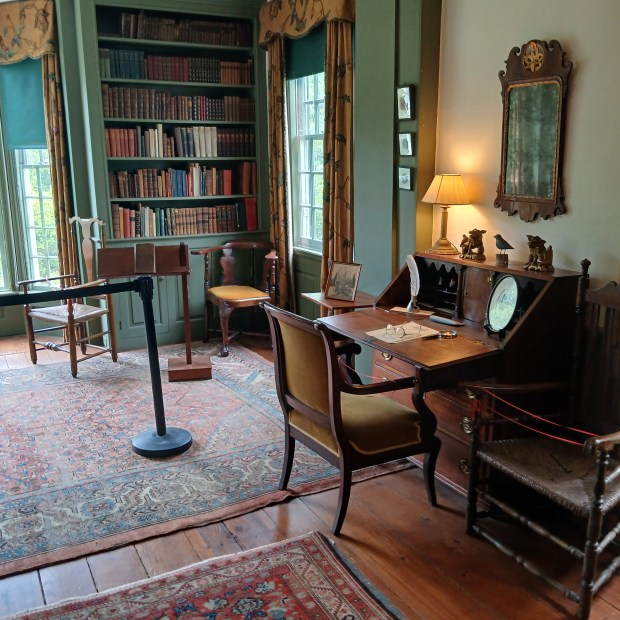
Ferriday spent 78 summers on her property, starting at the age of 9. When she became interested in the original owner of the house, she researched him and collected antiques related to the Rev. Bellamy’s life, many of them are preserved throughout the house.
The house is also filled with her own antique collections: her books are in the library, some of her dolls and toys are in her former bedroom on the second floor, where her office and typewriter are also displayed. Certificates for her French Legion of Honor medal and the Cross of Lorraine are displayed near her desk and chair, in her office on the landing of the second floor.
Continued history lessons
A new project is expected to begin this year: a restorative effort of Caroline Ferriday’s kitchen garden, which is hidden behind a long, high hedge hear the North Main Street entrance. There, Shimer and others will change the theme of the space into a World War II victory garden.
 The Bellamy-Ferriday House & Garden in Bethlehem, where the Bellamy family resided in the 1700s, and the Ferridays resided in the early 1900s. The ten-acre property at 9 North Main St. includes the house museum, along with gardens, barns and other structures. Caroline Ferriday, philanthropist and activist, made her home there. Since 2016, Ferriday has received worldwide recognition for rescuing Polish refugees used for Nazi experiments, detailed in Martha Hall Kelly’s book, “Lilac Girls.” (Emily M. Olson)
“We’re putting our focus on the WWII aspect of the house and the kitchen garden, as a continuation of Caroline’s work, helping others,” Shimer said. “We’ll have gardening glasses, and of course we’ll donate the food to the community.”
For admission information and directions, visit https://ctlandmarks.org/properties/bellamy-ferriday-house-garden/, or on Facebook.