
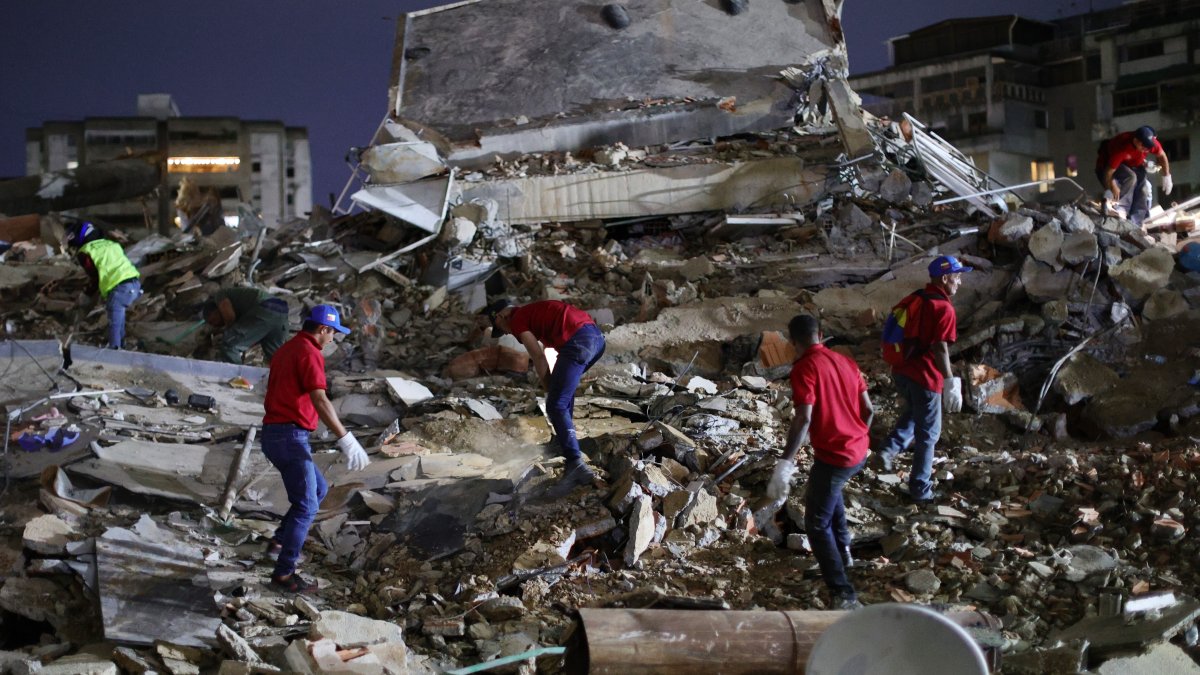
As relief efforts continue after twin earthquakes in Venezuela that killed 188 people and injured more than 1,500 others, federal officials are warning people to be cautious when donating to charities.
The warning comes as many Venezuelans living in the Philadelphia area anxiously wait for news from loved ones affected by the disaster.
Emilio Buitrago said his family lives in La Guaira, one of the cities hit hardest by the earthquakes that struck Wednesday night. He said he is still waiting to learn what happened to his grandmother.
“We don’t know about my grandmother. There are thousands of people still to be accounted for,” Buitrago said.
According to the report, Venezuela’s interim president, Delcy Rodríguez, declared La Guaira a disaster zone.
Buitrago said families are hoping humanitarian aid reaches those affected as soon as possible.
“We are just hoping for humanitarian aid to arrive soon. People are desperate. There are thousands of people missing. I mean, this is horrible,” Buitrago said.
As images of the devastation spread, many people are looking for ways to help. The Federal Trade Commission says scammers often take advantage of major disasters by creating fake charities or misleading donation campaigns.
Gema de las Heras, a consumer education specialist at the Federal Trade Commission, said scammers frequently use names that closely resemble legitimate organizations.
“You get a message, you know what’s happening, and you know it pulls at your heartstrings. You wanna help. Sometimes the scammers are using names that are very, very similar to legitimate charities,” de las Heras said.
The FTC recommends researching charities before making a donation. De las Heras said donors should verify whether a charity is registered with the IRS and check with their state’s Department of State or consumer affairs office.
“Just taking a few minutes to do some research can go a long way in making sure that your money goes to where you intended,” de las Heras said.
The FTC is also urging people to be careful when donating through crowdfunding campaigns.
“So ask yourself the question, do you know this individual? Do you trust that this person is going to give the money to the person that you want to donate to? Also, find out how much the platform is going take out of all of the donations,” de las Heras said.
The agency says potential warning signs include:
Typos in a charity’s posts or messages.
Social media accounts created immediately after the tragedy.
Requests for payment by gift cards, cryptocurrency or wire transfer.
NBC10 has compiled resources to help viewers research charities before donating. Click here to access those links.
This story was originally reported for broadcast by NBC Philadelphia. AI tools helped convert the story to a digital article, and an NBC Philadelphia journalist edited the article for publication.