
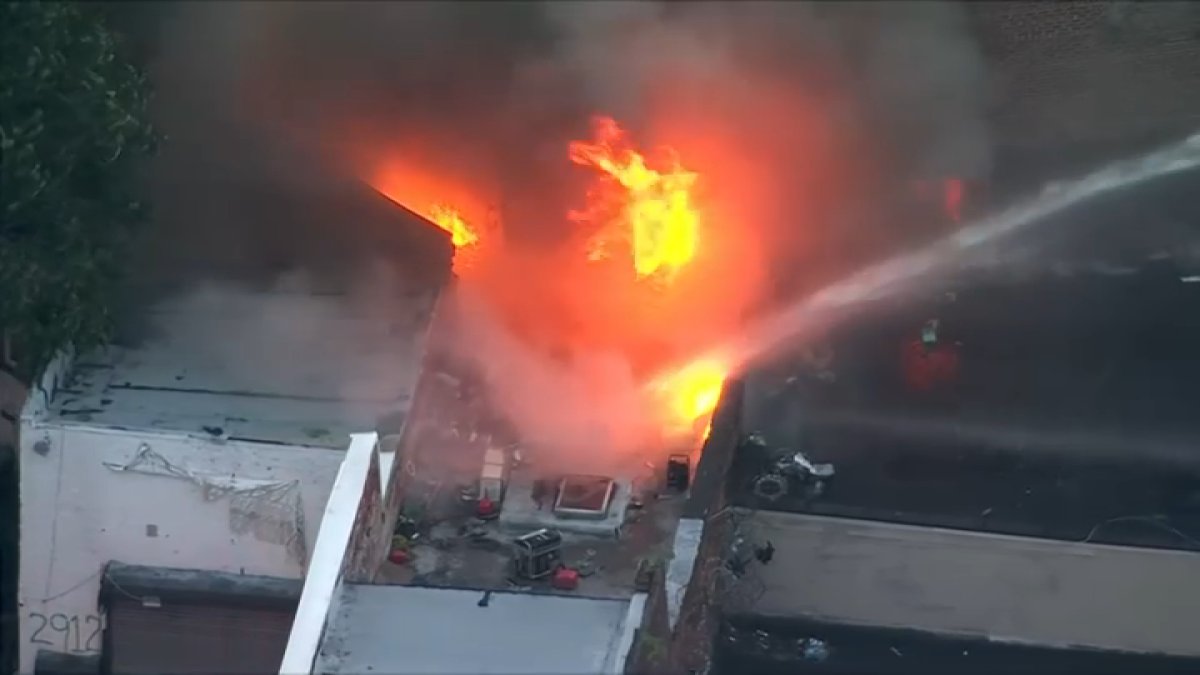
Philadelphia is seeing an increase in fire deaths this year as fire officials warn that modern homes, lithium-ion batteries and faster-moving fires are making emergencies more dangerous, even in homes equipped with smoke alarms.
So far this year, 22 people have died in fires in Philadelphia. In all of 2025, 37 people were killed in fires, putting the city on pace for an increase of more than 18%.
Philadelphia Fire Battalion Chief Kevin Donahue said the troubling trend comes despite an overall decline in the number of fires.
“We’re seeing less fires today that are still causing the same amount of fire deaths,” Donahue said. “That’s because of what’s burning and how it’s burning throughout the home.”
Donahue said one surprising finding is that more than half of the city’s deadly fires this year occurred in homes that had smoke alarms.
“It tells me that the fires today are getting harder to fight,” Donahue said. “Meaning the materials and the conditions that firefighters find upon arrival. So if we’re met with those conditions, imagine what an untrained person is met with, not in protective gear, knowing that they have to make a decision within a moment’s notice on how to get out of there.”
One example came on June 19, when a fire on Oregon Avenue in South Philadelphia trapped two women and a child. One of the women died.
Investigators found smoke alarms on the second floor of the home. They also determined the fire started in a scooter powered by a lithium-ion battery.
Donahue said rechargeable batteries have become a growing concern because they are now found in many everyday products.
“Everything powered, it’s with some type of lithium ion battery or some type of battery product,” Donahue said. “And we’re charging them. We’re charging them in our homes. A lot of times we’re not charging them the most appropriate way. And going back to people’s finances, we might not buy the appropriate charger. We might buy the cheaper one on Amazon, the one that’s not UL protected.”
He said batteries are only part of the challenge. Modern furniture and household items made with plastics and synthetic materials can burn hotter and cause fires to spread more rapidly than older products.
“If you buy a chair today versus buying a chair out of all wood, it’s collapsible, it’s easy, it’s ergonomic, it’s all plastic,” Donahue said.
“Each one of those types of items brings the heat level in the home when a fire starts up significantly, which increases the fire to rapidly grow throughout the home faster,” he said.
To help prevent future tragedies, the Philadelphia Fire Department is using a Geographic Information Systems, or GIS, program that analyzes real-time data to identify neighborhoods at the highest risk for fires.
The system combines information including demographics, census data, housing violations, vacant structures and records of past fire responses.
“How we responded to fires, where we’ve responded to fires, and not just fires that make the news,” Donahue said. “We’re talking about small fires, incipient stage fires that went out, one company responded to, and that’s over. That gets logged within our image trend system.”
The department uses that information to create heat maps that pinpoint areas most likely to experience fires, allowing its Community Action Team to conduct targeted outreach and share fire safety information before emergencies happen.
“We need to make sure we are there, making sure that we are delivering that message to prevent these fires,” Donahue said. “We need to think of a different way to approach this. And the way to differently approach that is through analytics, data, and technology.”
This story was originally reported for broadcast by NBC Philadelphia. AI tools helped convert the story to a digital article, and an NBC Philadelphia journalist edited the article for publication.