

A trip to the bank almost cost a Lackawanna County resident $9,000 until Deputy Sheriff Bob Moore stepped out of line to intervene.
The man withdrew the cash to pay a scammer who promised to fix his “broken” computer. Fortunately, Moore and an alert teller recognized the red flags and sent the man home with his savings intact.
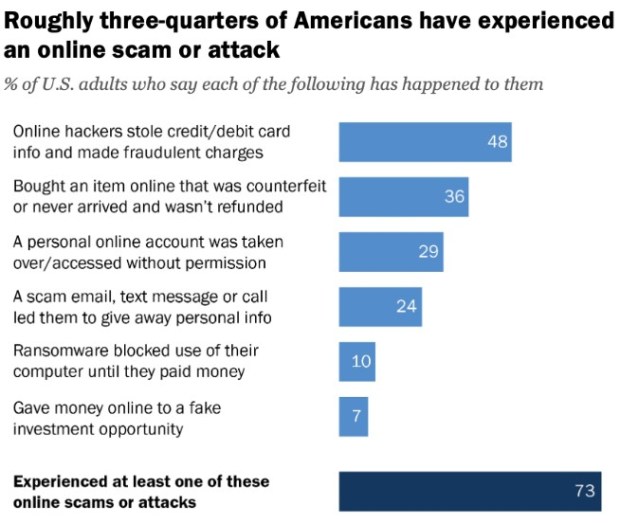 Pew Research Group 2025 statistics on scamming. (From website)
Had the transaction had gone through, he wouldn’t have been alone. According to the Pew Research Center, 73% of U.S. adults have experienced some kind of online scam or attack, with most receiving fraudulent calls, texts or emails weekly.
To combat the surge, Lackawanna County Sheriff Mark McAndrew wants residents of all ages to adopt a new motto when their phone rings: “Hang up, shut up, speak up, and listen up.”
Scammers rely on creating a false sense of extreme urgency, threatening jail time or claiming a loved one is in danger, to force victims into making panicked mistakes.
Here is what local law enforcement says you need to look out for, and exactly how to protect yourself from the most common local scams:
The phony warrant
You receive a call from someone claiming to be a sheriff’s deputy, threatening immediate arrest for unpaid fines or missing jury duty. Sheriff McAndrew recently witnessed the devastating impact of this firsthand while sitting in a local doctor’s waiting room. He noticed a woman crying after a scammer, posing as a “deputy,” demanded payment over the phone to avoid arrest. McAndrew took the phone himself, told the caller, “I don’t have a deputy by that name. Stop scamming people,” and hung up.
In reality, the sheriff’s office does not arrest people for missing jury duty. If there is a legitimate warrant, deputies will come to your door, not call you for payment.
The family emergency
Scammers pose as a grandchild or child in legal or medical trouble, demanding immediate funds to avoid jail or harm.
The romance hustle
Predators target social media profiles to strike up a relationship, eventually inventing a financial crisis or pitching a “sure-fire” crypto investment platform.
How to protect your money
Establish local contacts: Get to know the people at your bank, insurance provider and mortgage company. If you receive a suspicious call claiming your account is compromised, hang up and directly call the local branch manager or head teller you know by name.
Pause and verify: Scammers thrive on your panic. Never act immediately. Take a breath, break contact, and reach out to a trusted friend or family member for a second opinion.
Guard your data: Never give out your Social Security number, banking details or card numbers over the phone to an unsolicited caller.
What to do if you are scammed
Stop blaming yourself: Scams happen to everyone. Law enforcement notes that doctors, high-level executives and tech-savvy young adults regularly fall victim to these high-pressure tactics.
Cut all contact: Stop communicating with the scammer immediately.
Alert the authorities: Report the incident to your local police or sheriff’s department. The Lackawanna County Sheriff’s Department says it welcomes these calls and is relieved when residents reach out to verify rather than paying a scammer.
Lock down your accounts: Notify your bank and the major credit bureaus immediately to set up a fraud alert on your financial profile.