
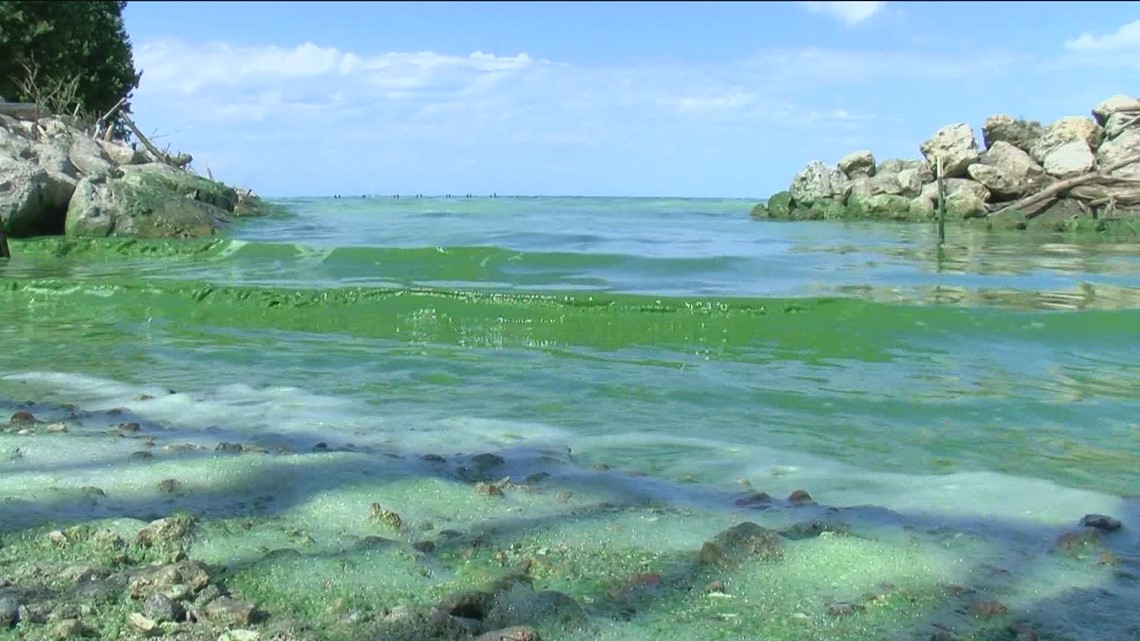
The bloom is expected to be higher than last year, peak in August and remain mostly in the western basin, according to the seasonal forecast.
TOLEDO, Ohio — A moderate harmful algal bloom is expected to develop in western Lake Erie this summer, according to NOAA’s 2026 seasonal forecast released Thursday.
NOAA’s National Centers for Coastal Ocean Science and its partners forecast the cyanobacterial harmful algal bloom will reach a severity of 3.5, with a potential range of 3 to 4.5. That is similar to 2024 but higher than 2025, according to the forecast.

This story continues below.
More in Local
Good for something: Mayflies swarm across Toledo, but the annoyance is actually a positive sign
Nearly $4 million in grants are restoring Audubon Islands between Maumee and Perrysburg
The new forecast narrows an early-season projection released in May, which estimated this year’s bloom could range from a severity of 2 to 5.5. At the time, researchers said the final severity would depend heavily on how much rain fell through spring and early summer.
The annual forecast is closely watched in northwest Ohio, where the 2014 Toledo water crisis remains a defining reminder of the risk harmful algal blooms can pose. That year, toxins from a bloom made Toledo’s drinking water unsafe for hundreds of thousands of people.
WTOL 11 | PROTECTING OUR WATER SPECIAL SECTION
This year’s forecast does not indicate a crisis-level bloom, but NOAA says a moderate bloom can still affect about one-third of the western basin at its peak and may produce patches of noticeable scum.
The bloom is expected to start in July, peak in August and likely continue into September. At this projected severity, NOAA expects the bloom to remain mostly in the western basin.
The forecast is based largely on the amount of total bioavailable phosphorus flowing into Lake Erie from the Maumee River between March and July. Phosphorus runoff is one of the major drivers of harmful algal blooms in western Lake Erie.
Spring rain is a key part of that equation. When heavy rain falls across the Maumee River watershed, it can carry phosphorus from agricultural fertilizer and other sources into streams and rivers that eventually flow into Lake Erie. Microcystis, the bacteria that causes the bloom, feeds off phosphorus in the water.
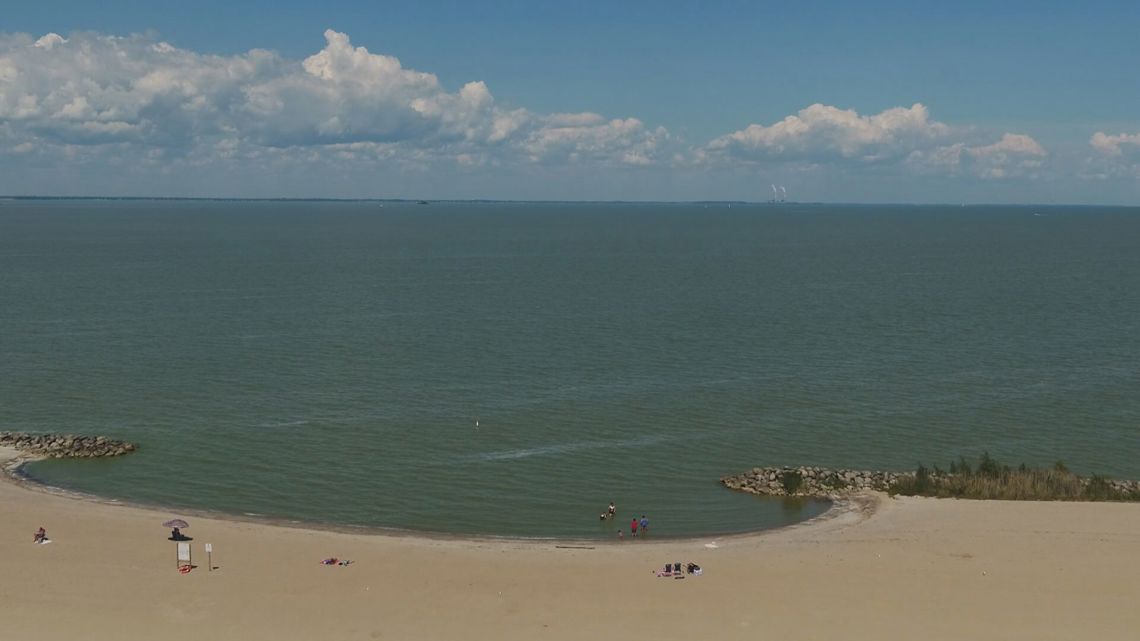
NOAA said slightly higher-than-normal rainfall and river flow are expected through July, and that information is already accounted for in the forecast.
While the size and location of the bloom can change depending on wind, NOAA said toxins can concentrate in surface scum that forms during calm weather. People and pets should not swim in areas where scum is visible.
The forecast focuses on bloom severity, which is based on the amount of bloom biomass over a sustained 30-day period. NOAA said toxicity can vary throughout the duration of the bloom, meaning a smaller or moderate bloom can still create localized concerns if toxic scum forms.
Harmful algal blooms can affect more than drinking-water confidence. They can also impact recreation across western Lake Erie, including swimming, boating and fishing, especially when visible scum develops near beaches, marinas or shoreline areas.
The forecast will be updated in late July as researchers get more information on the bloom’s size and severity.
Since the 2014 water crisis, Toledo and regional water-quality researchers have continued to track harmful algal blooms as a public health, drinking-water and recreation concern. The city has also made major investments in water treatment, while scientists continue to study how nutrient runoff affects the lake each year.
RELATED: How much progress has been made in Lake Erie? Advocate, expert weigh in | Protecting our Water
RELATED: Bowling Green State University researchers help monitor Sandusky Bay’s health | Protecting Our Water
RELATED: Scientists use mayflies and walleye as indicators of Lake Erie’s health